Future Thinking in a Time of Chaos
Future thinking is a challenging exercise even in the most stable of times. What is going to be important to society in 10 years? Imagine being the gig-economy visioneers like Uber and Airbnb getting sneered at back in 2010. On the scary side, think of what it must be like to be an oil-dependent economy today in this new world of too much oil, drastically reduced travel, and widespread acceptance of electric cars. What other commodities or services that we take for granted are no longer going to be valuable on the global markets 10 years from now?
In uncertain times like these, the challenge is even more perilous. Who knows whether Uber or Airbnb will even survive to the end of this year? What other giants of industry will succumb to the virus that has affected our economy as much as our health?
But in times of great instability also come great opportunities.
Some of the famous companies that saw new possibilities and started businesses in the midst of global recessions include GE, GM, IBM, Disney, HP, Hyatt, Trader Joe’s, and Microsoft.
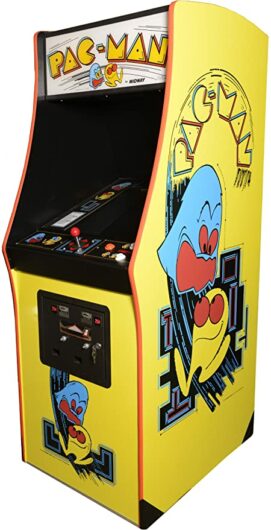
For those of you who have video game addicted kids like I do, the venerable Electronic Arts (look for the EA logo on their games) started in the early 1980s during the recession that followed the ‘79 oil crisis. Trip Hawkins was an incredibly astute futurist for envisioning that video games would move from arcades into homes. The year he formed EA saw the arcade video game industry — think coin-operated Pac-Man machines — peak at $8B and begin its rapid decline into a novelty. The home video game market has now grown into a $120B industry and is thriving in the time of COVID.
So what does future thinking look like for a small connectivity company in Nairobi, Kenya?
On one hand, we are seeing an increase in demand for connectivity now that people are either out of work or in lockdown. Unfortunately, our network is currently primarily located on public transportation and in public spaces. Neither of these are ideal areas for connectivity when social distancing is strictly enforced. There is a lot of thinking about how we might extend the reach of our signal beyond public spaces into more homes and shops. Some of these thoughts are pretty tactical, like adding more access points; others are applying more creative uses of technology, such as mesh networking – we are BRCK after all.
But the real future thinking happens when we start to look at the possible new products and services that we can enable from our connectivity platform. The issues for yesterday were getting access to digital content and entertainment; the issues for tomorrow are going to be food security, education, and jobs. We have to shift our focus from being just an enabler of connectivity to being an enabler of informal retail, a rail line for supply chains, and a touch point for tele-medicine. These are some of the most obvious extensions of Moja and they get closer to the heart of the challenge in our presently chaotic world. We have to be able to ask ourselves “how do we help a duka owner sell more bags of unga (flour)?” or “how do we help an unemployed woman learn the job skills she needs to be globally competitive?”.
There is a weightiness to these questions that were always an underlying rhythm to our work at BRCK, but now they have become the melody, the verse, and the chorus.
The great thing about the way that we think at BRCK is that we are a connectivity company that does not consider connectivity our end product. It is just the byproduct of our effort to ensure every African has access to participate in the 21st-century digital economy.
We always viewed Moja as an onramp for our users to access the digital products and services of both the local and global economies. While that underlying view hasn’t changed, we are in the process of rethinking how we can extend our value to players in various ecosystems that need to access and interact with our population, even when they are thousands of miles away. Much like Trip Hawkins saw a seemingly unbelievable future that kids would one day sit at home and have access to thousands of video games, we see a future where every African — and ultimately everyone on earth — is able to be remotely connected to the economy, their government, their doctor, their teacher, and their local vegetable vendor without having to decide if they should spend their limited financial resources on internet bundles or food.
Future thinking may be a challenging exercise but it is an absolute life-sustaining necessity.
The world we knew yesterday will not be the world that our kids know tomorrow. Things that were important before will be suddenly overshadowed by things that were previously taken for granted. Those of us who find a path through this devastation need to do everything we can to help fill in the gap for those products and services that won’t survive. I don’t know for certain if BRCK will survive to the end of the year but I believe that we will. I also believe that we can make a deeper and broader impact into the lives of our users in Kenya, Rwanda, and beyond.
If your business — whether supply chain, retail, health care, education, or anything else — depends upon connectivity to reach your users, please contact us and let’s see how we can work together to rebuild our economy and achieve sustainable resiliency in our community.