On A Journey To See Remote Kenya With World Vision

It has been approximately 5 months since I joined the BRCK team, and among some of the things I enjoy most is getting a chance to travel. I get to see what others think of our products and interact with them, listening to what features people would want among, see what works and what doesn’t in their world.

About three weeks ago, I got a call from the team that works at World Vision. They were looking for a solution to give internet connectivity to communities which would allow them to get connected to the rest of the world. With internet connectivity, the community will be able to access government services, access educational content and sell some of beautiful art work abroad.

At first I thought it would be pretty simple, get into a car and drive down. Now if you have been to Africa on safari, you know that you are going quite far if you are taking off in a land cruiser with two 90 Litre tanks.  This did not discourage me as I love seeing what the country has to offer.

So on Thursday March 12, we set off in the morning. Our first site visit was off to Kisapuk near Namanga. By “near” please note I mean that it is approx 40 KM from the Total petrol (gas) station in Namanga.

Kisapuk is a very beautiful place. I assure you pictures would not do it any justice. The community runs a school, greenhouse and a small market to sell their produce. Besides being a beautiful location, the people in the community are warm and welcoming, and they showed us a great deal of hospitality in our short time there.

After pushing the car to the wall on the all weather road, I quickly set up and got to work. The area is in a valley with a cell tower that is a repeater about 30 KM away.

If you grew up here, you have probably have heard stories from your parents or grandparents about walking long distances to get to school. I always thought these were amazing fables to make them look like super heroes. I must admit that reality dawned on me when there. School is a couple of kilometres from home, exams are done under the trees if you are lucky to get one. Worst of all you are detached from what is happening all over the world.

In Kenya, we have come to realise that most places with sparse population have either repeaters or cell towers that only offer EDGE. So I knew what to expect. For those of you who do not know, a repeater mostly carries voice technology. In some regions you would get some that carry data. Sadly in this region you would mostly get those carrying EDGE.

Luckily we understand our environment very well and I had carried just the right set of tools for the job. In this region only one cell carrier worked on this and after sometime I was able to get connectivity. There is nothing in this world that can relate to getting connectivity when out there. The ability to see something inspiring, share an idea with others, and get research material as and when you need it is mind blowing.

However, to serve a whole community on such a connection is close to insanity. Simply put I think this is not good enough. Time was now running out, we had to go to Mtito Andei and it was now 5 in the evening. I however left promising to get something a much better for them.

Back to our geography basics. Mtito is about 270 KM from where we are. At this point, the question was how would we make it there in good time. The only thing on my mind was a decent meal and a shower because we would be off to an early start the next morning.

If you know anything about our team, one fact is clear, we will always try new things. So I had been told there is a route that goes through the bush with basically trees or communities to mark where we were and thus where to turn.

Off we go into the bush

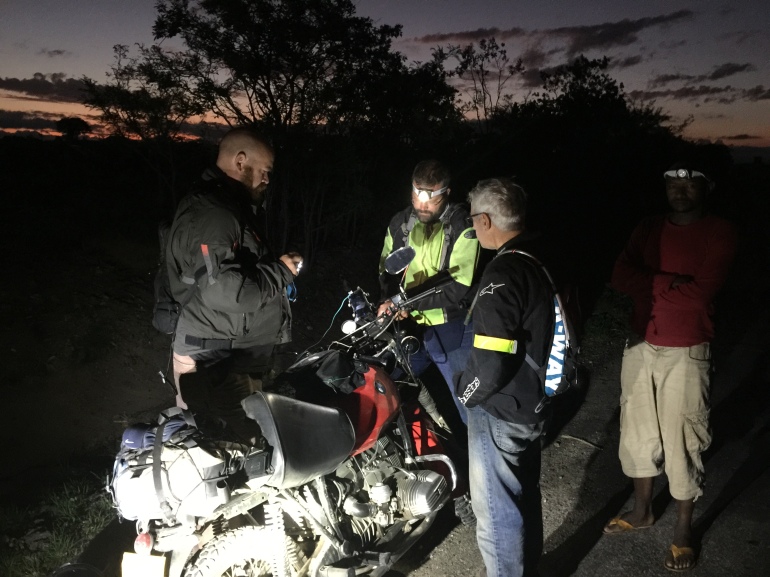
We somehow manage to make it through a whole tank of fuel in the bush. We made it to the town of Sultan Hamud. Which was impressive as we only got lost twice, taking tracks in the dusk, but somehow still finding our way to town.  We then proceeded to Mtito Andei .

Upon arrival, we called it a night.

Day two was easier on us. The school we were going to was only about 10 KM from the road. It was much easier getting a signal here. You’ll remember we are still talking about EDGE (2g connectivity) so it’s not very fast, but it does allow for a trickle of internet content.  If you are going to have a classroom of about 30 to 40 students connected to the internet, this is not the best option.

“Students in class working hard in class. I think the young fellow is being punished.”


Mtito Andei

If there is one thing that is clear, we can not take a sit back and wait for the mobile operators to realise that they need to provide country-wide 3G if we hope to get the rest of the country truly connected to the internet. We will need to come up with a solution that can work for us here and now. There are some ideas we have been working on in the office and I think it would be nice to get them into the last stage of testing and release them into the field. I can say at the most basic level, content caching is involved. The cost of fetching content from the cloud every time is too high especially timewise.

The sad reality is there is a whole generation not being exposed to what is happening all over the world in terms of content. My biggest concern is educational content. This is not fair in terms of having a level playing field.

It would be a dream come true to see them at the same competitive level with at least the rest of the country.

Thank you to the World Vision team!

World Vision

Crisis Stack: A microserver for disaster response teams

The heritage of BRCK is that we were born out of Ushahidi, which builds platforms for changing the way information flows in crisis and disasters events globally. It shouldn’t be a surprise then that we think a lot about how BRCK hardware can help extend the ability of disaster response teams around the world.

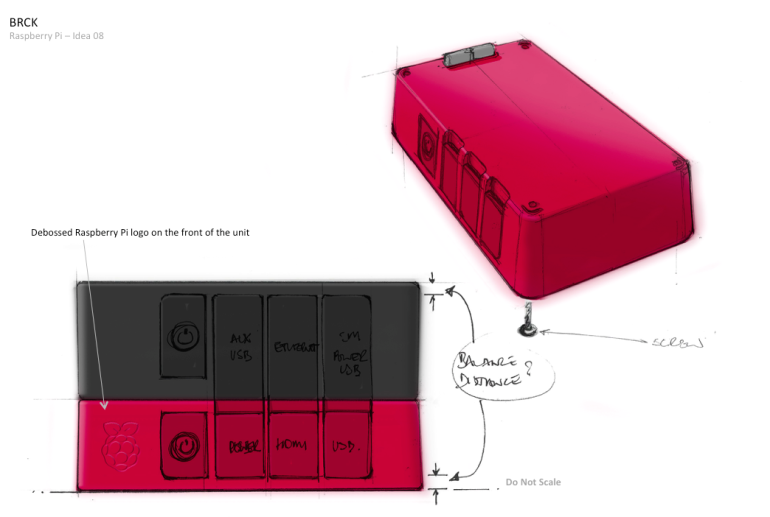
BRCK+Pi - new design concept for production

BRCK+Pi – new design concept for production

1: A Rugged Microserver

With the recent development of the BRCK+Pi, which marries a RaspberryPi + hard drive + 8-hour battery, to the BRCK in a simple package (full specs below), it gave us a chance to think through what could happen beyond just connectivity in tough environments. After all, with this extra computing power it turns the device into a remote microserver, where you can cache content locally and do stuff even when in an offline mode.

In short, the BRCK+Pi allows not just the standard BRCK connectivity, but now also the ability for content and computing in a small, rugged form factor that can be used anywhere.

2: Software for Disaster Response Teams

This allows us to provide a stack of disaster-related software that could be loaded onto the device. The goal being to have a core software stack available on BRCK+Pi devices to humanitarian response organizations globally. The purpose being to help speed recovery after a crisis, making first responder’s lives more efficient and making technology work where it normally doesn’t.

While anyone who makes these tools can put some time into making their tool work on the microserver, I was thinking to list out the full grouping that came out of a discussion on the CrisisMappers network recently, and then prioritize them into foundational tools that could be made into a “package” to download onto your own BRCK+Pi and which would help the broadest set of disaster responders. I asked the following questions:
   

  • What ideas do you have that would fit on BRCK+Pi?
  • Which problems could this help with?
  • Are there any software packages that you’d find valuable in the Crisis Stack?

3: What Goes in the Box?

First pass on this is about a set of basic tools that we can think of as a “core package”. We had an open call with members of the CrisisMappers community where we talked about the types of software needed and use cases for it. The initial tool list looks like this, though the repository is open on Github and can be changed, added to, or just plain branched in the future:

  • OSM tiles (Light) – (Ex: Haiti Browser)
  • OSM Sync – Make a mark on a map served off the BRCK+Pi and synchronize with OSM API occasionally
  • SMSsync – Use the BRCK wireless modem to allow for text messaging, rewritten to be native on the BRCK Device
  • LDLN – An inexpensive, distributed local data hub, with mobile apps to address damaged communication infrastructures after natural disasters
  • Sahana Eden – A suite of tools designed specifically for organizations during disasters, including organization registry, project tracking, asset tracking and more.
  • Cellular Coverage Mapping – Find a tool to report the signal strength measured if connected to cell network to contribute to existing project (see: http://www.ebola-cellular-map.resudox.net/)
  • Etherpad Lite – The most basic and simple communications tool we know of
  • Image sharing tool – Still to be determined, but could be BitTorent Sync for file management (protocol for local sync, not for normal torrenting activities)

Secondary applications to consider are:

ONA – http://ona.io/
Enketo – https://enketo.org/
FrontlineSMS -http://www.frontlinesms.com/
Ping – http://pingapp.io/
DragonForce – http://www.drakontas.com/
Ushahidi – http://ushahidi.com
WordPress – http://wordpress.org
Flickr or YouTube Sync
Wiki  – Gollum, Dokuwiki or Mediawiki
VPN service

4: Getting Stuff Done & How You Can Help

An idea, once outlined, is good but not enough. Now it’s time to build something. This week the BRCK and Ushahidi teams have been working on getting the basic libraries to run the “core package” onto the device. We’ve also setup a Github repo for Crisis Stack that is open for others to join. Beyond that, the team is getting Etherpad and Ushahidi 2.x working on the device.

Mikel Maron of Open Street Map was on the call and is helping to get the OSM tiles working.
Praneeth Bodduluri of Sahana also joined us and is helping to make Sahana Eden available.
I’m in contact with the LDLN team and we hope to have them also contributing to the core package.

We’re on the way to getting an alpha of Crisis Stack out by mid-February, we need the community in the disaster response space to help to make it happen.

If you’re a software engineer and would like to be involved, check out the repository and get involved with one of the projects that’s being put on the device.

If you’re a first responder, let us know what we is really needed on the device. We’ll need testers on this front as well, of course, but that won’t happen until we get some basic items working on it.

—————————————————–

BRCK+Pi specs

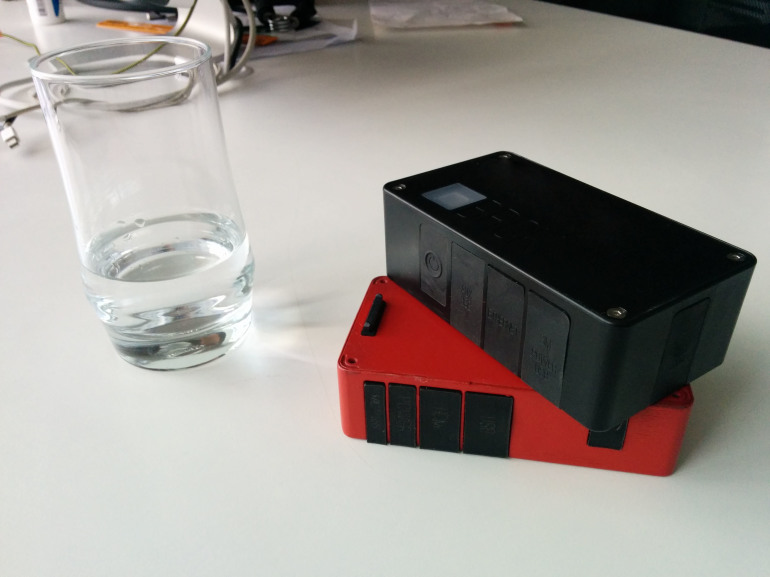
BRCK+Pi - initial working prototype

BRCK+Pi – initial working prototype

• IP51 water and dust ingress protection
• Dimensions: 132mm (5.18 inches) by 72mm (2.82 inches) by 45mm (1.77 inches)
• Native Raspberry Pi network connectivity when connected to BRCK
• Input voltage 5 – 18V, 0.1 – 3A charge current.
• Solar compatible charging
• Over voltage and reverse polarity protected inputs
• Dual USB connection to BRCK+Pi for Keyboard or Mouse (500mA)
• Mini-HDMI Video Out
• SDXC support (up to 2TB of SD storage), normally ships with 16GB
• BCM2835 SoC
• 4GB native storage (upgradeable to 500GB with extra cost)
• 512MB RAM
• 3.7V 8,000 mAH battery
• Can be preconfigured with Raspbian, but compatible with any Raspberry Pi distribution.
• Connects to the BRCK by stacking underneath, screws on for security


You can find the BRCK specs here.

Internet for Ranches and Wildlife Research

The El Karama Ranch

Farms and Ranch WiFi

I took off this weekend to test some BRCKs out in some of the more rural parts of Kenya. In this case, I was invited by Michael Nicholson who runs the cattle part of the El Karama Ranch situated near Nanyuki at the foot of Mount Kenya. The ranch is approximately 17,000 acres, and it has both a safari lodge and a lot of wildlife on it, as well as a 700-head cattle ranch. It’s an impressively well-run operation, and I got to see much of it.

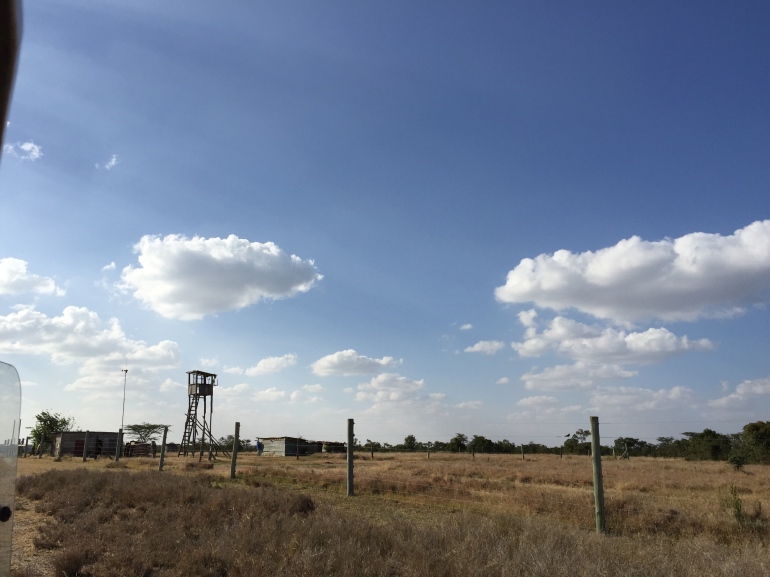
The tower and gate at El Karama Ranch

The tower and gate at El Karama Ranch

It turns out that the ranch is about 13 kilometers from the nearest mobile phone tower, and with a normal phone sitting out at their gate, you can get some spotty edge connectivity. Fortunately, Michael is a tech-oriented type of rancher, so he was already familiar with modems and routers, and had educated himself on the types of antennas and WiFi repeaters he’d need. There was a lookout tower at the gate that already had two of Poynting’s amazing long-range directional antennas (which we call “swords” as they look like a weapon from a fantasy game).

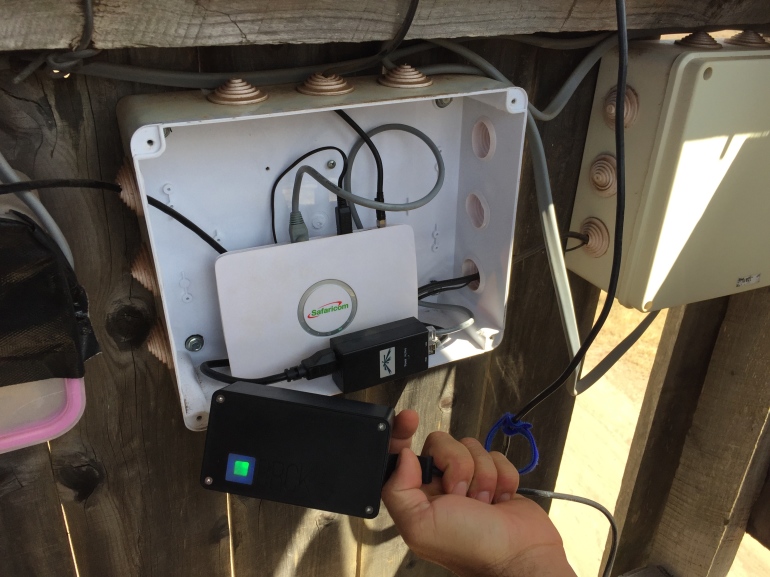
He had a working setup, but his biggest problem was the modem would randomly shut off. This isn’t a problem on the BRCK, because as soon as the modem loses connectivity, we tell it to search again and reset and reconnect. A simple solution would be for Michael to replace his current Safaricom modem with the BRCK (see below).

Switching out a Safaricom modem with a BRCK

Switching out a Safaricom modem with a BRCK

Heading into the Bush

The next day I took off up further north, past Isiolo to the Samburu area around Archer’s Post. This is a dusty, dry and hot land fed by the Ewaso Nyiro River. The wildlife research teams at the Grevy Zebra Trust and the Ewaso Lions had asked if we could test out if they could get connectivity.

This elephant isn't friendly, he took off after us for a bit

This elephant isn’t friendly, he took off after us for a bit

Grevy Zebra - endangered

Grevy Zebra – endangered

It turns out that to get to their camps you have to drive through the Samburu National Wildlife Reserve, which is amazing and has plenty of animals of all sorts. We saw everything from crocs and elephant to Grevy zebra and oryx. As fun as that was, it took us 1.5 hours to get through the park and many kilometers beyond to get to their camps. These teams are in real bush country with no towers anywhere around them.

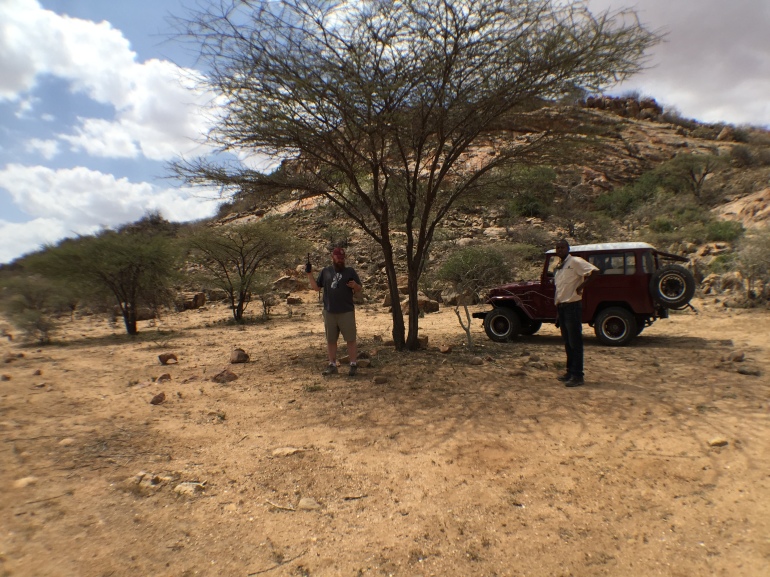
Me, standing at that ONE tree where you can get network signal

Me, standing at that ONE tree where you can get network signal

However, like almost anywhere you go in Kenya, there’s always some random tree that you can stand under and get connectivity (that’s me at said tree, above). They knew where these were, so we started to visit the locations to see what might work. Of the 5 areas we tested, one had a strong signal but was a couple kilometers from the camp. Another had a weak and usable signal near camp, and one had a possible signal in the middle of the Ewaso Lions camp. Very positive, and doable!
In the testing kit, I take a couple directional antennas as well as a small omnidirectional antenna to walk around with. On top of this, I have a way to mount an amplifier (booster) in the car to increase the signal gain on the antennas. It’s a great bit of testing kit, and it proved out incredibly well.

My suggestion to them is that they’ll need to raise a small pole on the top of their hill. Add a Poynting antenna, Voltaic solar panels for power, a BRCK and an amplifier. If they do this, we’ll likely test out our BRCK Extender at this location as well, which increases the WiFi range from about a 10m radius to approximately 900m. Since both the Extender and the amplifier need external power, there will need to be a small battery which is charged via solar. This whole concoction will run just over $1000 and should be fairly hands-free once setup.

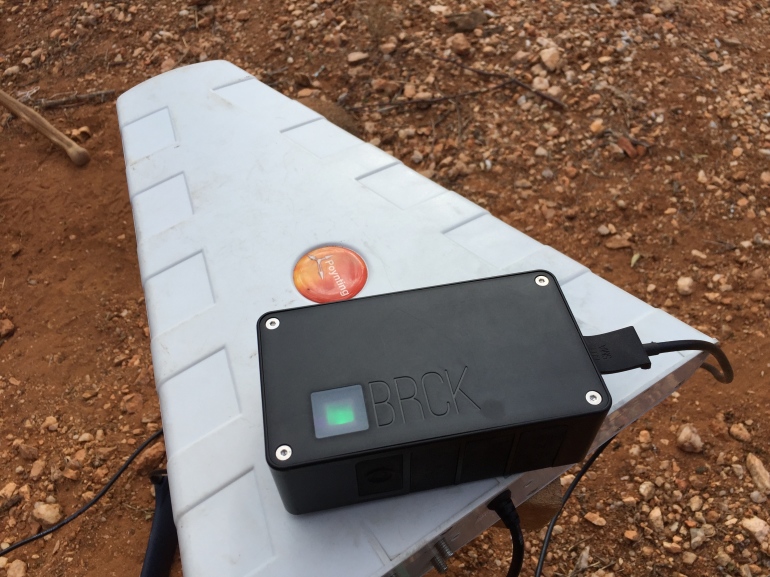
BRCK and Poynting antenna

BRCK and Poynting antenna

Andrew helping with antenna holding

Andrew helping with antenna holding

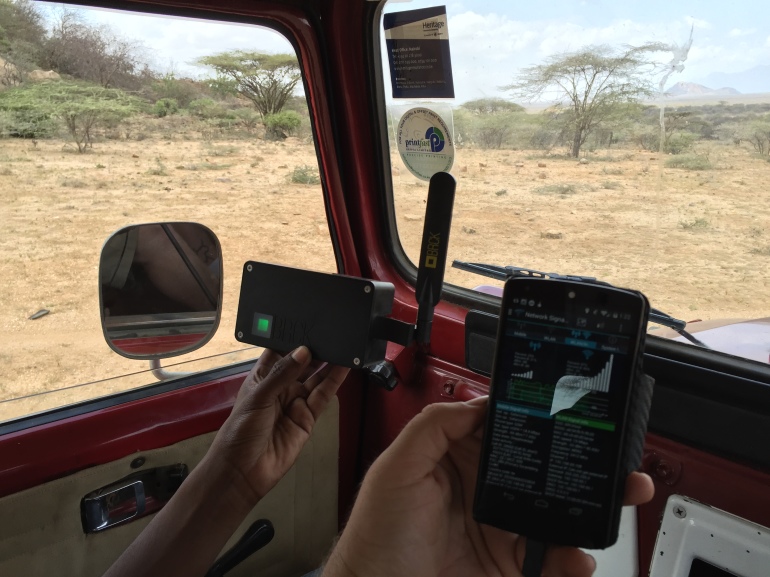
Using an Android app with the BRCK to test signal in the vehicle

Using an Android app with the BRCK to test signal in the vehicle

Summary

It turns out that BRCKs end up being a great solution for some of these rural and off-grid type places. While we can’t drive everywhere to do testing for everyone, we do try to get out and see what’s going on and see if we can help. It gives us a better understanding of our customers knowledge, and also a better feel for their pain points.

BRCK Pricing Changes in 2015

We set the price for the BRCK in 2013 in our Kickstarter campaign, well before many changes to the product, upgrades and final delivery of the device a year later. We’ve kept to that initial $199 pricing through the end of 2014 as a commitment to our first customers.

On Feb 1, the retail price for a BRCK will change to $249.99. This new price allows us to include an omnidirectional antenna in every box, as well as the new micro and nano SIM card adapters to make it easier for people who have a hard time finding full-sized data enabled SIM cards. Anyone who buys a BRCK before Feb 1, 2015 will get it for the current $199 on the BRCK store.

The increase in pricing helps by giving us more realistic margins to allow us to invest more into improving the BRCK product.
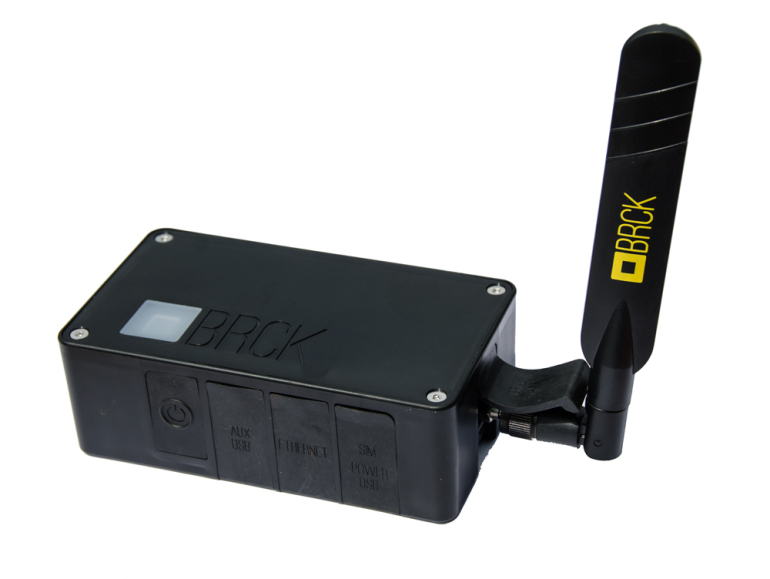
Antenna-BRCK

Internet, Even When the Lights go Out

As a Kenyan company based in Nairobi, we know first-hand the challenges of dealing with power cuts. So we built a router that stays online when the lights go out.

Juliana, when the lights went out, in Tanzania

Juliana, when the lights went out, in Tanzania

Our team was down in South Africa, a couple weeks ago, which has some power issues that they’re working through. This means different neighborhoods have their electricity turned off at different times to save energy, also known as load-shedding. It seemed that not too many South Africans have had to deal with this kind of problem, unlike the rest of us in the rest of Africa. They didn’t have a fallback plan for when the power went out.

In-built Power, by Design

Each BRCK has a full 8-hours of power up-time and a smart charge controller that keeps the battery topped up and ready for the unexpected. Designed for seamless failover between Ethernet and 3G, the BRCK can connect to your primary ISP and then automatically switch to a 3G provider when it senses that your internet has been interrupted.

BRCK was designed to survive the rigors of Africa. Here we suffer daily with power outages, brown outs and power surges. From day one we realized we needed to work hard to help smooth this out to make the internet work the way you want it, when you want it.

BRCK has built in 8000mAh of battery, enough to charge your phone or tablet more than twice. This battery provides power to the 3G, WiFi and Ethernet capabilities of the BRCK, which isn’t a small hotspot, but enough to connect 20 device to and running at full speed.

The use of micro-USB cables also allows your device to be charged from your laptop, wall plug, iphone charger, power bank or even another BRCK. We’ve included a USB charging port as well to allow you to charge your phone or tablet from your BRCK.

BRCK’s protected supply is unique in that it will continue to work from 4V right through to 18V from a standard 5V micro-USB connector. And if you go above, below or somehow reverse the wiring BRCK will pause charging, but keep running until the power comes back again. We’ve even optimized the charging circuit to run off raw solar panels without a step up or inverter.

All this charging ruggedness, combined with BRCKs proprietary network switching and fail over means you and your colleagues can keep on doing what you need to do even when the lights go off.

BRCK Nile Expedition Redux

With all the hubbub about the team’s epic three week dash to South Africa and back, some may have forgotten that only a month and a half ago, the other half of the team were cruising Lake Victoria and the Nile in Uganda. The video edit is done, though, so we’re bringing it back!

We started off with a plan to work with Johnny Long of Hackers for Charity to connect schools around Jinja to the internet and learn from local educators how we can build technology that meets their needs:

http://brck.com/2014/11/brck-expedition-2014-exploring-edtech-on-the-water/#.VJP-mACU

We wound up visiting the Living Hope Secondary School on Lingira Island in Lake Victoria:

http://brck.com/2014/11/brcked-expedition-connecting-lingira-secondary-school/#.VJP–ACU

http://brck.com/2014/11/brcked-expedition-part-two/#.VJP-8ACU

On the boat ride back, we broke out our OpenROV underwater exploration robot:

http://brck.com/2014/11/going-deep-with-openrov/#.VJP_JACU

Finally, we took a raft trip down the White Nile to play with antennas and sensors, to see how the Internet of Things could help conservation efforts in threatened ecosystems:

http://brck.com/2014/11/how-the-internet-of-things-can-help-save-our-rivers/#.VJP_TACU

You can see all that and more (read: zany BRCK team adventures) in the video above. It’s been a heck of a year for us here in Nairobi, and we can’t wait to see what 2015 brings! (Did someone say they need a weather station on Mt. Kenya…?)

A Dash South, and Back Again

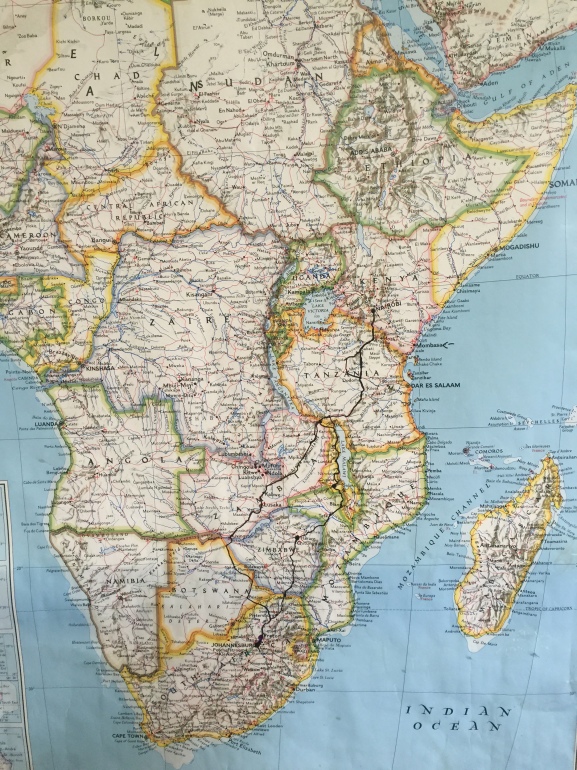
It has been 18 days since we left Nairobi for South Africa, then returned to Kenya. In that time, we passed through 8 countries, 18 border posts, covered 9,000 kilometers and saw some of Africa’s amazing beauty and realized just how vast of a continent we live and work on.

Sunrise riding is beautiful

Sunrise riding is beautiful

A BRCK Expedition is meant to be challenging, as well as provide a testing environment for the device, and of course to have fun as well – this was all of those things.

Philip fixes his broken throttle cable roadside, early morning in Tanzania

Philip fixes his broken throttle cable roadside, early morning in Tanzania

Our path to SA and back to KE

Our path to SA and back to KE

Through the BRCK, and partners like Inmarsat (with their iSavi device), we were able to stay connected on the road to the internet. We learned about the hassles of SIM buying, registering, activating, buying airtime and converting that to internet data in each country. On the motorcycles we stayed in conversation using Sena headsets, which meant we could warn each other of dangers, as well as have conversations on future products and features (of which there are many). Around campfires in the night we discussed our current challenges and ways we could make things better.

Inmarsat iSavi, BRCK, computer and solar panels

Inmarsat iSavi, BRCK, computer and solar panels

The team back home, as well as our families, tracked our progress and helped us remotely out of some problems. Whether that was trying to get the information on the gap needed on a 1983 BMW R65 spark plug, or finding a place for us to camp in the next couple hours when things got a bit dicey. Having the ability to communicate and people who anchor the expedition team were amazing luxuries to have.

We used a couple channels for public updates, including the BRCK Twitter and Instagram accounts, Open Explorer as our geographic diary of sorts, and of course the BRCK blog. However, on the trip north we also had a cool gift from the Inmarsat team of a satellite tracker for the vehicle.

The route back north to Kenya

The route back north to Kenya

A Few of the Best and Worst Experiences:

[BEST] Makuzi Beach Malawi – a beautiful, unexpected, and much welcomed oasis. We did amazingly well on our 500km that morning, so were there by lunch and had a whole afternoon to rest, fix things and have some fun before continuing.

Paul drives the underwater OpenROV

Paul drives the underwater OpenROV

Matt catches this amazing sunrise in Lake Malawi

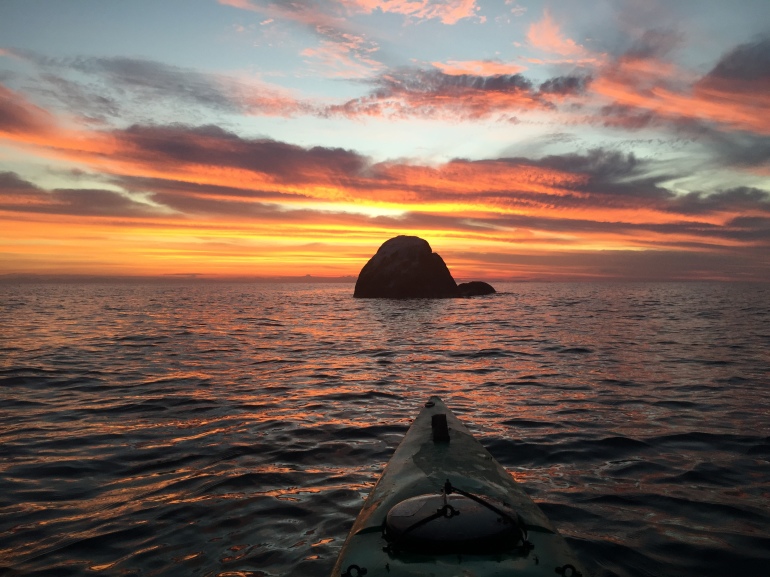
Matt catches this amazing sunrise in Lake Malawi

[BEST] Hospitality of Tech Communities in Africa – It was amazing to roll into Lusaka, Zambia and be welcomed by the BongoHive and find the same in Harare, Zimbabwe from HyperCube and the tech community there. Finding like-minded individuals who were wonderful hosts was just what we needed.

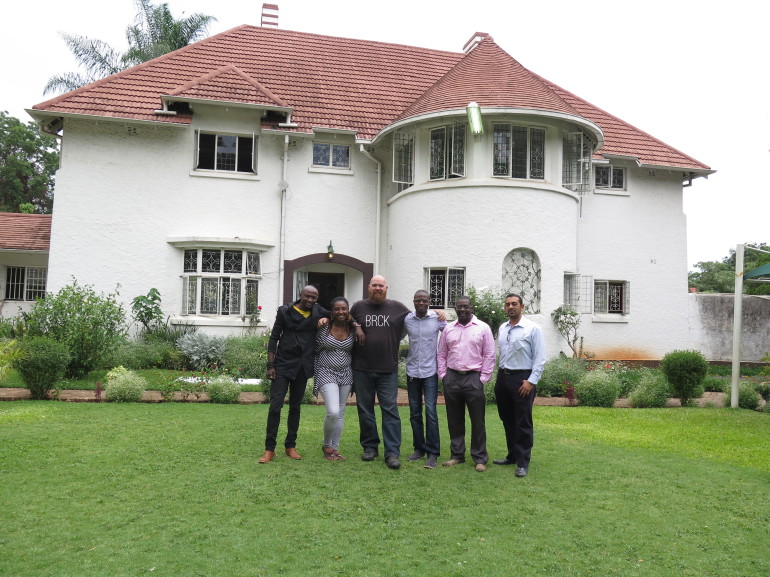
At HyperCube in Harare, Zimbabwe

At HyperCube in Harare, Zimbabwe

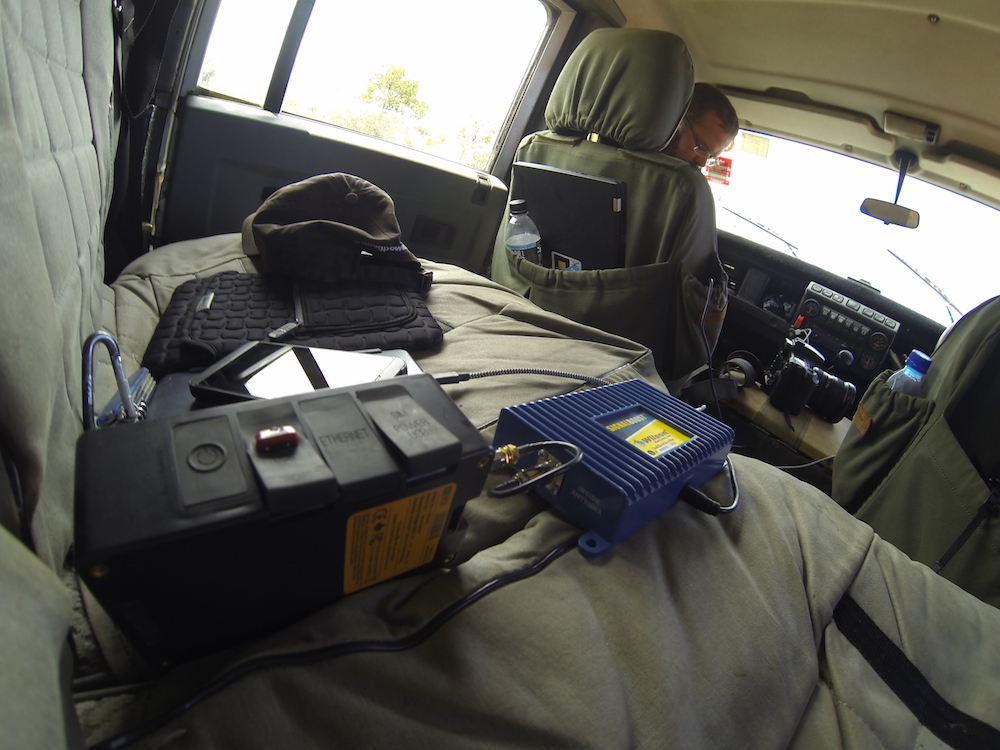
[BEST] BRCK Working Everywhere – Having someone in the vehicle working to get the BRCK going with a new SIM in a new country, as it was attached to an amp and vehicular mounted antenna, meant that we could stay connected (almost always). Rolling up on the vehicle and watching my phone sync up with messages and updates was cool, even in traffic. Mostly, it was gratifying to see the tech we had built withstand the harshness of travel and terrain, and just work.

Kurt readies a BRCK with the Wilson signal booster

Kurt readies a BRCK with the Wilson signal booster

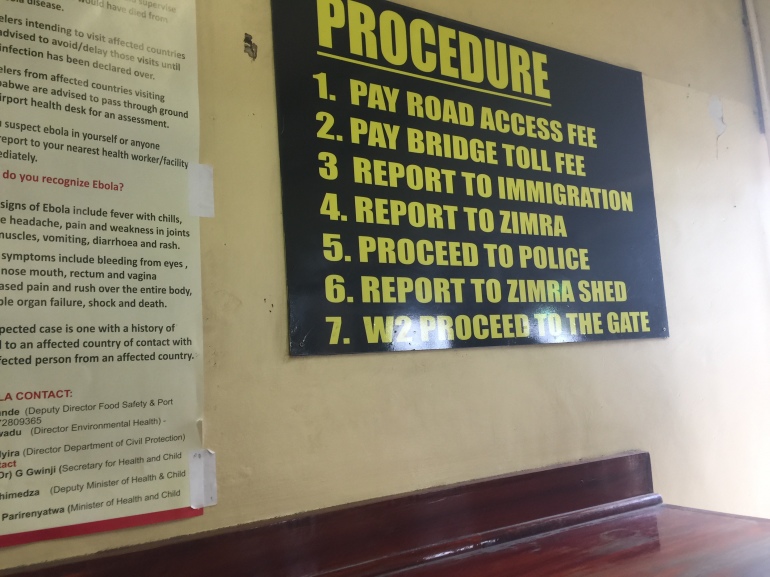
[WORST] Border Crossings – It’s a toss-up whether the Tunduma Border crossing from Tanzania into Zambia is worse than the Beit Bridge border crossing from South Africa into Zimbabwe. The first is a chaotic mess, and the second is a process nightmare. (Note: Crack-of-dawn is the best time to do both crossings)

Beit Bridge border process into Zimbabwe

Beit Bridge border process into Zimbabwe

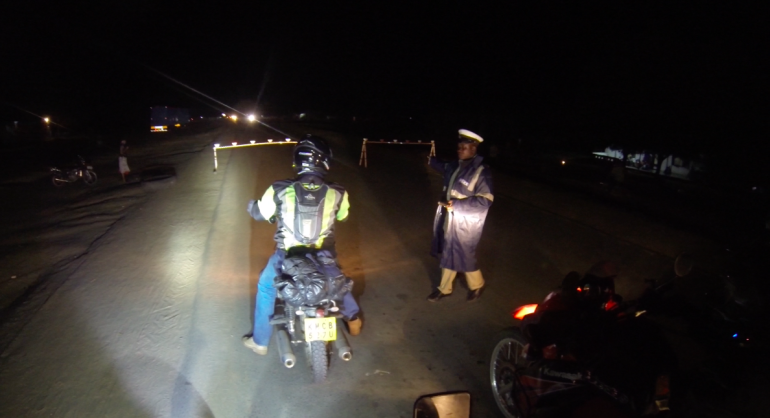
[WORST] Speed bumps and Police in Tanzania – The speedbumps in every town slow you down, plus the number of police waiting to stop any vehicle. The worst are the ones with radar guns, as their only mission is revenue generation. It seems that all Tanzanian police are unsubtly looking for bribes all of the time.

A police officer in Tanzania not asking for a bribe

A police officer in Tanzania not asking for a bribe

[WORST] SIM card frustrations in new countries – Kurt wrote about this in a past post, so won’t belabor it, but it was extremely annoying to have to figure out the obscure and opaque mysteries of getting a SIM card connecting to the internet in each country. One of my personal goals is to make this easier for other travelers in the future.

Getting Connected

The BRCKs have been working great on this trip; pop in a data enabled SIM card and a few minutes later the solid blue ring tells us that we are online.  It is a bit surreal to be corresponding with people back in the office while we are travelling through the heart of Africa.  I can watch Baobab trees go by, wave back at people resting in the shade to escape the mid-day heat and catch a glimpse of a chicken fluttering out of the way all while answering email.

We have a nice big omni-directional antenna from Poynting mounted on the bumper of our Defender and a dual band amplifier in the cab to boost the signal when things really get weak. The antenna is awesome!  It has  seen some super rough roads, some unexpected speed bumps (yes, Defender 110’s can fly!), scorching heat and heavy rains over the last 8000km and survived no problem.

mark_kamau_full

So connecting to a cellular signal has not been a significant issue this trip.  However, getting “data enabled SIM” is an adventure in every new country.  We have compiled a bit of a travel guide to help people in similar situations starting with “data enabled SIM card.”  The general procedure for getting on line looks something like this:

1. Buy a SIM card. When entering into a new country, usually while waiting for paperwork, I would find a hawker selling SIM cards a couple of scratch cards of airtime.  It’s not my forte but I would try to negotiate the price down as much as I could but we were often pressed for time.

In Zimbabwe we paid $5 (Zimbabwe has reverted to using USD) for the SIM and another $10 of credit, in Mozambique we paid 500 Metcali (???) for the SIM and 2000 for airtime (which later we learned transferred into 512MB), in Malawi the SIM card was and in Tanzania 2000TZS.  Currently Kenya, Tanzania, Zambia require some sort of identification (such as a passport) to buy a SIM so that the government can track phone numbers, ostensibly for security reasons.  Eventually most countries will probably adopt this.

2. Activate the SIM card. For example, TNM in Malawi involved dialing 100 which give and introductory recording.  Econet in Zimbabwe had no activation step.  The instructions for Vodacom in Tanzania said *104# but since we had to register the card when we purchased it we are not certain if this is actually required.

We are pushing hard to this functionality (as well as steps 3, 4 & 5) directly on the BRCK but for now we have a ubiquitous Nokia candy bar phone for this purpose.  You could almost certainly use the salespersons phone as well.

3. Add the credit as airtime. In Kenya we can add it directly as data but on this trip we always added it as airtime first.  This step is usually straight forward and the instructions are right on the scratch card.  For example, in Malawi TNM the code is: *111*scratch card number # and the only thing that changes

 4. Activate data on the phone. Often data needs to enabled for the SIM.  The instructions for TZ Vodacom are to SMS “INTERNET” to 15300

5. Buy a data bundle with the airtime. This is usually done through a USSD menu.  We will spare all the details and the menus can change at any time but for example in Malawi  on TNM:

  1. Access the menu is accessed with *100#
  2. Select “2” for “Bundles”
  3. “1” for “Available Bundles”
  4. “3” for “Internet”
  5. Then select which bundle. (We had only purchased 2000 Quacha of credit so we were able to get 512MB)

Now it’s ready!  Below are a few of the SIM’s we collected during the course of the trip.

IMG_20141213_112636

(At this point we often popped the SIM in the Firefox Flame phone.  This allowed us to verify what type of data connection is available; i.e. Edge or 3G.  And using a smart phone also allows us to check which APN the phone uses so we verify our BRCK table of APN settings.)

Put the SIM in the BRCK and wait for it to connect!

That all sounded quite straightforward; in reality there are many variables.  So here are a few other suggestions & comments:

  • The USSD menu may or may not be in English but we always found the English option so keep trying.  Spend a few minutes getting familiar with the options in the menu.
  • If something doesn’t work; try again a few times before trying something else; many times the network did not behave and the menu would time out or our credit would not go through.  So we would try and try some more until eventually it worked.
  • In Tanzania we had to re-registered our SIM simply because it was not working and so we lost a day with that card.
  • Budget half an hour or more to register and get the SIM card all working; ideally with the salesperson.  We often thought it would be a quick process but in reality it always took time, for one reason or another.
  • Keep the little instruction sheet that comes with the SIM and try to get as many shortcuts as you can from the locals.  Things like check data balance, check airtime credit, etc.

We are aiming to streamline this process to save the user from all this hassle, especially for travelers.  We would like to give someone a BRCK in Nairobi, maybe even with SIM cards from all the countries they will visit, and all they need to do is pop in a new card for each country; BRCK takes care of the rest.  In the meantime hopefully this guide was somewhat helpful.

Through Mozambique and Malawi

Before we left Nairobi, 2 weeks ago, I though that a 500km day on a motorcycle was a long time. Now I just ask, “well, what will we do in the afternoon then?”

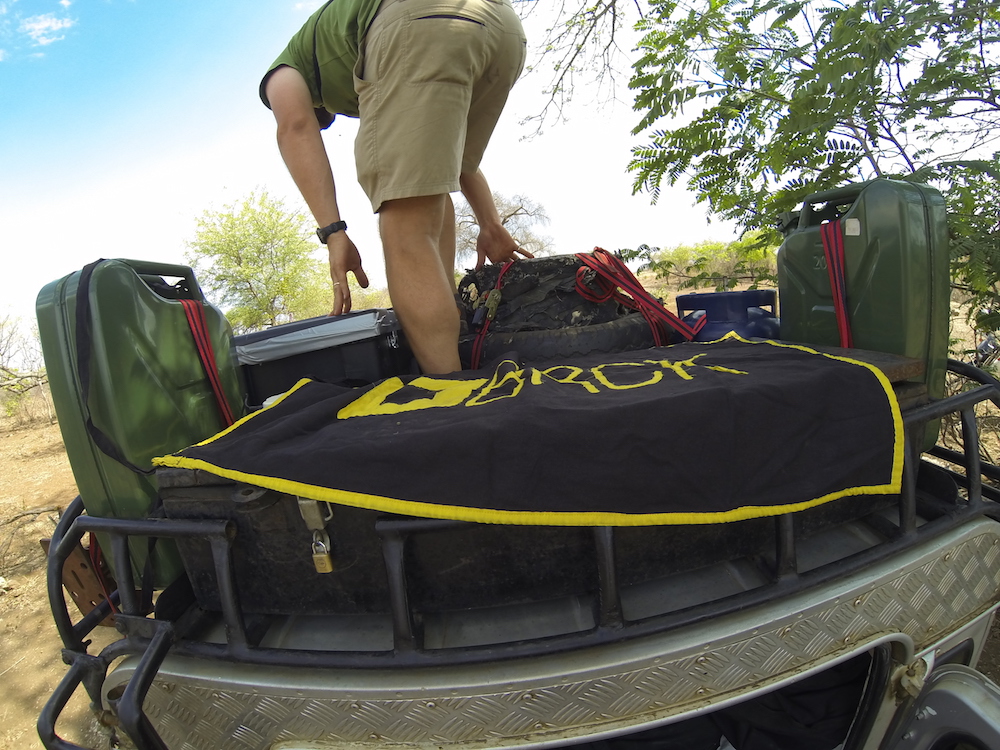
BRCK truck top

BRCK truck top

Our setup of BRCK plus Amp plus Car antenna

Our setup of BRCK plus Amp plus Car antenna

We left Harare, where the Arensen’s had hosted us for two nights in their lovely home, for a bit of a long day. We were gambling that we could make it through the Zimbabwe-Mozambique border AND then the Mozambique-Malawi border in good enough time to get to a campsite by the end of the day. A quick breakfast of chai, coffee and pre-boiled eggs underneath a baobab tree saw us to the first border in good time.

The Douane border crossing is less busy than it’s Beit Bridge counterpart. Leaving Zimbabwe, the customs and immigration officials are efficient and helpful. Getting into Mozambique was equally problem-free, especially since we had all gone to get our visas already.

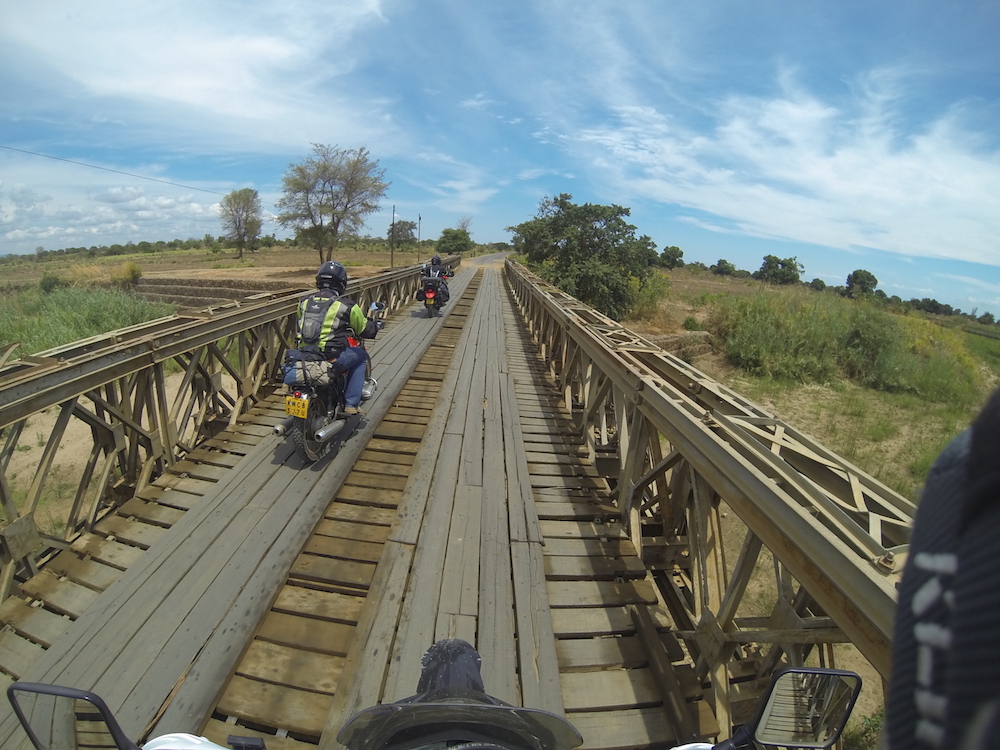
A rickety wooden bridge in Malawi

A rickety wooden bridge in Malawi

Philip, solving problems in Kenya, while on the road in Malawi

Philip, solving problems in Kenya, while on the road in Malawi

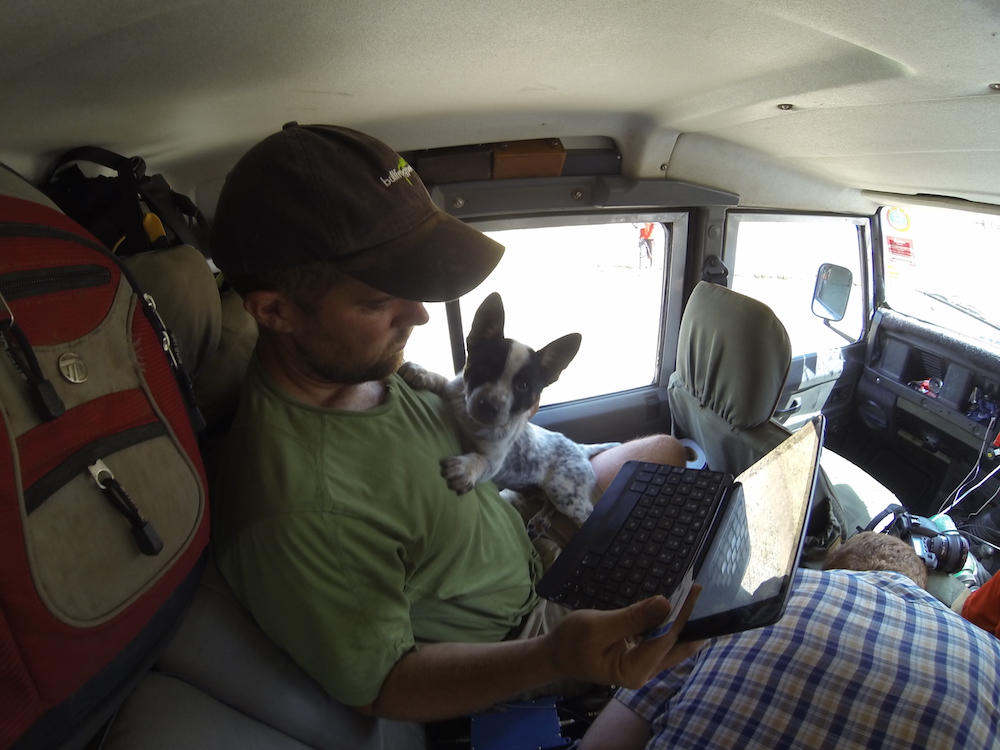
Kurt with Lobo in the vehicle

Kurt with Lobo in the vehicle

My Suzuki DR650

My Suzuki DR650

Now, Mozambique, this part of it anyway where you shoot across the Tete corridor towards Malawi, is a hot, dry and barren land. The only thing of any note is the nice bridge you cross over the Limpopo river passing through the city of Tete. Besides that, I’d suggest it’s not a place you want to spend any time.

Two interesting things happen as you run to the Malawi border. First, you realize that you cross back and forth between the two countries a couple times on the way. Second, when you pass through the Mozambique side of the border you’re still 5km from the Malawi border crossing. Strange… but, again border crossings are not about security, they’re about revenue generation.

The Mozambique customs officials had clearly never seen a Carnet de Passage (it’s like a passport for your vehicle), so they acted like it was something they couldn’t stamp. We were able to convince them that it was something normal, and that their colleague at the previous border had stamped it, so they could as well. Stamped and moving, we shot off for the campground, as we saw a storm rolling in.

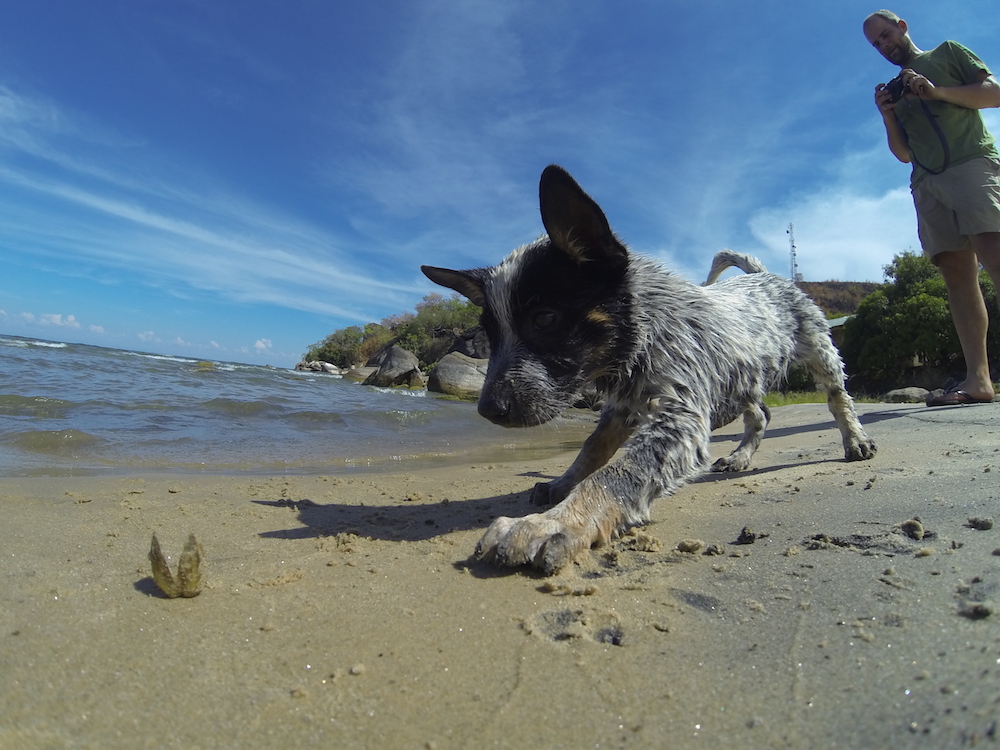
It was at this time that our small team mascot, Lobo the Australian cattle dog puppy, decided to have an explosive experience inside of the vehicle. Many curses were heard as people sprayed themselves down, and cleaned out the dog’s carrier. Praying for a dry night, we took off a bit behind schedule, and still managed to roll into Bushman’s Baobabs (great place), and had a warm still night of sleep.

500km up Lake Malawi

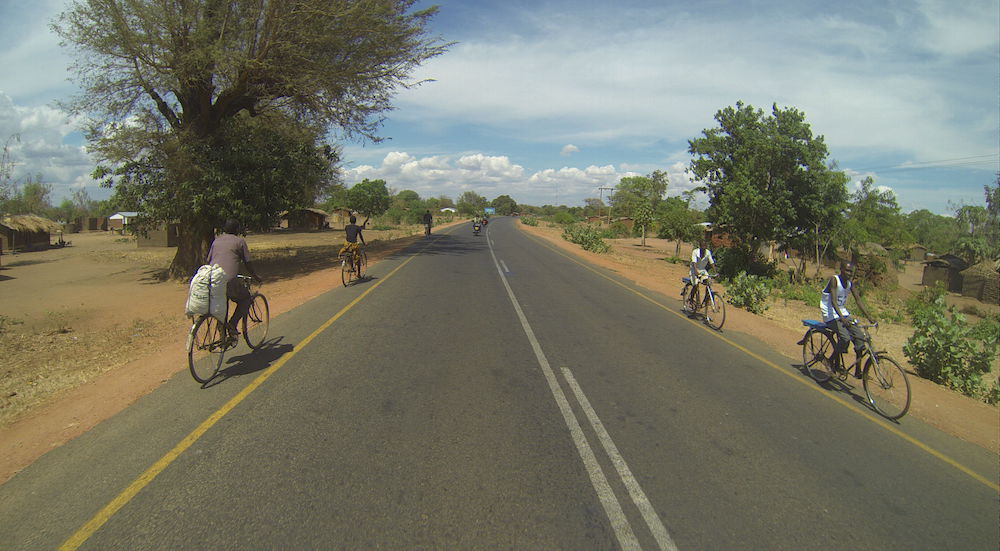
Off early, as always, we were half-way to our destination by 9:30am and got to camp by just after noon. As an aside, I think the word “Malawi”, and the flag symbol, all are pointed at the meaning of “land of the bicycle”. We saw so many people on bicycles today, more than in any other country we’ve been to.

The bicycles of Malawi

The bicycles of Malawi

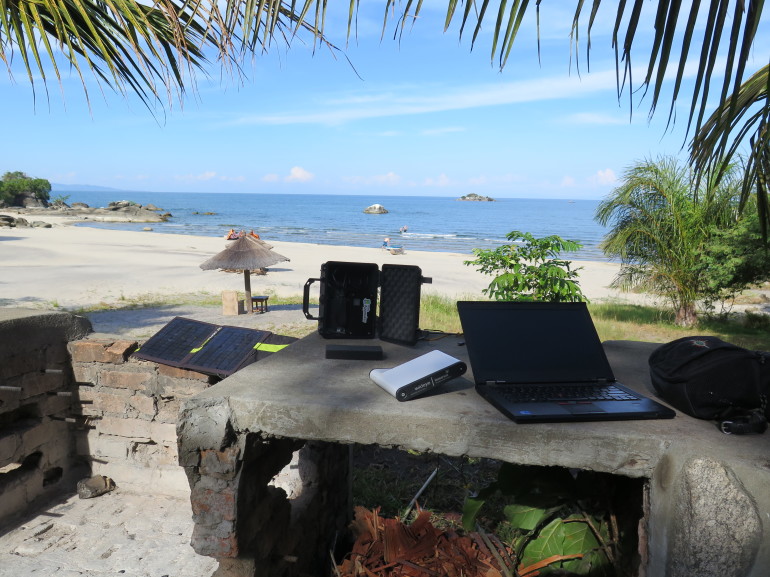
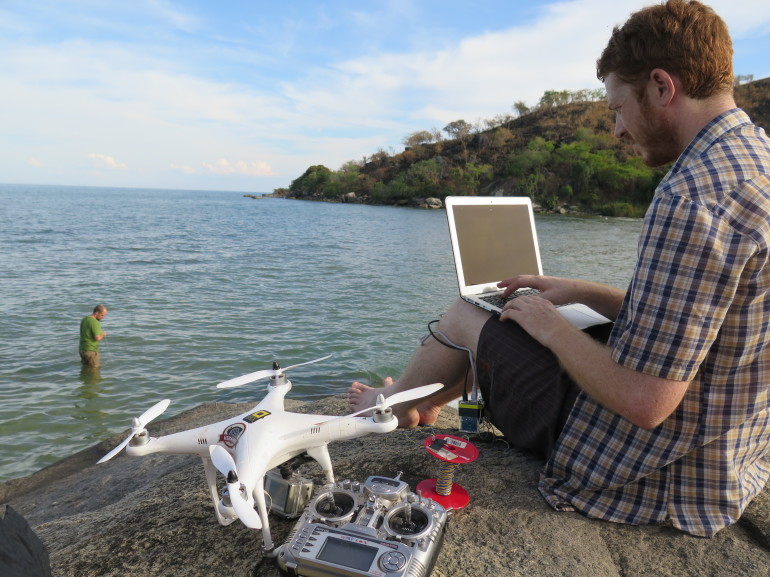
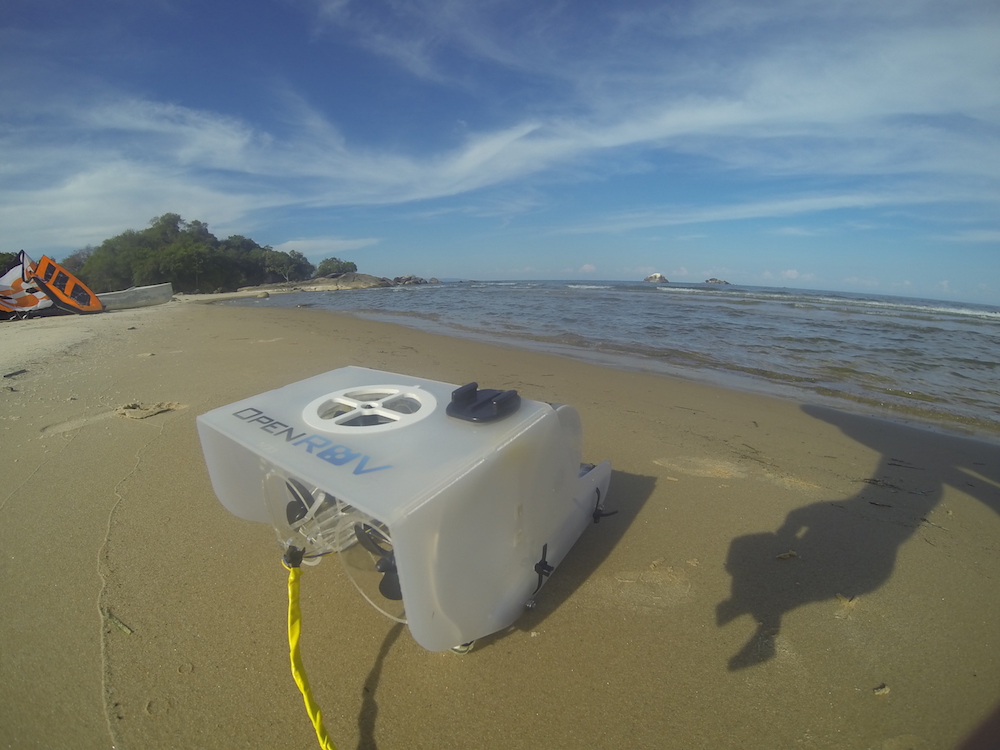
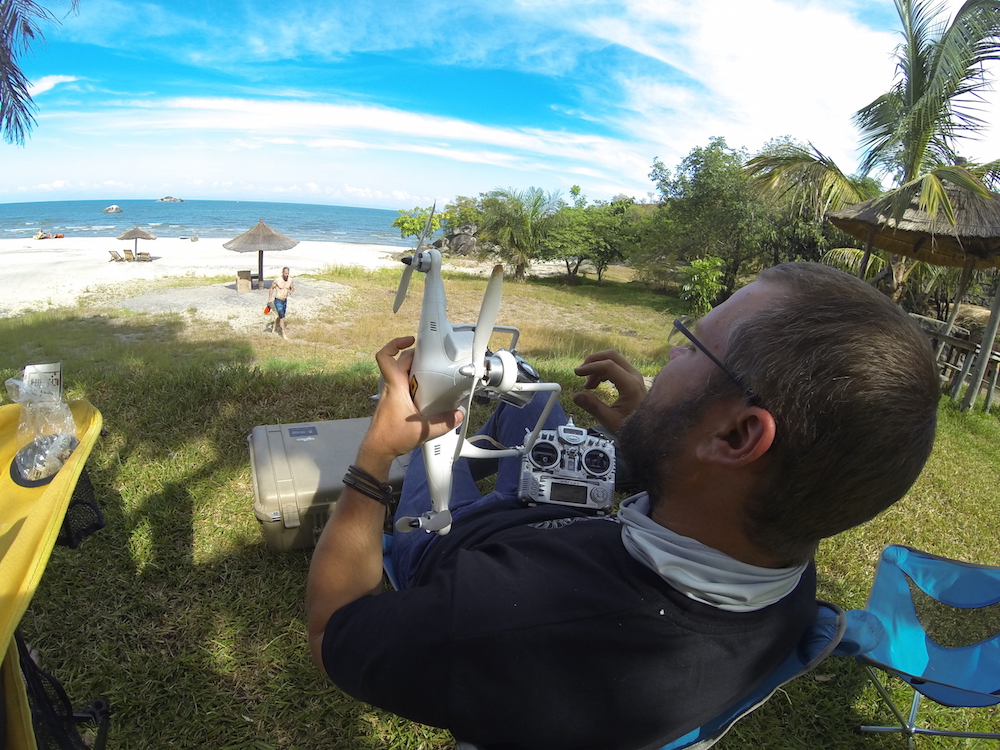
Makuzi Beach area of Lake Malawi is beautiful, and having a full afternoon ahead of us was something we didn’t know quite what to do with. So, of course we broke out the drone and OpenROV to have some fun.

We got some shots.

The OpenROV set to try Lake Malawi

The OpenROV set to try Lake Malawi

Philip getting ready with the drone

Philip getting ready with the drone

Lobo checking out a shell

Lobo checking out a shell

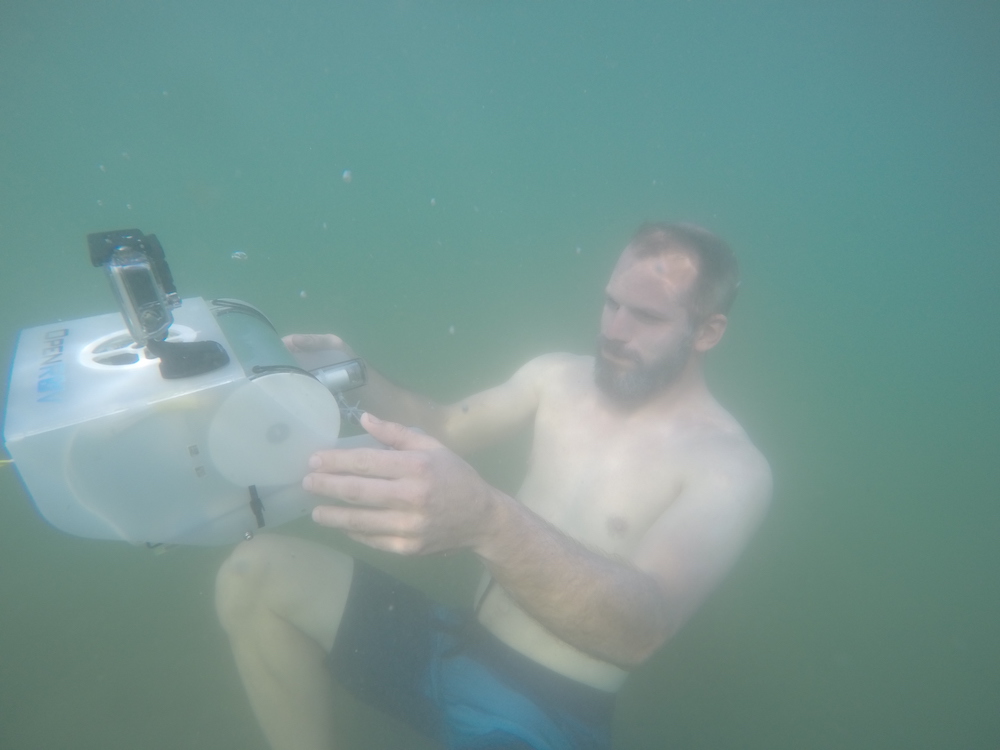
Matt Schoenhold of Teague playing with the OpenROV

Matt Schoenhold of Teague playing with the OpenROV

Philip managed to crash the drone into the lake, so we’re trying to see if we can resurrect it. (Update: we dried it out all night and now it’s working again. DJI makes an amazingly hardy device)

We had a grand idea of Paul driving the OpenROV underwater vehicle under a rock and taking a video of someone jumping into the water. We kind of did that, the problem was the cable was a bit short. The other problem was that it cut my toe with a blade as it came up directly underneath me. The good thing is that we had a lot of fun trying and leaned some of the limits of the vehicle.

There is now a beautiful, slow moonrise happening at 9pm, over Lake Malawi. We’re all well, fat and happy. The bikes and Land Rover have been behaving well. We’re set for our early AM departure as we have 750 kilometers and a border crossing to go through.

The Emperor has no clothes

Since I was a child I have heard stories regaled of South Africa. The modernity. The beauty. The ethnic diversity. Even though I remember seeing signs growing up in West Africa that said “Apartheid a bas!” ( English: down with Apartheid), I have always had a positive and idealized view of this great stalwart of the African continent. From my naive perspective, it was what the rest of us should aspire to realize in our own corners of the continent. I visited SA for the first time in the early 2000’s. It definitely had some African feel to it, however, the fear in those days was palpable. Entering a business was an ordeal of security checks. The malls had the same scanning equipment as an airport. Yet, in the leafy suburbs of Johannesburg, there was an amazing sense of tranquility, beauty, and progress. It was easy to do business with South Africans and their sense of optimism for their country – and the continent – was overwhelming.

Fast forward nearly 15 years and I find myself sitting in an altogether different country. While the roads are just as spectacular crime is still a problem – although the sense of fear is clearly diminished. Everything about this country screams modernity and progress. But the veneer is thin. What lies beneath the glossy shell is insidious, corrupt, and diseased. And it is getting worse.

IMG_0756

In the few days that we spent in South Africa, we personally felt the pinch of the widespread power shedding that is going on due to insufficient, aging, and poorly maintained power infrastructure. We lost an entire day from our schedule because the Land Rover shop we were using removed the tyres from the wheels and subsequently were cut off from power and unable to remount them. As I spoke with the proprietor he shared that another customer had their vehicle completed but the shop could not raise the lift enough to release the locks that would allow the vehicle to be lowered. This is South Africa! A “european” country at the base of Africa. How could these kind of infrastructure issues be happening here? As I continued my dialog the old man told me that he was even considering buying a generator to keep up productivity. That would have been my first thought – given that our office and my house already have generators – but in this part of Africa that notion is foreign and frightening.

This lack of realistic perspective on the rest of the continent came up during our discussion with another South African technologist who is focused on the education sector. The problems that he has been dealing with are related to choosing HP over Cisco routing equipment for the schools where he works. Although I’m sure that is important in his context, these things mean nothing where we live. To his credit, this guy is traveling around southern Africa with his family and exploring the challenges that exist for education outside of South Africa. He understands the problem enough to have been very excited about BRCK. I sense that he is willing learn to adapt his thinking and will ultimately be very effective at solving the real problems that exist north of the Tropic of Capricorn.

While there are plenty of subtle (and often not so subtle) clues that this southern civilization is crumbling from the inside out, there is hope. And not just a hope for survival but a hope for a rising tide extending well beyond the smooth roads and superhighways.

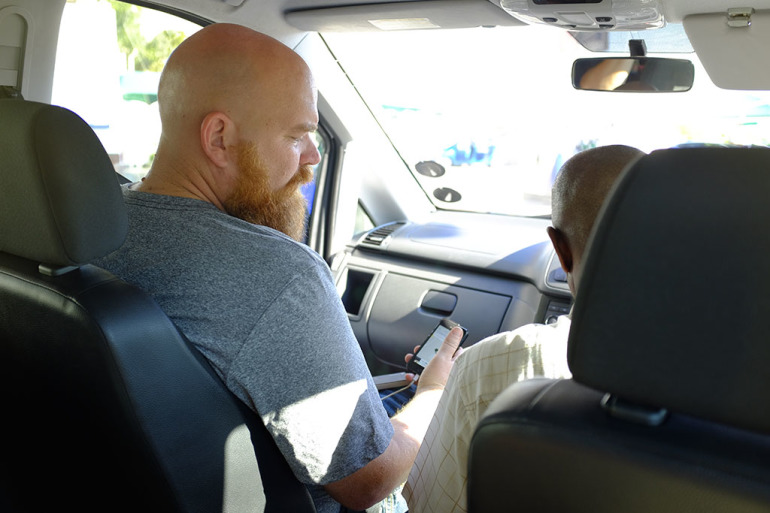
During our time in Jozi we relied heavily on Uber for our transportation. I had never used this service and I was blown away by the convenience and reliability. During each ride I would query the driver with the same questions on how they liked driving for Uber, how they were doing economically, and their plan forward. What I found was a bunch of very hard working, polite, and intelligent entrepreneurs at various stages of the business lifecycle. Some were driving for the owner of the car and saving their money to buy their own car. One had just bought his first car. You could see the pride and optimism of this older gentleman as we shifted through Joburg in his new Toyota Corolla. This man had gone from being an employee of a metered taxi service to a driver of someone else’s Uber car to now being an entrepreneur in his own right. An inspiring story. The final driver that I used was driving a C-class Mercedes. He now owned a couple of cars and was working to manage a handful of drivers. He was driving that day because his previous driver had gotten into an accident and damaged the car. He struggles to find good employees but he was excited about the new guy who starts on Monday.

_DSF9584

I absolutely adore these examples of the disruption that technology brings to business and the resourceful application of hard work at the points of disruption to create new opportunities, businesses, and jobs. As African technologists (particularly as BRCK), this is our real potential to have an impact and build a sustainable and prosperous community.

On Friday, Erik and I had the chance to sit down with a South African who is the fund manager for a very wealthy German technologist. Marc has a very down to earth and insightful view to technology and business in Africa. He sees beyond the glossy shell and recognizes the challenges that underly his own country along with the potential for the rest of the continent. It was odd for Erik and I to talk with an investor who didn’t need to be sold on the potential and opportunity for BRCK in Africa. Instead we focused on our real issue which is scaling production and distribution to meet the untapped potential for BRCK. Marc figures that we could place an advert in Joburg and sell a few thousand BRCKs overnight to South Africans who are frustrated by the intermittent power and unreliable connectivity – sounds more like Naiorbi than Johannesburg. Because he has some experience in telecommunication equipment and infrastructure, Marc seemed particularly excited about the idea for Supa BRCK. A weatherproof BRCK with multiple ethernet and multiple cellular connections that could serve as a critical component in building reliable corporate networks for African schools, business, and governments. It was reassuring and encouraging to spend time with someone who knows the realities on the ground, sees past the veneer, and is still excited for the opportunity to build African technology to solve African problems.

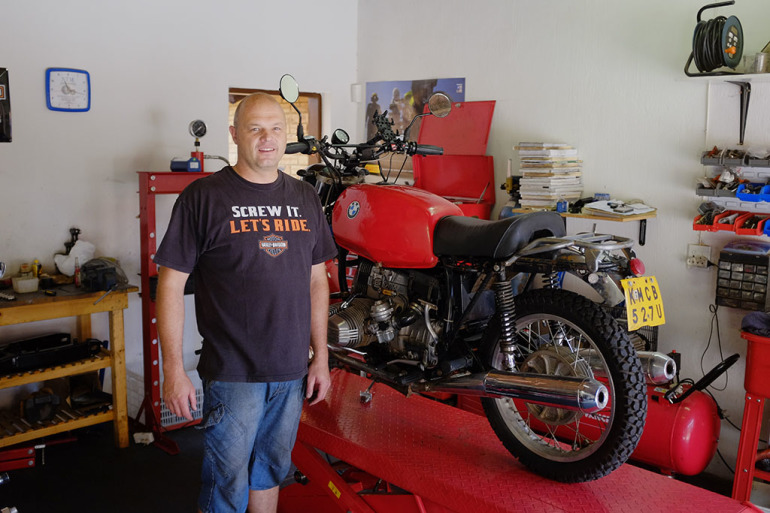
My favorite experience of the trip was meeting Marcus Watson who runs a BMW motorcycle repair business. We were referred to Marcus to help sort out some issues on my bike and get it ready for the return trip. Even though as a sole proprietor his schedule is packed, Marcus gladly took in my bike to get it prepped for the hard road ahead. I immediately appreciated Marcus’ knowledge on these bikes and his attention to detail. He knows these machines, how much abuse they can take, and how to keep them running reliably across Africa. As he poked and prodded my bike I got to hear his story of being a first-rate engineer in the power industry, getting retrenched as South Africa struggled to balance racial distribution in the work place, and ultimately turning his hobby into a thriving business. Although Marcus is saddened to see how poorly the power infrastructure is being maintained today, he isn’t the kind of person who gets bitter and then sits down to complain. Instead he took his talents and commitment to customer service and built a business and reputation as a world class motorcycle mechanic. He didn’t flinch at the fact that my bike was a bit Kenyan in its mixed component heritage and adapted to the changes that Rick and I have made to make this bike suitable for this trip. What saddened me in my conversations with Marcus is that he is considering emigrating to Australia. I have no doubt that he would find a wonderful life there but I am disheartened to think that Africa will be losing such an amazing resource. I hope one day that guys like Marcus are willing to travel north and set their sights and talents on the challenges facing the rest of Africa.

_DSF9598

In the end, I came away from our trip still a little glassy eyed about our cousins in the south. I don’t think that I could live there but I certainly don’t mind visiting. I also think that there is a real opportunity for Africans to come together in this time where Kenyans have insights into dealing with poor infrastructure and South Africans have insights into proper engineering. It would be a great benefit to both sides of the Limpopo River to work together to solve challenges and problems that exist in each others back yards. I truly hope that these present and future challenges in South Africa will force this society to unleash their best and brightest onto the rest of the continent.