Internet, Even When the Lights go Out

As a Kenyan company based in Nairobi, we know first-hand the challenges of dealing with power cuts. So we built a router that stays online when the lights go out.
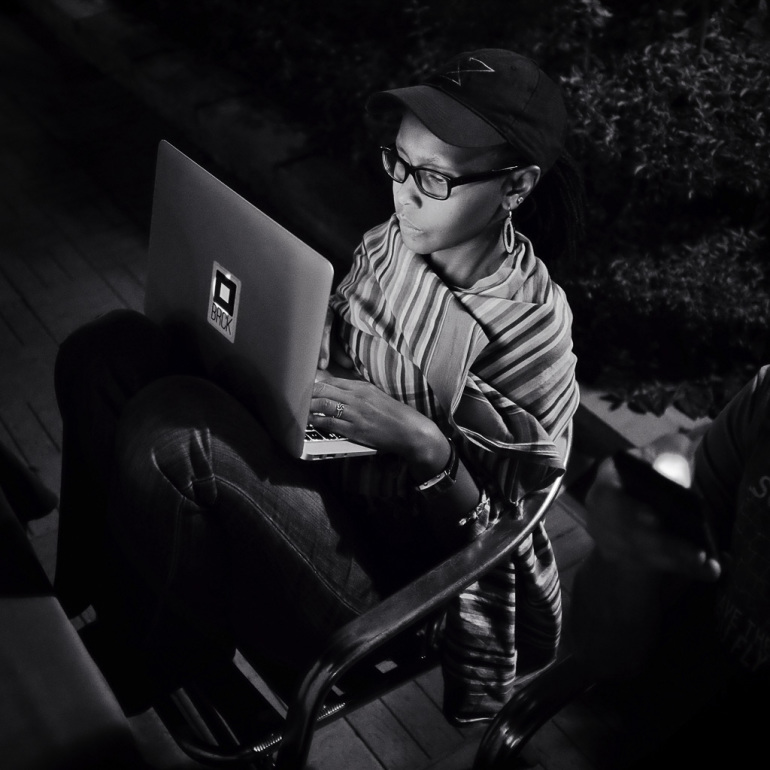
Juliana, when the lights went out, in Tanzania

Juliana, when the lights went out, in Tanzania

Our team was down in South Africa, a couple weeks ago, which has some power issues that they’re working through. This means different neighborhoods have their electricity turned off at different times to save energy, also known as load-shedding. It seemed that not too many South Africans have had to deal with this kind of problem, unlike the rest of us in the rest of Africa. They didn’t have a fallback plan for when the power went out.

In-built Power, by Design

Each BRCK has a full 8-hours of power up-time and a smart charge controller that keeps the battery topped up and ready for the unexpected. Designed for seamless failover between Ethernet and 3G, the BRCK can connect to your primary ISP and then automatically switch to a 3G provider when it senses that your internet has been interrupted.

BRCK was designed to survive the rigors of Africa. Here we suffer daily with power outages, brown outs and power surges. From day one we realized we needed to work hard to help smooth this out to make the internet work the way you want it, when you want it.

BRCK has built in 8000mAh of battery, enough to charge your phone or tablet more than twice. This battery provides power to the 3G, WiFi and Ethernet capabilities of the BRCK, which isn’t a small hotspot, but enough to connect 20 device to and running at full speed.

The use of micro-USB cables also allows your device to be charged from your laptop, wall plug, iphone charger, power bank or even another BRCK. We’ve included a USB charging port as well to allow you to charge your phone or tablet from your BRCK.

BRCK’s protected supply is unique in that it will continue to work from 4V right through to 18V from a standard 5V micro-USB connector. And if you go above, below or somehow reverse the wiring BRCK will pause charging, but keep running until the power comes back again. We’ve even optimized the charging circuit to run off raw solar panels without a step up or inverter.

All this charging ruggedness, combined with BRCKs proprietary network switching and fail over means you and your colleagues can keep on doing what you need to do even when the lights go off.
BRCK Nile Expedition Redux

With all the hubbub about the team’s epic three week dash to South Africa and back, some may have forgotten that only a month and a half ago, the other half of the team were cruising Lake Victoria and the Nile in Uganda. The video edit is done, though, so we’re bringing it back!

We started off with a plan to work with Johnny Long of Hackers for Charity to connect schools around Jinja to the internet and learn from local educators how we can build technology that meets their needs:

http://brck.com/2014/11/brck-expedition-2014-exploring-edtech-on-the-water/#.VJP-mACU

We wound up visiting the Living Hope Secondary School on Lingira Island in Lake Victoria:

http://brck.com/2014/11/brcked-expedition-connecting-lingira-secondary-school/#.VJP–ACU

http://brck.com/2014/11/brcked-expedition-part-two/#.VJP-8ACU

On the boat ride back, we broke out our OpenROV underwater exploration robot:

http://brck.com/2014/11/going-deep-with-openrov/#.VJP_JACU

Finally, we took a raft trip down the White Nile to play with antennas and sensors, to see how the Internet of Things could help conservation efforts in threatened ecosystems:

http://brck.com/2014/11/how-the-internet-of-things-can-help-save-our-rivers/#.VJP_TACU

You can see all that and more (read: zany BRCK team adventures) in the video above. It’s been a heck of a year for us here in Nairobi, and we can’t wait to see what 2015 brings! (Did someone say they need a weather station on Mt. Kenya…?)

A Dash South, and Back Again

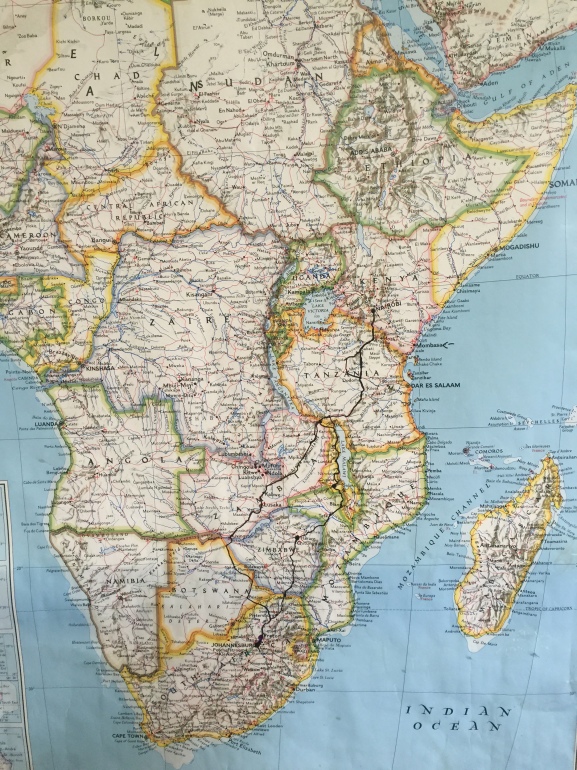
It has been 18 days since we left Nairobi for South Africa, then returned to Kenya. In that time, we passed through 8 countries, 18 border posts, covered 9,000 kilometers and saw some of Africa’s amazing beauty and realized just how vast of a continent we live and work on.

Sunrise riding is beautiful

Sunrise riding is beautiful

A BRCK Expedition is meant to be challenging, as well as provide a testing environment for the device, and of course to have fun as well – this was all of those things.

Philip fixes his broken throttle cable roadside, early morning in Tanzania

Philip fixes his broken throttle cable roadside, early morning in Tanzania

Our path to SA and back to KE

Our path to SA and back to KE

Through the BRCK, and partners like Inmarsat (with their iSavi device), we were able to stay connected on the road to the internet. We learned about the hassles of SIM buying, registering, activating, buying airtime and converting that to internet data in each country. On the motorcycles we stayed in conversation using Sena headsets, which meant we could warn each other of dangers, as well as have conversations on future products and features (of which there are many). Around campfires in the night we discussed our current challenges and ways we could make things better.

Inmarsat iSavi, BRCK, computer and solar panels

Inmarsat iSavi, BRCK, computer and solar panels

The team back home, as well as our families, tracked our progress and helped us remotely out of some problems. Whether that was trying to get the information on the gap needed on a 1983 BMW R65 spark plug, or finding a place for us to camp in the next couple hours when things got a bit dicey. Having the ability to communicate and people who anchor the expedition team were amazing luxuries to have.

We used a couple channels for public updates, including the BRCK Twitter and Instagram accounts, Open Explorer as our geographic diary of sorts, and of course the BRCK blog. However, on the trip north we also had a cool gift from the Inmarsat team of a satellite tracker for the vehicle.

The route back north to Kenya

The route back north to Kenya

A Few of the Best and Worst Experiences:

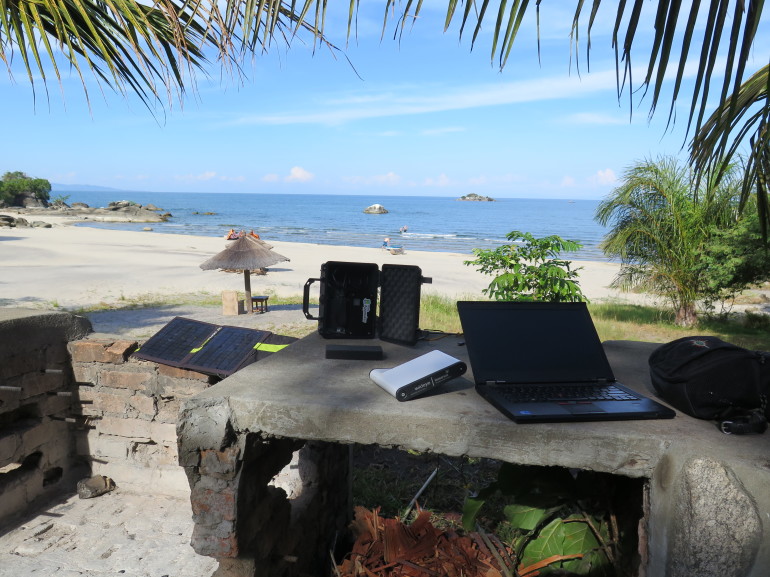
[BEST] Makuzi Beach Malawi – a beautiful, unexpected, and much welcomed oasis. We did amazingly well on our 500km that morning, so were there by lunch and had a whole afternoon to rest, fix things and have some fun before continuing.

Paul drives the underwater OpenROV

Paul drives the underwater OpenROV

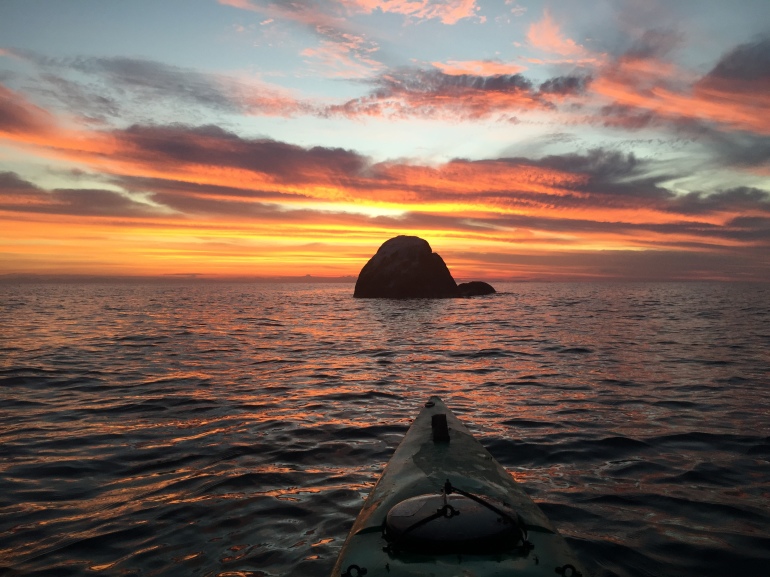
Matt catches this amazing sunrise in Lake Malawi

Matt catches this amazing sunrise in Lake Malawi

[BEST] Hospitality of Tech Communities in Africa – It was amazing to roll into Lusaka, Zambia and be welcomed by the BongoHive and find the same in Harare, Zimbabwe from HyperCube and the tech community there. Finding like-minded individuals who were wonderful hosts was just what we needed.

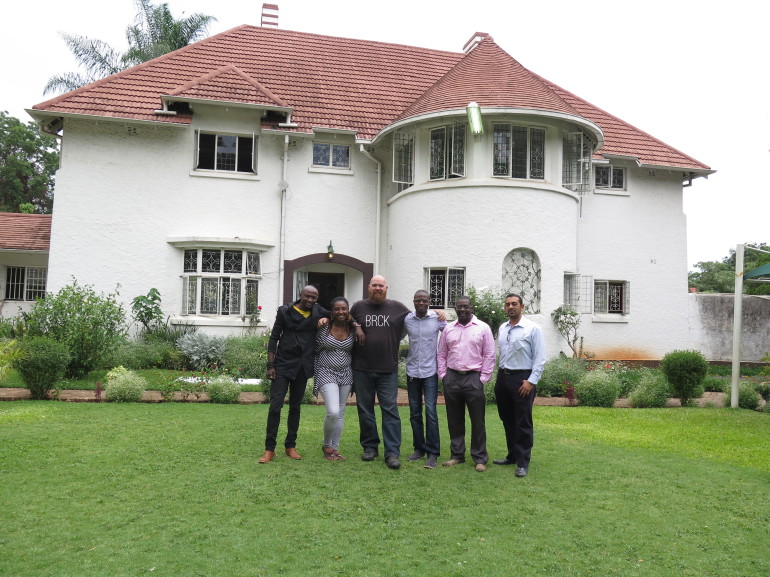
At HyperCube in Harare, Zimbabwe

At HyperCube in Harare, Zimbabwe

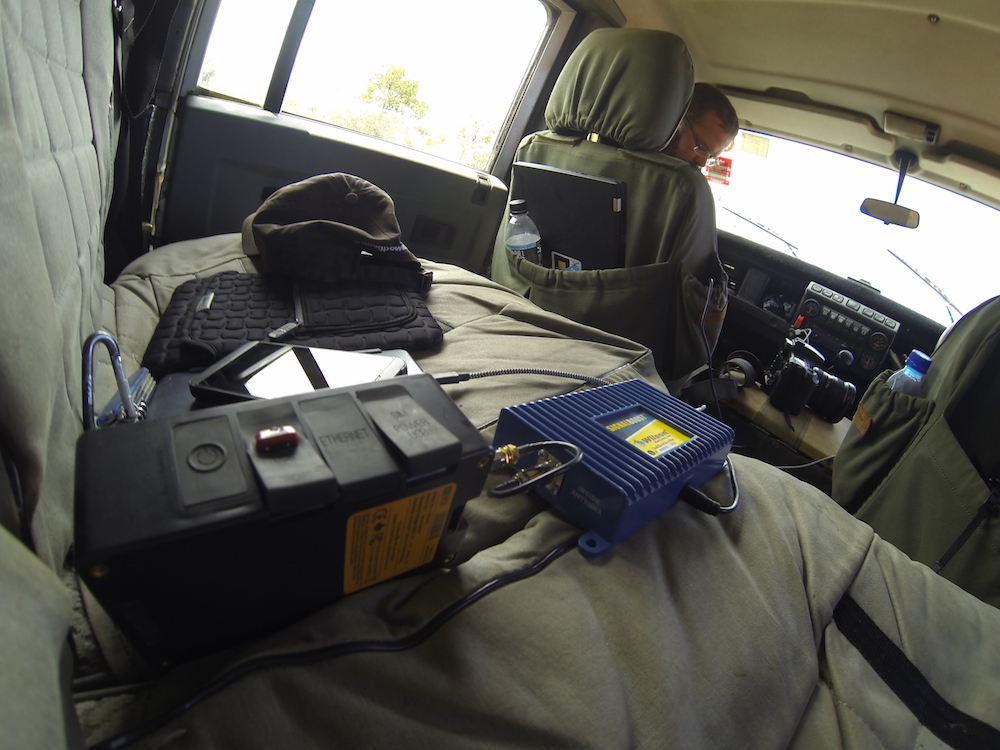
[BEST] BRCK Working Everywhere – Having someone in the vehicle working to get the BRCK going with a new SIM in a new country, as it was attached to an amp and vehicular mounted antenna, meant that we could stay connected (almost always). Rolling up on the vehicle and watching my phone sync up with messages and updates was cool, even in traffic. Mostly, it was gratifying to see the tech we had built withstand the harshness of travel and terrain, and just work.

Kurt readies a BRCK with the Wilson signal booster

Kurt readies a BRCK with the Wilson signal booster

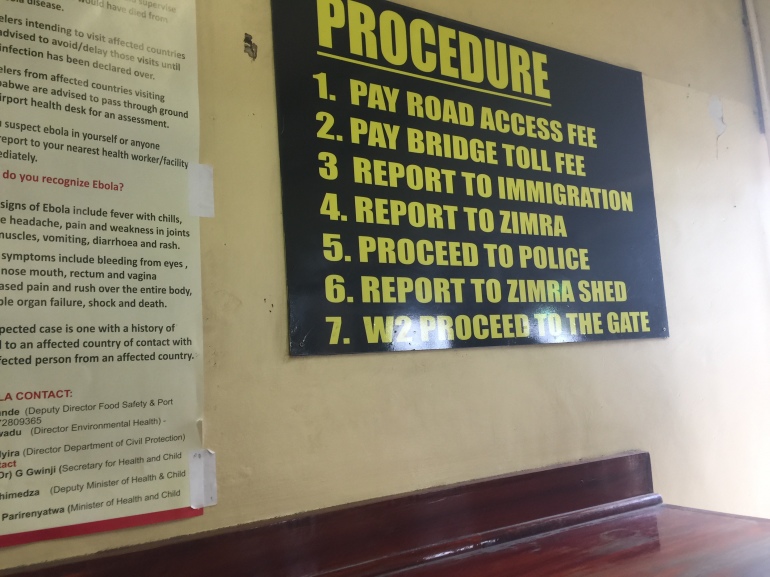
[WORST] Border Crossings – It’s a toss-up whether the Tunduma Border crossing from Tanzania into Zambia is worse than the Beit Bridge border crossing from South Africa into Zimbabwe. The first is a chaotic mess, and the second is a process nightmare. (Note: Crack-of-dawn is the best time to do both crossings)

Beit Bridge border process into Zimbabwe

Beit Bridge border process into Zimbabwe

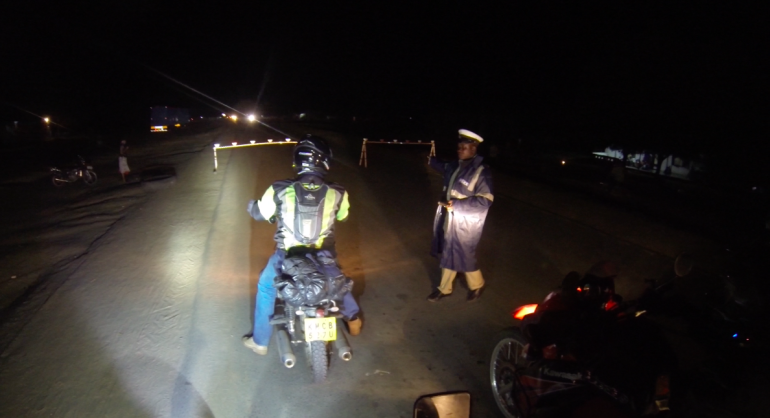
[WORST] Speed bumps and Police in Tanzania – The speedbumps in every town slow you down, plus the number of police waiting to stop any vehicle. The worst are the ones with radar guns, as their only mission is revenue generation. It seems that all Tanzanian police are unsubtly looking for bribes all of the time.

A police officer in Tanzania not asking for a bribe

A police officer in Tanzania not asking for a bribe

[WORST] SIM card frustrations in new countries – Kurt wrote about this in a past post, so won’t belabor it, but it was extremely annoying to have to figure out the obscure and opaque mysteries of getting a SIM card connecting to the internet in each country. One of my personal goals is to make this easier for other travelers in the future.

Getting Connected

The BRCKs have been working great on this trip; pop in a data enabled SIM card and a few minutes later the solid blue ring tells us that we are online.  It is a bit surreal to be corresponding with people back in the office while we are travelling through the heart of Africa.  I can watch Baobab trees go by, wave back at people resting in the shade to escape the mid-day heat and catch a glimpse of a chicken fluttering out of the way all while answering email.

We have a nice big omni-directional antenna from Poynting mounted on the bumper of our Defender and a dual band amplifier in the cab to boost the signal when things really get weak. The antenna is awesome!  It has  seen some super rough roads, some unexpected speed bumps (yes, Defender 110’s can fly!), scorching heat and heavy rains over the last 8000km and survived no problem.

mark_kamau_full

So connecting to a cellular signal has not been a significant issue this trip.  However, getting “data enabled SIM” is an adventure in every new country.  We have compiled a bit of a travel guide to help people in similar situations starting with “data enabled SIM card.”  The general procedure for getting on line looks something like this:

1. Buy a SIM card. When entering into a new country, usually while waiting for paperwork, I would find a hawker selling SIM cards a couple of scratch cards of airtime.  It’s not my forte but I would try to negotiate the price down as much as I could but we were often pressed for time.

In Zimbabwe we paid $5 (Zimbabwe has reverted to using USD) for the SIM and another $10 of credit, in Mozambique we paid 500 Metcali (???) for the SIM and 2000 for airtime (which later we learned transferred into 512MB), in Malawi the SIM card was and in Tanzania 2000TZS.  Currently Kenya, Tanzania, Zambia require some sort of identification (such as a passport) to buy a SIM so that the government can track phone numbers, ostensibly for security reasons.  Eventually most countries will probably adopt this.

2. Activate the SIM card. For example, TNM in Malawi involved dialing 100 which give and introductory recording.  Econet in Zimbabwe had no activation step.  The instructions for Vodacom in Tanzania said *104# but since we had to register the card when we purchased it we are not certain if this is actually required.

We are pushing hard to this functionality (as well as steps 3, 4 & 5) directly on the BRCK but for now we have a ubiquitous Nokia candy bar phone for this purpose.  You could almost certainly use the salespersons phone as well.

3. Add the credit as airtime. In Kenya we can add it directly as data but on this trip we always added it as airtime first.  This step is usually straight forward and the instructions are right on the scratch card.  For example, in Malawi TNM the code is: *111*scratch card number # and the only thing that changes

 4. Activate data on the phone. Often data needs to enabled for the SIM.  The instructions for TZ Vodacom are to SMS “INTERNET” to 15300

5. Buy a data bundle with the airtime. This is usually done through a USSD menu.  We will spare all the details and the menus can change at any time but for example in Malawi  on TNM:

  1. Access the menu is accessed with *100#
  2. Select “2” for “Bundles”
  3. “1” for “Available Bundles”
  4. “3” for “Internet”
  5. Then select which bundle. (We had only purchased 2000 Quacha of credit so we were able to get 512MB)

Now it’s ready!  Below are a few of the SIM’s we collected during the course of the trip.

IMG_20141213_112636

(At this point we often popped the SIM in the Firefox Flame phone.  This allowed us to verify what type of data connection is available; i.e. Edge or 3G.  And using a smart phone also allows us to check which APN the phone uses so we verify our BRCK table of APN settings.)

Put the SIM in the BRCK and wait for it to connect!

That all sounded quite straightforward; in reality there are many variables.  So here are a few other suggestions & comments:

  • The USSD menu may or may not be in English but we always found the English option so keep trying.  Spend a few minutes getting familiar with the options in the menu.
  • If something doesn’t work; try again a few times before trying something else; many times the network did not behave and the menu would time out or our credit would not go through.  So we would try and try some more until eventually it worked.
  • In Tanzania we had to re-registered our SIM simply because it was not working and so we lost a day with that card.
  • Budget half an hour or more to register and get the SIM card all working; ideally with the salesperson.  We often thought it would be a quick process but in reality it always took time, for one reason or another.
  • Keep the little instruction sheet that comes with the SIM and try to get as many shortcuts as you can from the locals.  Things like check data balance, check airtime credit, etc.

We are aiming to streamline this process to save the user from all this hassle, especially for travelers.  We would like to give someone a BRCK in Nairobi, maybe even with SIM cards from all the countries they will visit, and all they need to do is pop in a new card for each country; BRCK takes care of the rest.  In the meantime hopefully this guide was somewhat helpful.

Through Mozambique and Malawi

Before we left Nairobi, 2 weeks ago, I though that a 500km day on a motorcycle was a long time. Now I just ask, “well, what will we do in the afternoon then?”

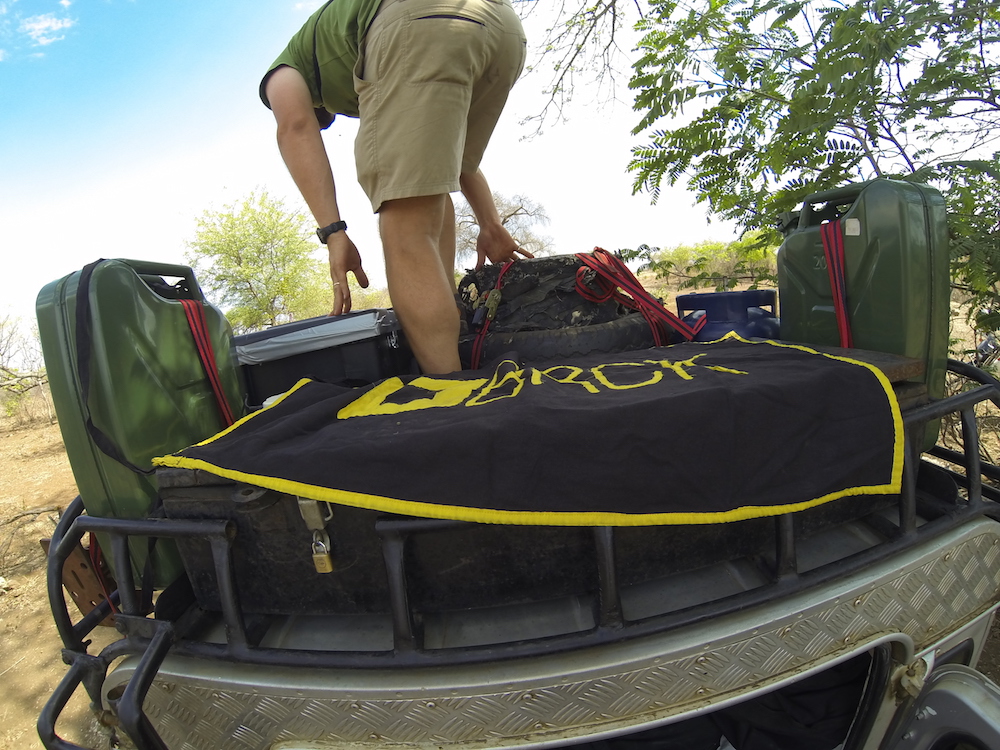
BRCK truck top

BRCK truck top

Our setup of BRCK plus Amp plus Car antenna

Our setup of BRCK plus Amp plus Car antenna

We left Harare, where the Arensen’s had hosted us for two nights in their lovely home, for a bit of a long day. We were gambling that we could make it through the Zimbabwe-Mozambique border AND then the Mozambique-Malawi border in good enough time to get to a campsite by the end of the day. A quick breakfast of chai, coffee and pre-boiled eggs underneath a baobab tree saw us to the first border in good time.

The Douane border crossing is less busy than it’s Beit Bridge counterpart. Leaving Zimbabwe, the customs and immigration officials are efficient and helpful. Getting into Mozambique was equally problem-free, especially since we had all gone to get our visas already.

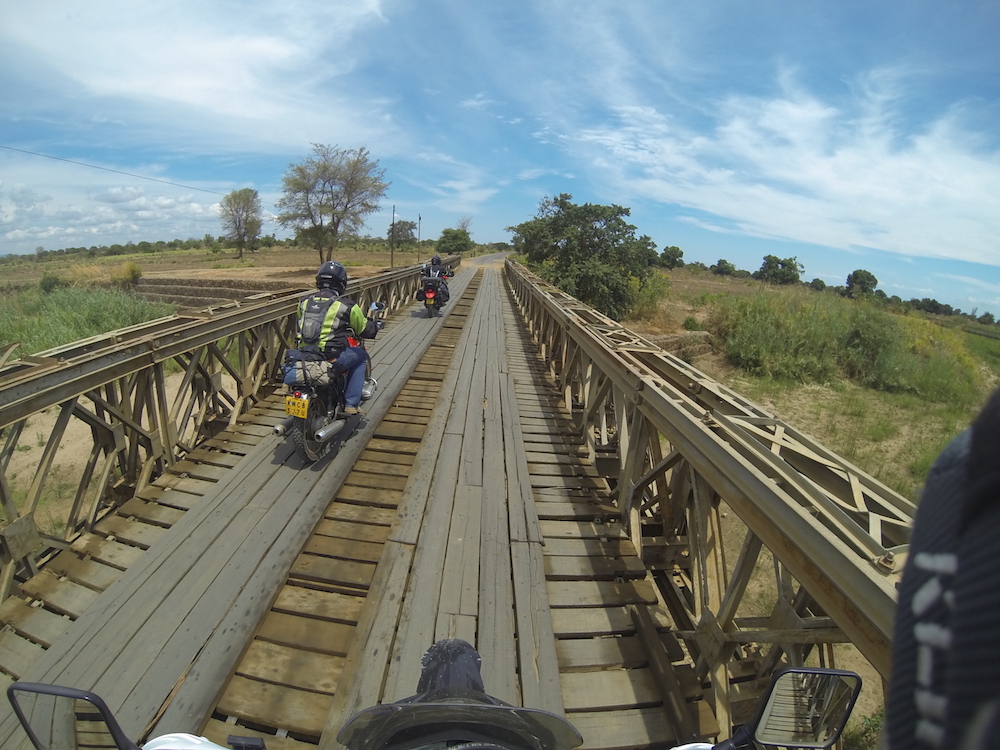
A rickety wooden bridge in Malawi

A rickety wooden bridge in Malawi

Philip, solving problems in Kenya, while on the road in Malawi

Philip, solving problems in Kenya, while on the road in Malawi

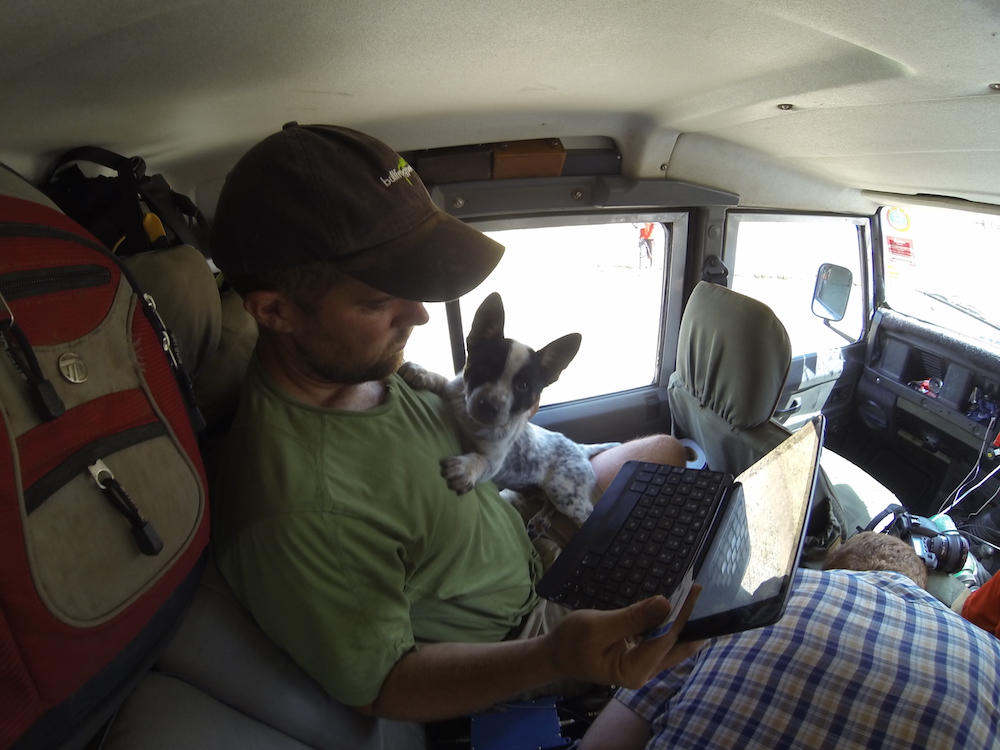
Kurt with Lobo in the vehicle

Kurt with Lobo in the vehicle

My Suzuki DR650

My Suzuki DR650

Now, Mozambique, this part of it anyway where you shoot across the Tete corridor towards Malawi, is a hot, dry and barren land. The only thing of any note is the nice bridge you cross over the Limpopo river passing through the city of Tete. Besides that, I’d suggest it’s not a place you want to spend any time.

Two interesting things happen as you run to the Malawi border. First, you realize that you cross back and forth between the two countries a couple times on the way. Second, when you pass through the Mozambique side of the border you’re still 5km from the Malawi border crossing. Strange… but, again border crossings are not about security, they’re about revenue generation.

The Mozambique customs officials had clearly never seen a Carnet de Passage (it’s like a passport for your vehicle), so they acted like it was something they couldn’t stamp. We were able to convince them that it was something normal, and that their colleague at the previous border had stamped it, so they could as well. Stamped and moving, we shot off for the campground, as we saw a storm rolling in.

It was at this time that our small team mascot, Lobo the Australian cattle dog puppy, decided to have an explosive experience inside of the vehicle. Many curses were heard as people sprayed themselves down, and cleaned out the dog’s carrier. Praying for a dry night, we took off a bit behind schedule, and still managed to roll into Bushman’s Baobabs (great place), and had a warm still night of sleep.

500km up Lake Malawi

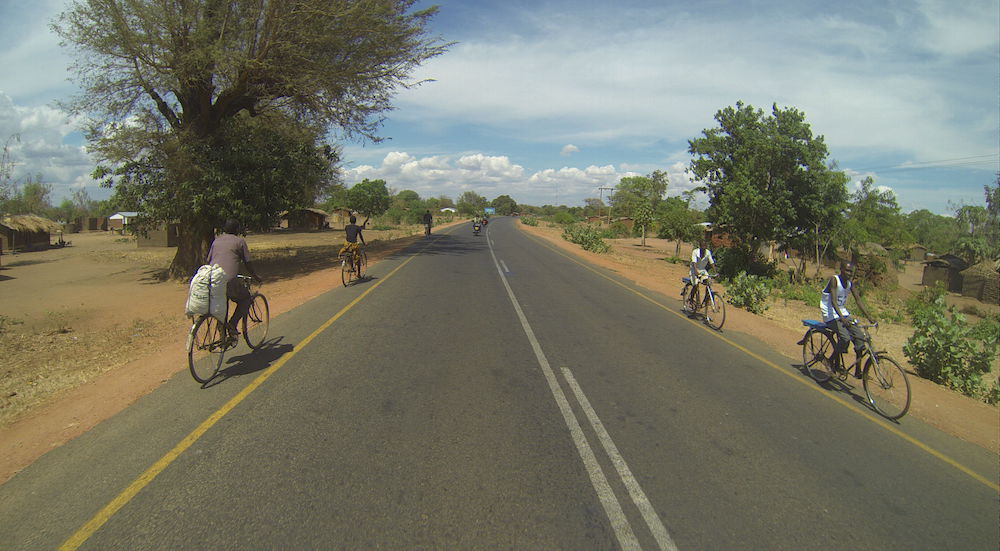
Off early, as always, we were half-way to our destination by 9:30am and got to camp by just after noon. As an aside, I think the word “Malawi”, and the flag symbol, all are pointed at the meaning of “land of the bicycle”. We saw so many people on bicycles today, more than in any other country we’ve been to.

The bicycles of Malawi

The bicycles of Malawi

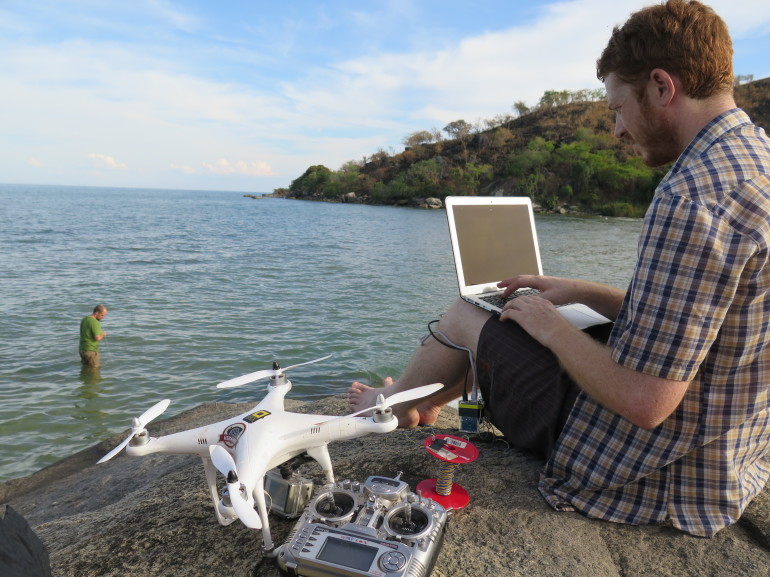
Makuzi Beach area of Lake Malawi is beautiful, and having a full afternoon ahead of us was something we didn’t know quite what to do with. So, of course we broke out the drone and OpenROV to have some fun.

We got some shots.

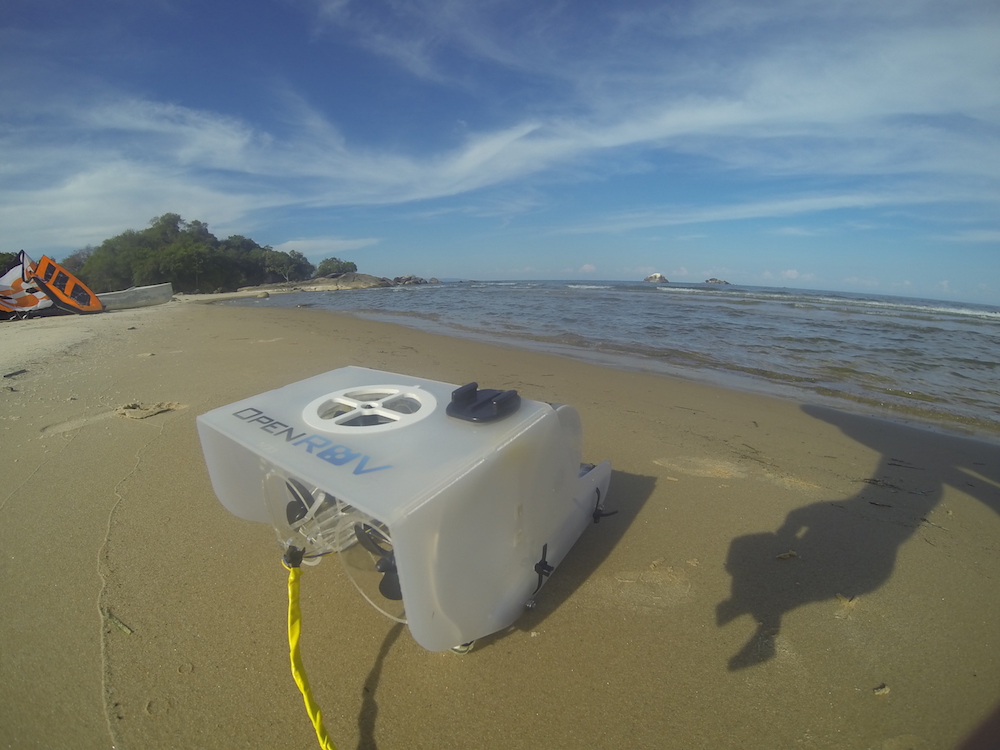
The OpenROV set to try Lake Malawi

The OpenROV set to try Lake Malawi

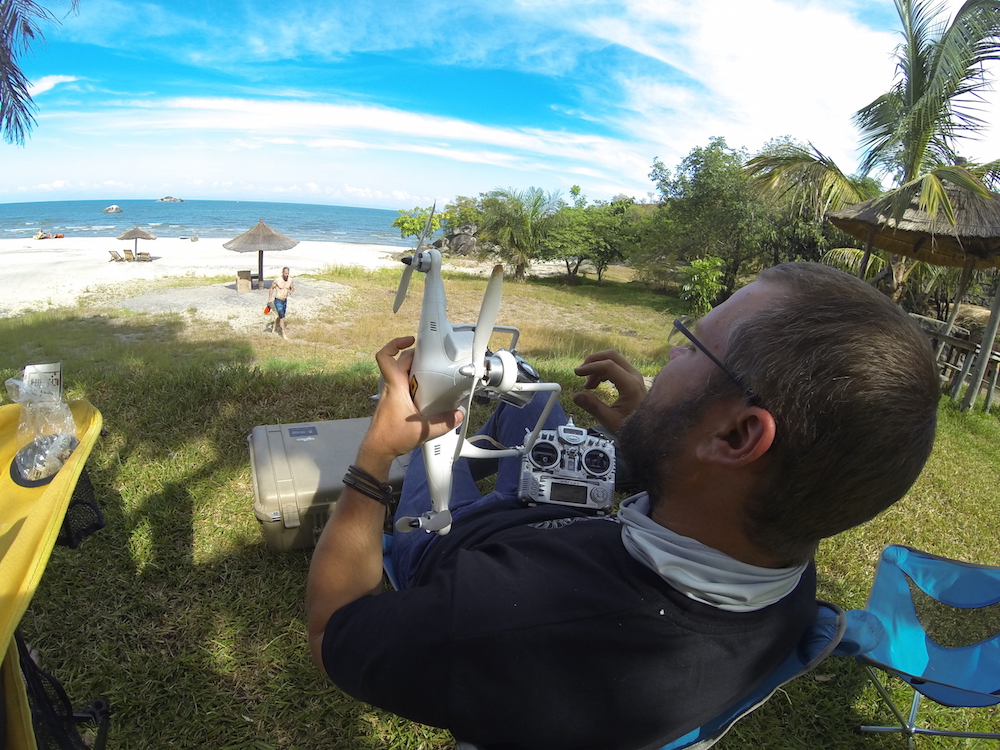
Philip getting ready with the drone

Philip getting ready with the drone

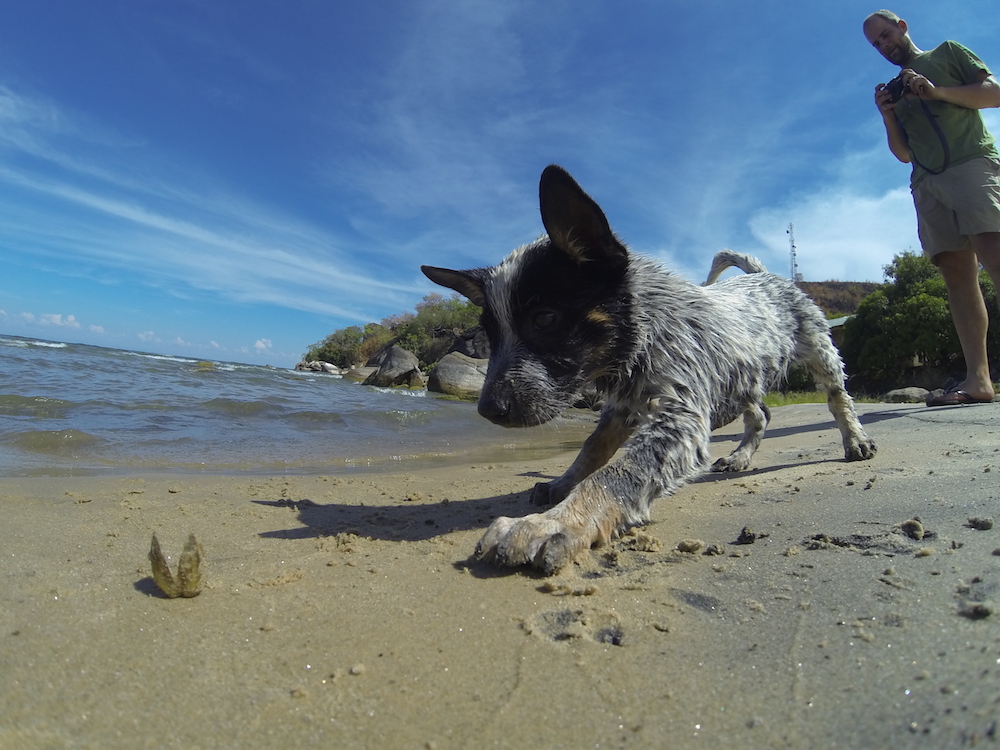
Lobo checking out a shell

Lobo checking out a shell

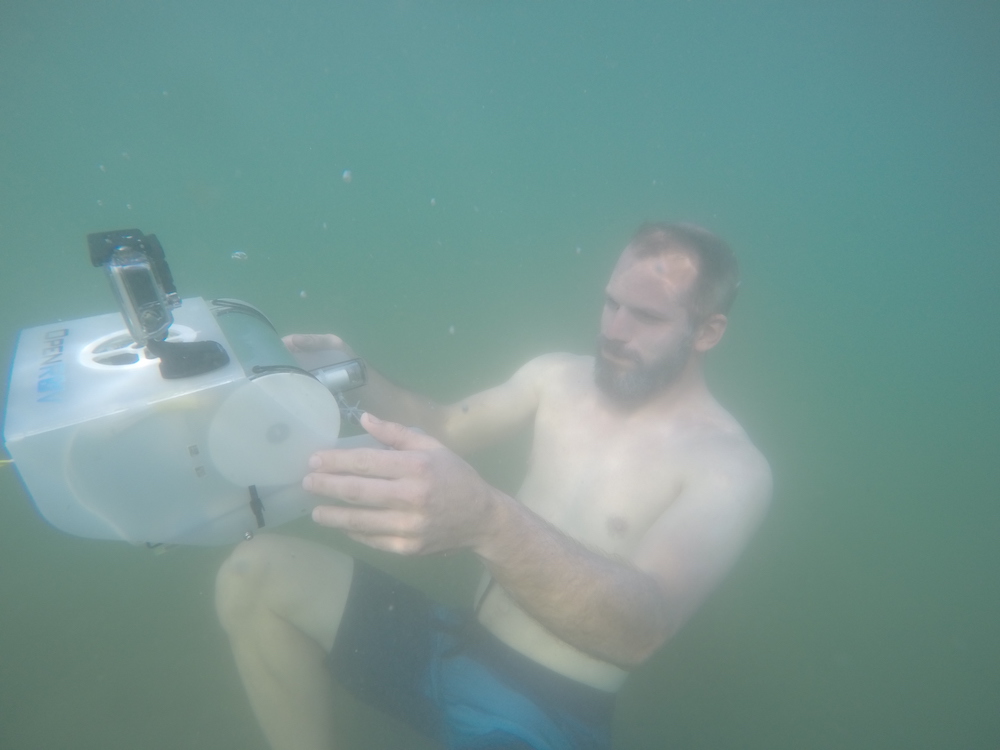
Matt Schoenhold of Teague playing with the OpenROV

Matt Schoenhold of Teague playing with the OpenROV

Philip managed to crash the drone into the lake, so we’re trying to see if we can resurrect it. (Update: we dried it out all night and now it’s working again. DJI makes an amazingly hardy device)

We had a grand idea of Paul driving the OpenROV underwater vehicle under a rock and taking a video of someone jumping into the water. We kind of did that, the problem was the cable was a bit short. The other problem was that it cut my toe with a blade as it came up directly underneath me. The good thing is that we had a lot of fun trying and leaned some of the limits of the vehicle.

There is now a beautiful, slow moonrise happening at 9pm, over Lake Malawi. We’re all well, fat and happy. The bikes and Land Rover have been behaving well. We’re set for our early AM departure as we have 750 kilometers and a border crossing to go through.

The Emperor has no clothes

Since I was a child I have heard stories regaled of South Africa. The modernity. The beauty. The ethnic diversity. Even though I remember seeing signs growing up in West Africa that said “Apartheid a bas!” ( English: down with Apartheid), I have always had a positive and idealized view of this great stalwart of the African continent. From my naive perspective, it was what the rest of us should aspire to realize in our own corners of the continent. I visited SA for the first time in the early 2000’s. It definitely had some African feel to it, however, the fear in those days was palpable. Entering a business was an ordeal of security checks. The malls had the same scanning equipment as an airport. Yet, in the leafy suburbs of Johannesburg, there was an amazing sense of tranquility, beauty, and progress. It was easy to do business with South Africans and their sense of optimism for their country – and the continent – was overwhelming.

Fast forward nearly 15 years and I find myself sitting in an altogether different country. While the roads are just as spectacular crime is still a problem – although the sense of fear is clearly diminished. Everything about this country screams modernity and progress. But the veneer is thin. What lies beneath the glossy shell is insidious, corrupt, and diseased. And it is getting worse.

IMG_0756

In the few days that we spent in South Africa, we personally felt the pinch of the widespread power shedding that is going on due to insufficient, aging, and poorly maintained power infrastructure. We lost an entire day from our schedule because the Land Rover shop we were using removed the tyres from the wheels and subsequently were cut off from power and unable to remount them. As I spoke with the proprietor he shared that another customer had their vehicle completed but the shop could not raise the lift enough to release the locks that would allow the vehicle to be lowered. This is South Africa! A “european” country at the base of Africa. How could these kind of infrastructure issues be happening here? As I continued my dialog the old man told me that he was even considering buying a generator to keep up productivity. That would have been my first thought – given that our office and my house already have generators – but in this part of Africa that notion is foreign and frightening.

This lack of realistic perspective on the rest of the continent came up during our discussion with another South African technologist who is focused on the education sector. The problems that he has been dealing with are related to choosing HP over Cisco routing equipment for the schools where he works. Although I’m sure that is important in his context, these things mean nothing where we live. To his credit, this guy is traveling around southern Africa with his family and exploring the challenges that exist for education outside of South Africa. He understands the problem enough to have been very excited about BRCK. I sense that he is willing learn to adapt his thinking and will ultimately be very effective at solving the real problems that exist north of the Tropic of Capricorn.

While there are plenty of subtle (and often not so subtle) clues that this southern civilization is crumbling from the inside out, there is hope. And not just a hope for survival but a hope for a rising tide extending well beyond the smooth roads and superhighways.

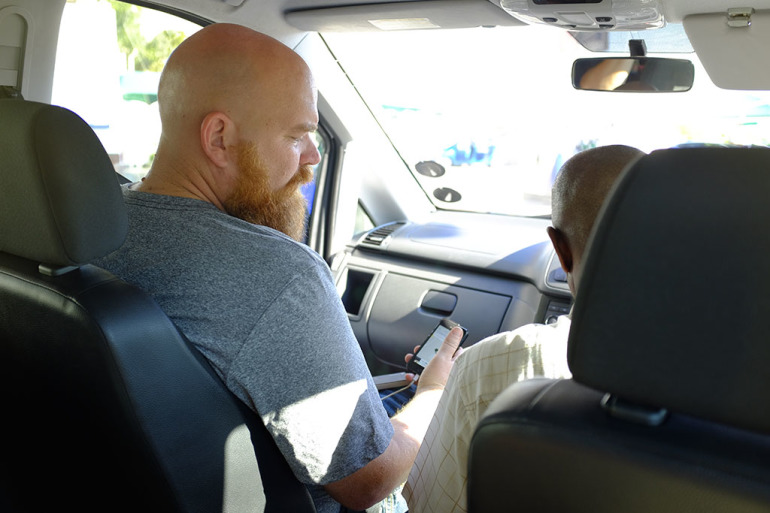
During our time in Jozi we relied heavily on Uber for our transportation. I had never used this service and I was blown away by the convenience and reliability. During each ride I would query the driver with the same questions on how they liked driving for Uber, how they were doing economically, and their plan forward. What I found was a bunch of very hard working, polite, and intelligent entrepreneurs at various stages of the business lifecycle. Some were driving for the owner of the car and saving their money to buy their own car. One had just bought his first car. You could see the pride and optimism of this older gentleman as we shifted through Joburg in his new Toyota Corolla. This man had gone from being an employee of a metered taxi service to a driver of someone else’s Uber car to now being an entrepreneur in his own right. An inspiring story. The final driver that I used was driving a C-class Mercedes. He now owned a couple of cars and was working to manage a handful of drivers. He was driving that day because his previous driver had gotten into an accident and damaged the car. He struggles to find good employees but he was excited about the new guy who starts on Monday.

_DSF9584

I absolutely adore these examples of the disruption that technology brings to business and the resourceful application of hard work at the points of disruption to create new opportunities, businesses, and jobs. As African technologists (particularly as BRCK), this is our real potential to have an impact and build a sustainable and prosperous community.

On Friday, Erik and I had the chance to sit down with a South African who is the fund manager for a very wealthy German technologist. Marc has a very down to earth and insightful view to technology and business in Africa. He sees beyond the glossy shell and recognizes the challenges that underly his own country along with the potential for the rest of the continent. It was odd for Erik and I to talk with an investor who didn’t need to be sold on the potential and opportunity for BRCK in Africa. Instead we focused on our real issue which is scaling production and distribution to meet the untapped potential for BRCK. Marc figures that we could place an advert in Joburg and sell a few thousand BRCKs overnight to South Africans who are frustrated by the intermittent power and unreliable connectivity – sounds more like Naiorbi than Johannesburg. Because he has some experience in telecommunication equipment and infrastructure, Marc seemed particularly excited about the idea for Supa BRCK. A weatherproof BRCK with multiple ethernet and multiple cellular connections that could serve as a critical component in building reliable corporate networks for African schools, business, and governments. It was reassuring and encouraging to spend time with someone who knows the realities on the ground, sees past the veneer, and is still excited for the opportunity to build African technology to solve African problems.

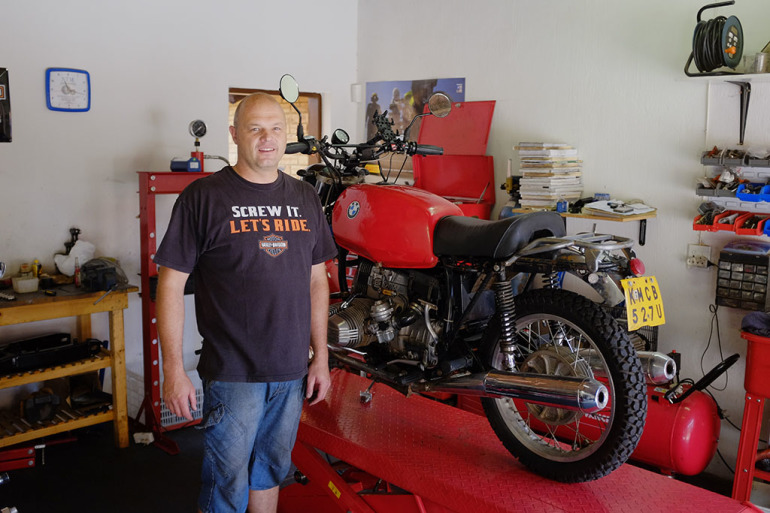
My favorite experience of the trip was meeting Marcus Watson who runs a BMW motorcycle repair business. We were referred to Marcus to help sort out some issues on my bike and get it ready for the return trip. Even though as a sole proprietor his schedule is packed, Marcus gladly took in my bike to get it prepped for the hard road ahead. I immediately appreciated Marcus’ knowledge on these bikes and his attention to detail. He knows these machines, how much abuse they can take, and how to keep them running reliably across Africa. As he poked and prodded my bike I got to hear his story of being a first-rate engineer in the power industry, getting retrenched as South Africa struggled to balance racial distribution in the work place, and ultimately turning his hobby into a thriving business. Although Marcus is saddened to see how poorly the power infrastructure is being maintained today, he isn’t the kind of person who gets bitter and then sits down to complain. Instead he took his talents and commitment to customer service and built a business and reputation as a world class motorcycle mechanic. He didn’t flinch at the fact that my bike was a bit Kenyan in its mixed component heritage and adapted to the changes that Rick and I have made to make this bike suitable for this trip. What saddened me in my conversations with Marcus is that he is considering emigrating to Australia. I have no doubt that he would find a wonderful life there but I am disheartened to think that Africa will be losing such an amazing resource. I hope one day that guys like Marcus are willing to travel north and set their sights and talents on the challenges facing the rest of Africa.

_DSF9598

In the end, I came away from our trip still a little glassy eyed about our cousins in the south. I don’t think that I could live there but I certainly don’t mind visiting. I also think that there is a real opportunity for Africans to come together in this time where Kenyans have insights into dealing with poor infrastructure and South Africans have insights into proper engineering. It would be a great benefit to both sides of the Limpopo River to work together to solve challenges and problems that exist in each others back yards. I truly hope that these present and future challenges in South Africa will force this society to unleash their best and brightest onto the rest of the continent.

SKELETONS OF CIVILIZATION

mark_kamau2

We had a long 17 hour day on the road yesterday. We did this to compensate for over 10 hours lost fixing the Land Rover in Johannesburg. We started at 4:30 in the morning and stopped at around 10p.m. But that has become normal.  Covering over 820km a day is something we have stopped noticing too much. Something else was noticeable getting into Zimbabwe from South Africa. There was a surreal binary switch from Africa-lite to the real Africa.

Right from the border, after the South African side, you drive into this huge frenzy of hundreds if not thousands of people, busses, trucks and people offering to fix the border process for you so you clear in a few hours and not take the whole day. I understood why Beitbridge border in Zimbabwe is considered one of the worst crossings in the entire continent. One experienced traveller told me it took him 3 days to get through once.

After 3 hours of Erik’s quick thinking and some local help, we were lucky to go through. Once inside Zimbabwe, there was a surreal feeling on former optimism and progress. A restaurant that was once nicely done, now a shell of its former glory. A mall with half the shops in business, roads that must have once been beautiful to drive, but slowly withering from the edges in, making driving and riding on them quite dangerous, especially coming against wide load trucks in blinding full lights in the pitch black wilderness. We were back to real Africa.

We tried to get a local SIM in a mall and this too was a surreal experience. We have done this in every country to test the BRCK. Once a full mall now with only a handful of shops.  This on the other hand had formed the perfect breeding ground for hustlers. Local fixers who could get you anything you had come to buy from the mall. They have SIM cards, airtime, you name it.

The cell connectivity is the worst we have found so far. Even with a multi directional antenna, we could only connect sparingly across the journey, which was not surprising since along the road down, there was nothing. Long stretches of amazing scenic natural beauty but little signs of civilization.

One thought I had as we drove from village to village was how could access to information affect the situation in Zimbabwe? What if these school kids, vendors, villagers had access to the internet? How would that affect their situation? Their country? Thats fascinating thought.

Dashing back

Paul and I flew down to Johannesburg on Monday and spent some time helping prepare for when the team arrived.  We looked for mechanics shops for all the vehicles, I had some meetings and Paul prepared for Maker Faire.

Now we get to join the guys as we dash back up to Nairobi!  I have wanted to do such a trip since I was a high schooler in Nairobi and Paul has also had visions of taking a motor bike across Africa. So we were both very excited to have this opportunity.  And we still are… but today didn’t start off the way we would have chosen.

This Mark and I went to check on how the Land Rover was fairing.  The mechanic was already there, trying to get us on the road as early as possible.  Unfortunately it didn’t have an indicator console, a steering wheel, a passenger door panel, nor any wheels on when we arrived.  Johannesburg has been suffering from load shedding for a while now and we got to feel the pain yesterday.  Without electricity, the tire shop was unable to get the tires ready yesterday.  So while he went to get the tires Mark and I got to installing a GPS tracker that our friends at Inmarsat had generously loaned us.  It didn’t take to long to give it power and arrange the antennas, unfortunately the truck was inside the shop so the GPS was unable to connect.

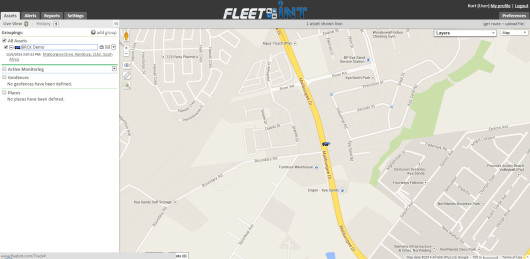
By about 12:30 the truck had a brand new set of wheels, things were settled with the mechanic and we were on the road.  Unfortunately that lasted about 10 min.  Coming up to a stop light something started squeaking and 100m later the truck screeched to a halt; a wheel had seized up.  We were not able to call the mechanic so I quickly just jogged back to the shop, which luckily was less than a mile back.  The mechanic had to make a couple of trips back to the shop so in the mean time I figured, hey, I wonder if the GPS is working.  So on the side of the road I booted up my computer, got online (we are BRCK after all!) and sure enough, there we were sitting on Malibongwe Drive!  We are currently looking into feeding that data live to our other feeds so stay tuned!

malibongwe

It turns out the rear stub axle had seized.  We were able to let the affected wheel coast and drive back to the shop.  By 4:30 we had removed the bad axle, cannibalized a good one from another Defender 11o and were back on the road.

Meanwhile back at the guest house the guys had simply had to wait for us.  As soon as we rolled in the driveway they were tossing gear up on the roof rack and filling up the back.  And at 5:30, about 9 hours after our ideal departure time, we were on the road up to Zimbabwe.

Fortunately the roads in South Africa are amazing and the traffic very organized.  We made excellent time until 8pm.  Then we hit a weather system which included heavy rain and some incredible wind.  The bikers got soaked so we stopped around 9pm so they could change and we could get some food.  But the system passed us while we were stopped so we had to get through it again.  After running it twice the bikers were just frozen so we called it a day, found a hotel to get a decent nights sleep.

To make up for the lost time we need to be on the road again in about 4 hours!  But that’s OK, as always told my campers years ago, “It’s not an adventure if everything goes as planned!”

BRCK at Maker Faire Africa: From Prototype to Production

The BRCK and Gearbox tables at Maker Faire Africa in Johannesburg

The BRCK and Gearbox tables at Maker Faire Africa in Johannesburg

We’ve been excited to show up at Maker Faire Africa (old site) in Johannesburg for quite a few months, so actually being there yesterday was a big deal for us. Especially as we had driven 4,400km to be here and it was our primary goal for the journey.

The BRCK table certainly drew our fair share of interest at Maker Faire Africa this year. While Maker Faires elsewhere often feature the likes of fire-breathing dragon statues and other impressive works of art, making in Africa has a slightly different tone. The Faire in Joburg had plenty of amazing artwork – not least of which was a 30-foot tall LED light sculpture made of CNC’ed plywood and steel that looked amazing as the sun went down – but it also featured a leveling device for brick layers to make high-quality masonry easier to achieve. There’s a strong enterprising spirit to many local makers, and lots of them were keen to learn BRCK’s story of starting a hardware company in Africa.

From questions about sourcing components, to finding access to tools, financing, and marketing expertise, makers from across the continent wanted to know BRCK’s story of taking a uniquely African innovation to commercializable product. We held a joint workshop with the Gearbox team on how to take a product design from idea to prototype to production, and showed lots of people how they could leverage their experience in the local market and knowledge of the local context to develop innovative new products that no one else in the world would be capable of making.

Maker Faire Africa 2014 workshop

3d printed artwork at MFA 2014

A 3d printing station at MFA 2014

While this year’s MFA is a bit smaller than in years past, we were still in great company with people building drones, robots, DIY kids electronics kits, 3D printers and a guy who built his own art car and skinned it in denim. (The best coverage is found on HTXT.africa. There were these guys who had built a small remote-controlled hovercraft who kept sliding it around, as well as a whole space setup for people to 3D print and make their own things.

Prototyping to Manufacturing

MFA is a great event, if for no other reason than that it brings together the engineers and inventors in an area together. There’s a lot of learning and connections made, and then more things happen afterwards. The other thing that happens is that people who are inventing new things are found by media and business people who can help them.

Last year there wasn’t a Maker Faire Africa, so we at BRCK weren’t able to showcase our prototype-level devices. This year, we had one of the more polished items at the event.

There’s a lot that needs to happen between your first hacked together prototypes and a real production run of a new product. This is why I think providing an on-ramp to manufacturing is the obvious place to go next with Africa’s inventors. This is why we’re helping to build Gearbox in Nairobi. We need people, training and machines that can take guys with great ideas and early prototypes, and move them into becoming real businesses.

The foundation is a lot more hardware-based prototyping, whether that’s Fundibots in Uganda, MakerHut in Zambia is trying to foster a community around hardware, and there’s a lot of activity in robotics groups by engineering students in Kenya, South Africa, Egypt and Senegal much of it happening in their respective tech hubs.

[As an aside: read Bankole’s post on “Africa needs an Industrial Revolution]

The next layer is what we need to plan for next. So, while we’re thinking of Gearbox in Kenya, there are others doing the same in South Africa (who has always had a great manufacturing base). What others are out there? Who else is creating a program, space and bringing together that city’s inventors and engineers to not just create prototypes, but take things to market?

Expedition Technology – Part II

Thanks goodness for BRCK. 

Unfortunately this will be my last expedition post this trip. I’ve had to leave the guys early to make a dash north to sort out some business. If it weren’t for BRCK I’d still be in Livingstone. When the news came that I had to come back to Nairobi, we knew we had 40 minutes to get flights. The BRCK was fired up, with in a minute we were online, and 4 of us rapidly trying to find the fasted route north. Its times like this that the utility of BRCK really shines!

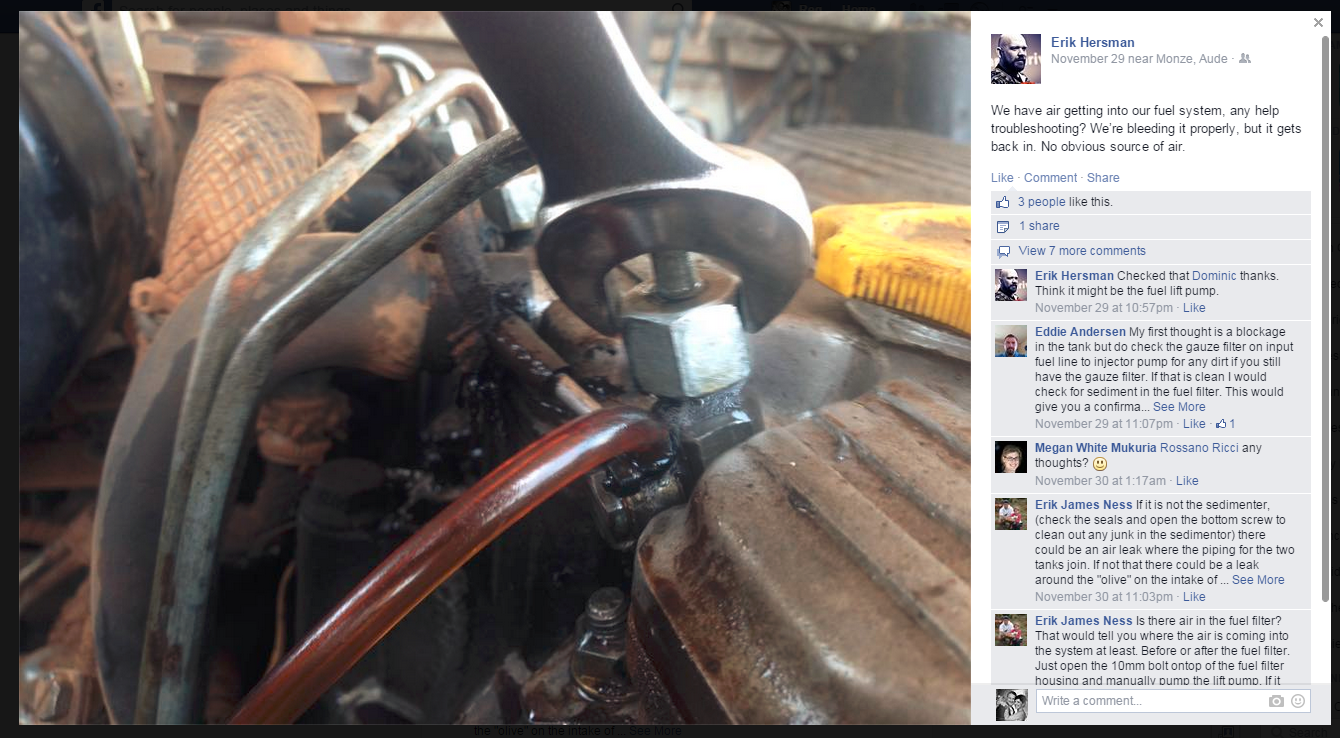
Earlier in the day the BRCK became a lifesaver as well. On the road from Lusaka to Livingstone, a short 563km journey, the Land Rover developed a nasty fuel system problem with the fuel lines filling with air every 20km or so, stalling the truck mid drive. Stopping every 20km to bleed the fuel system makes for a LONG trip (14 hours I believe!). Out came the BRCK, and everyone who wasn’t driving was delving into Land Rover forums the world over trying to work out what the problem was, then trying twitter, facebook and instagram asking for help. Eventually diagnosing the problem as a faulty lift pump. Another quick Google search for a replacement lift pump in Livingstone and we were on the way again.

Trying to get help with a buggered 300TDi fuel system

Trying to get help with a buggered 300TDi fuel system

Power issues again. 

We are an expedition company, and as such, our vehicles are kitted out more than most. We’ve got a 1500W 110V inverter wired in to the battery, 4 x 5A Cigarette jacks, and dual 12V batteries powering all the kit we have on the road. The biggest problem? Finding cables! Every time we have to charge a GoPro, power the Satellite internet or charge the motorbike headset, a mad scramble ensues trying to find the adapter, cable, or correct power BRCK. This is why we love the microUSB. As from Part I, we know its not perfect, but now we are torn. What should we use!

Knowing your limits

Getting the BRCK online in Tanzania and Zambia has been really easy, in fact, other than getting SIM’s and working out the crazy commands, the BRCK’s have been working flawlessly. One area that has popped up constantly is ‘how good is my signal now’. Driving from village to village the signal fluctuates quite a bit. We are working now to streamline the process of finding out how your BRCK is doing now.

Back in Nairobi we are working feverishly to take what the team and I have learnt to get some updates ready for the trip north on Saturday.

Working on new wireframes with information from the expedition south

Working on new wireframes with information from the expedition south