mathare valley kenya mesh

Digitizing Mathare Valley With Africa’s Largest Mesh Network

By Nivi Sharma & Loyce Chole

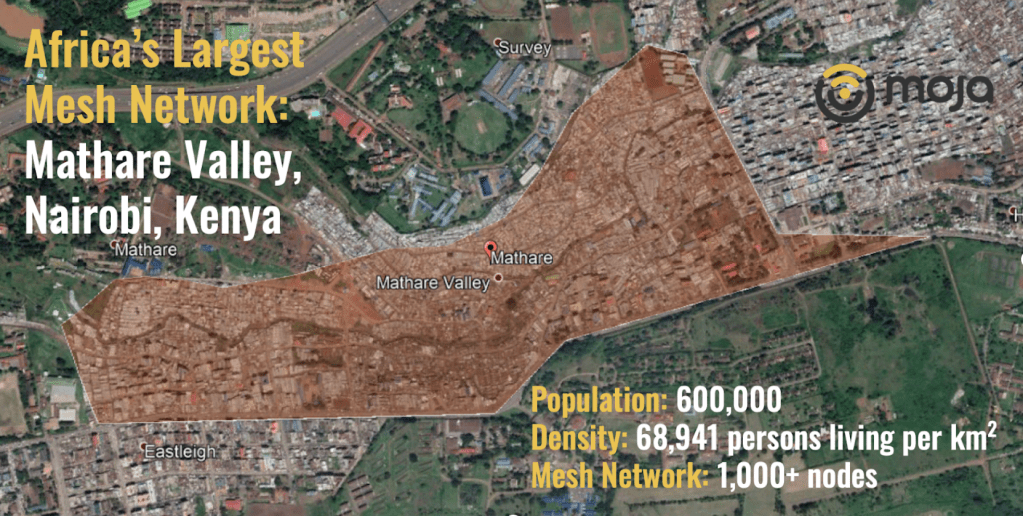
Mathare Valley is one of the oldest, poorest, most densely populated slums in the world. Despite having over 60,000 people living per km2 (in contrast to the national average of 82 persons per km2), many people in Kenya are not aware of the poor living conditions in the region. It’s rare for people in the rest of the world to even know about Mathare Valley, let alone understand the impact of the digital divide on their livelihoods.
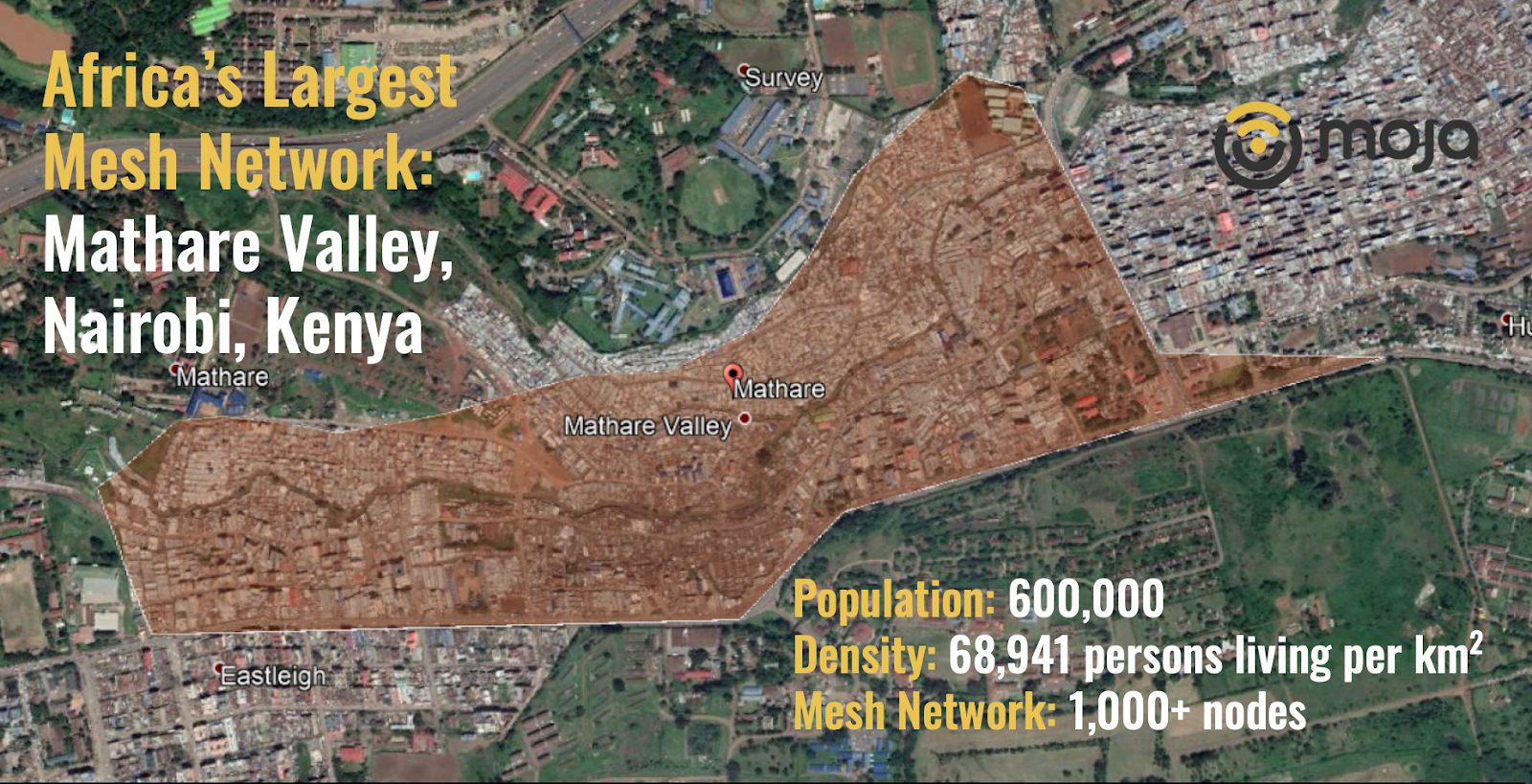
Mathare Valley has the same population as Boston, but more than a hundred times smaller in size

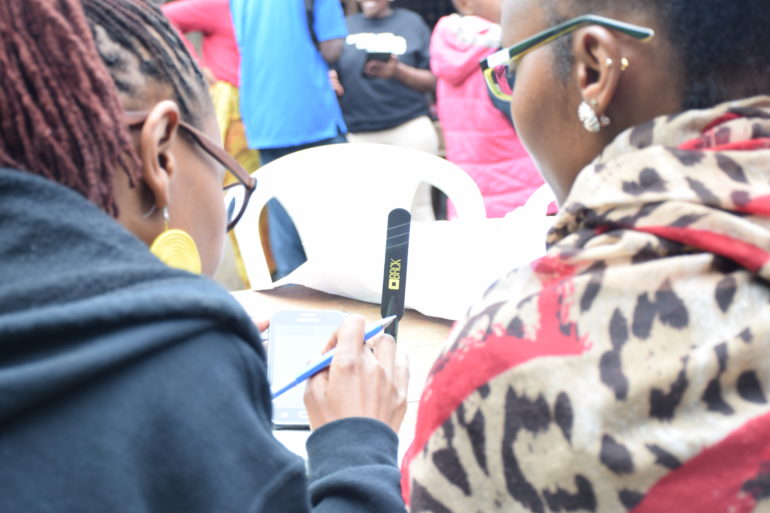
BRCK has connected more than 2 million people to the internet over the past 3 years. This year, we have embarked on a bold and ambitious project in partnership with the Deutsche Gesellschaft für Internationale Zusammenarbeit (GIZ) GmbH. Within the framework of the German Federal Ministry for Economic Cooperation and Development (BMZ) funding program develoPPP, GIZ and BRCK joined forces to bring Moja free WiFi to Mathare Valley. The partners are installing a technical infrastructure that connects the entire slum population of at least 600,000 people. This infrastructure is the largest mesh network in Africa where residents are able to access the internet at no direct cost. Using their smartphones, users perform digital tasks on the Moja platform like watching an ad or filling out a survey to earn Moja points that they can then use as credit to access the internet. Moja is also a repository for health and education information that is disseminated to residents, helping them cope with the economic impacts of the pandemic. 
5,000 SMEs and entrepreneurs are being trained by our partners, Shining Hope for Communities (SHOFCO). SHOFCO, is a Kenyan, grassroots non-profit that aims to build urban promise from urban poverty. SHOFCO are training Mathare business owners on how to leverage the free Internet service to unlock the potential of digital access to jump start or grow their businesses; and digital services to gain business skills as well as take advantage of government and social services. A further 5,000 residents of Mathare will be trained on basic digital skills giving them the tools to participate in the global economy.

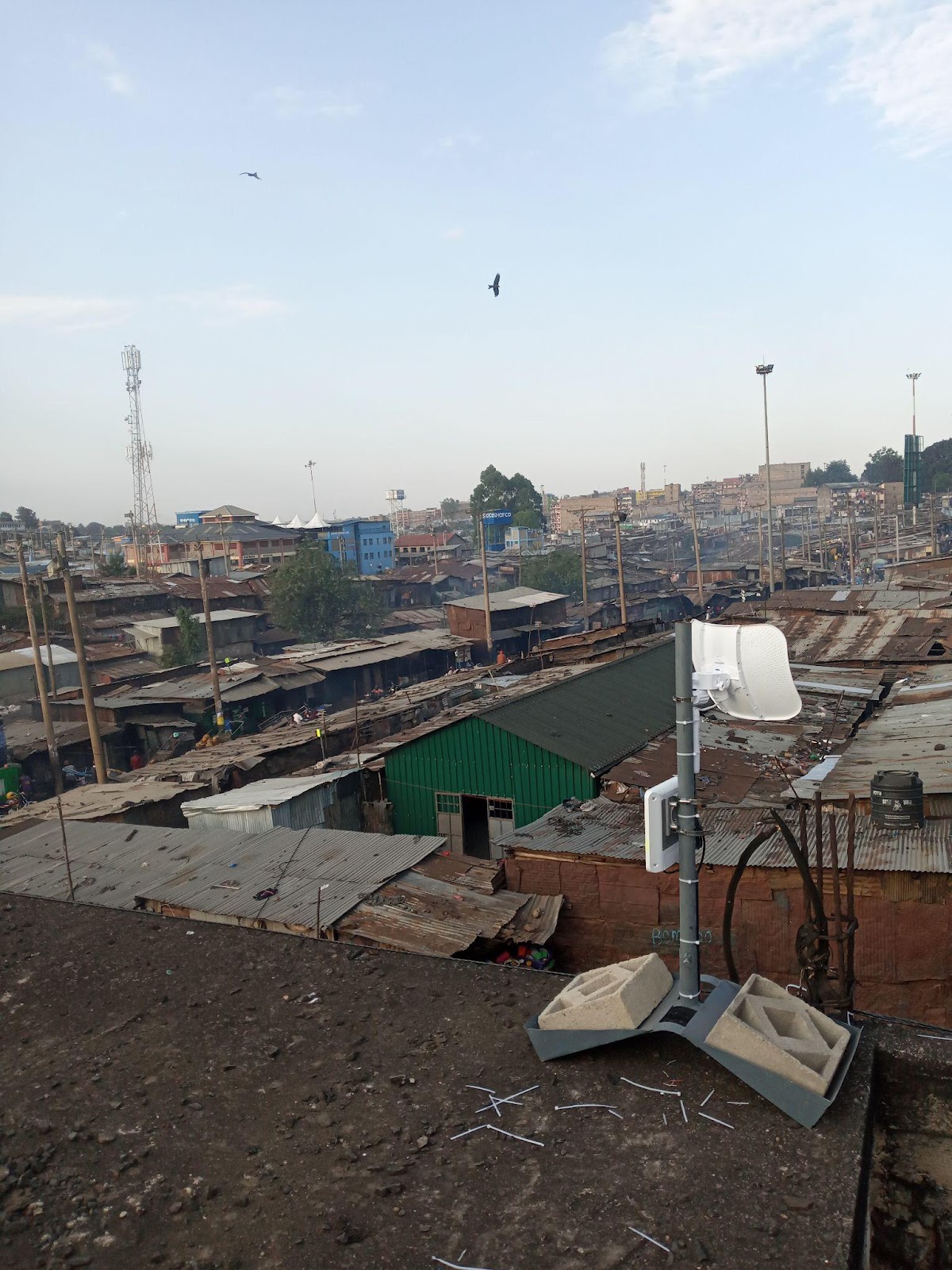
BRCK’s innovation lies in using mesh technology to improve network coverage and resilience in Mathare by allowing access points to intelligently connect to each other and fail over in case of network issues. In order to provide high quality, affordable connectivity, BRCK has developed the SupaMESH WiFi Access Point. This device has been co-created by BRCK, Ignitenet and Facebook Connectivity to enable large mesh networks (>100 Sites) in challenging environments. 
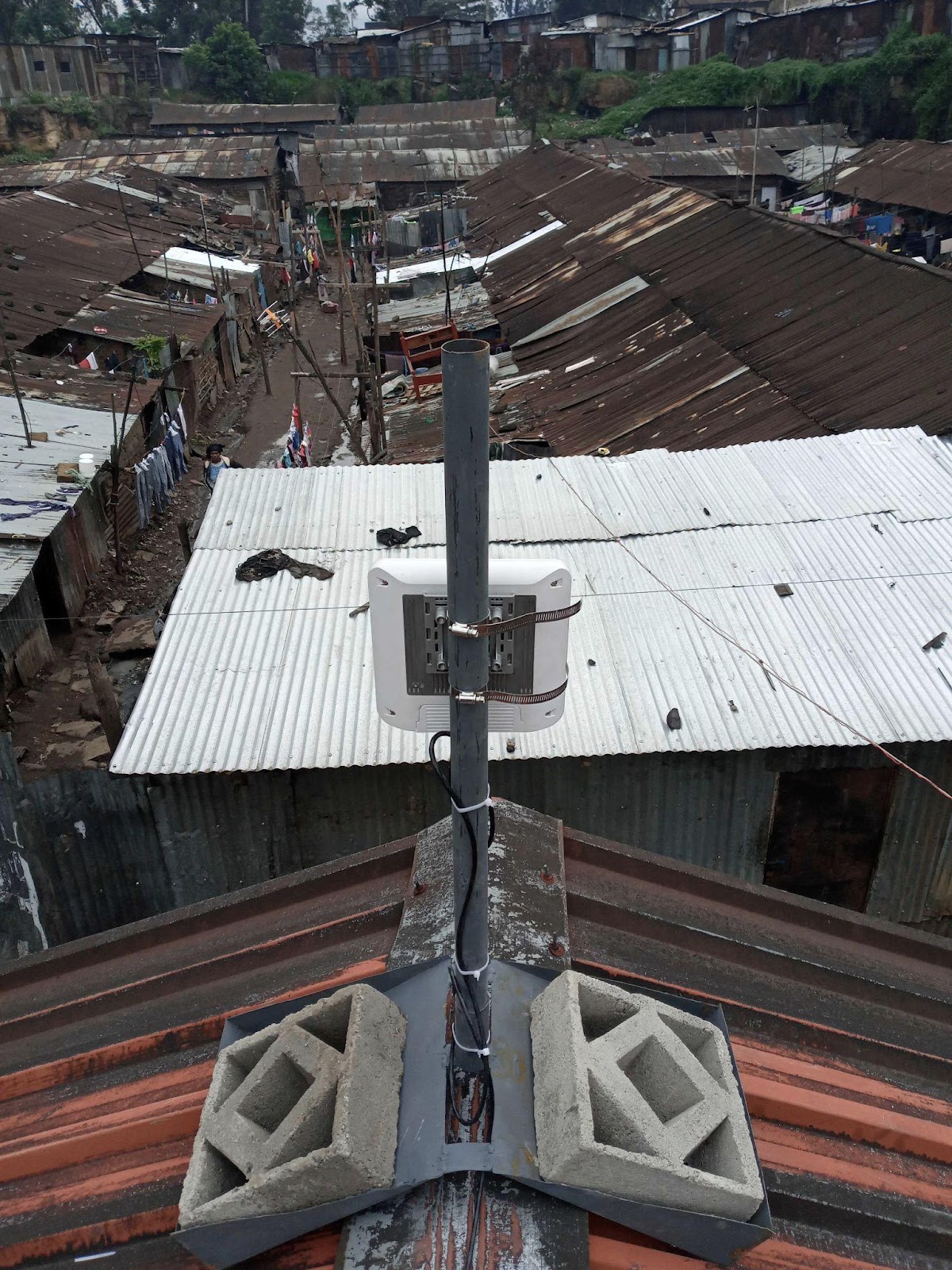
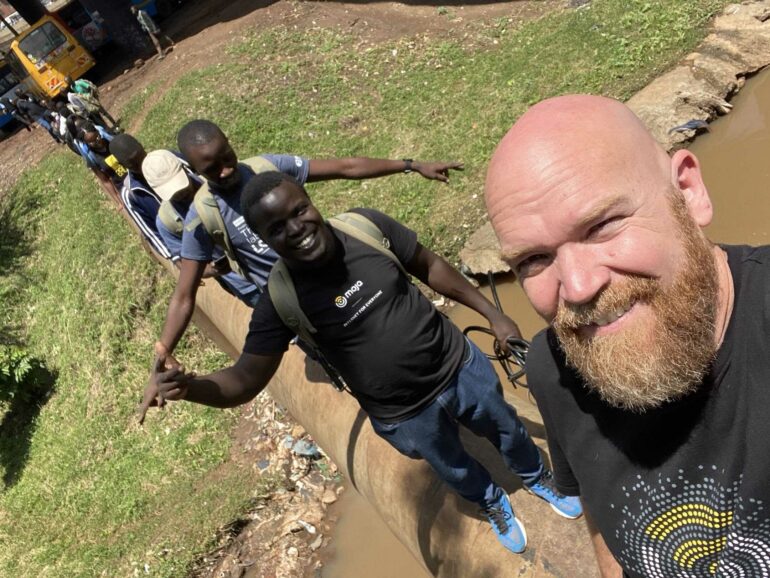
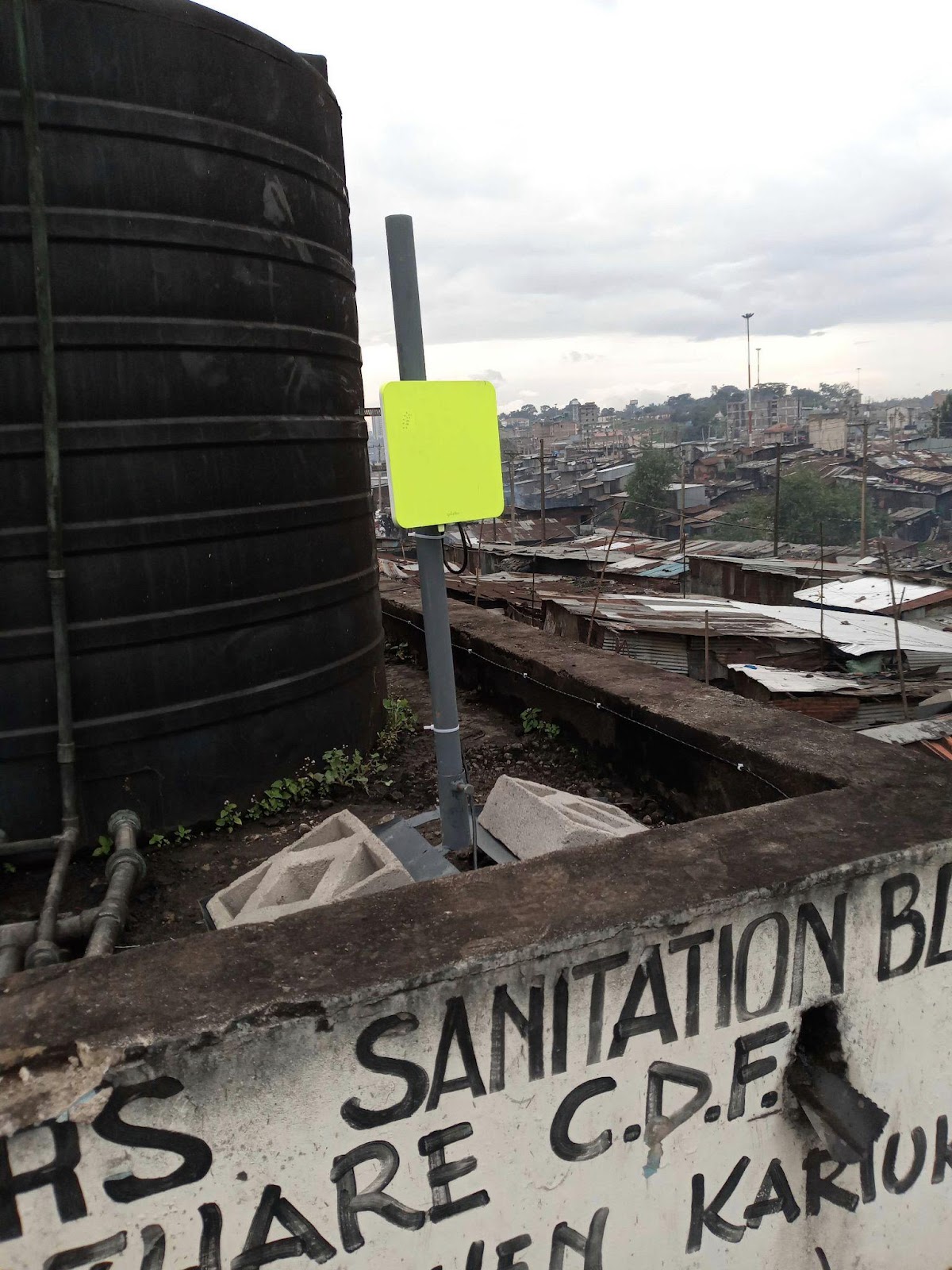
Deploying and maintaining a network infrastructure in Mathare Valley is not without challenges. Power is a major issue at most sites – it’s neither reliable, nor clean. Theft and vandalism are also a risk we foresee. However, having rolled out a quarter of the planned network so far, we see how much the youth value the service and we’re confidently counting on them to continue to protect the “bright yellow WiFi squares” that have dotted the Valley. We are especially grateful for the support from Community Based Organizations and Youth Groups like Mathare Social Justice Centre, Pamoja Twaweza Community Project, Shantit and Muoroto.
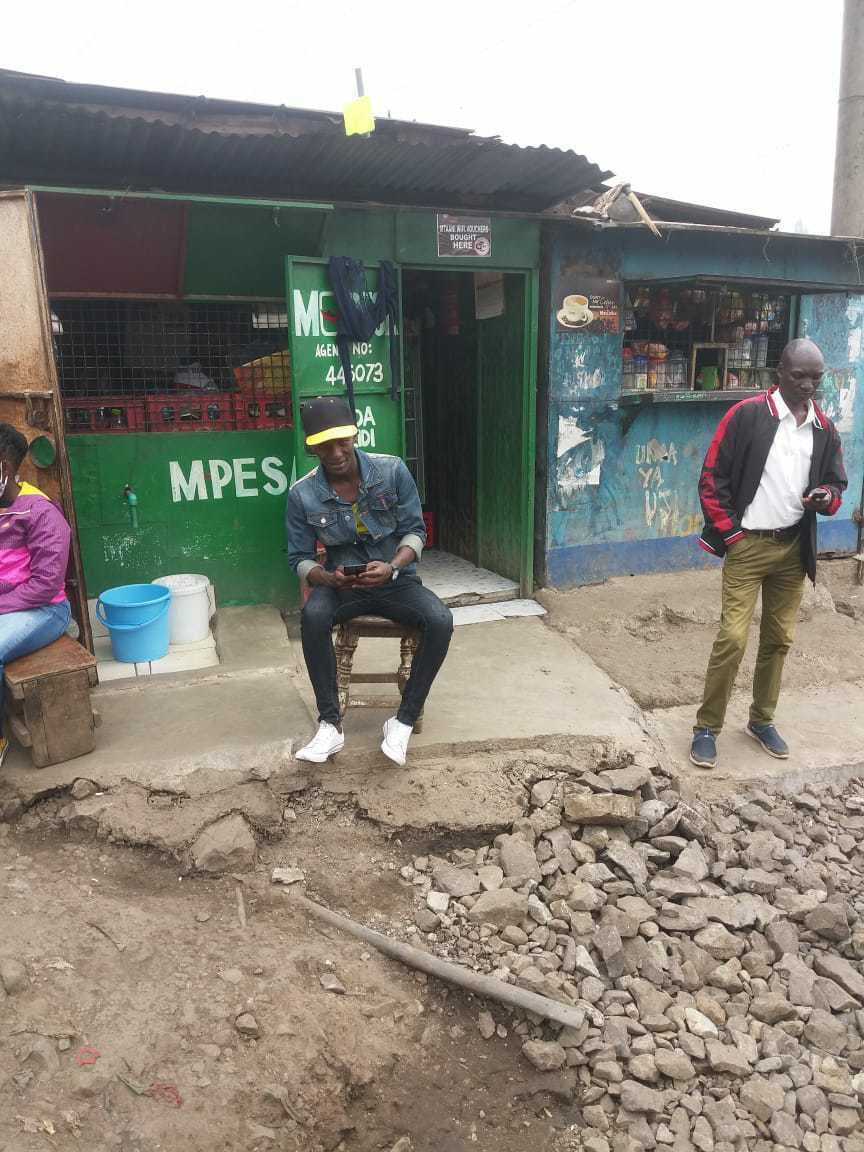
One of the biggest concerns that young people brought to BRCKs attention was that there are not enough points earning activities for them. In short, they want more digital tasks on the platform from organizations who value their time or their eyeballs. These are the first important steps towards giving the youth the opportunity to earn from real digital work: we are encouraging all organizations interested in engaging with these young people to think creatively about leveraging the Moja platform: advocacy and awareness campaigns; short polls and long surveys; and brand awareness. With Moja WiFi, the youth of Mathare Valley now have the opportunity to be active participants and beneficiaries of the digital economy.
5 Business Lessons from Riding a Motorcycle in Nairobi

I got my first motorcycle when I was 16 and started to ride the streets of Nairobi.  Fortunately, we had fewer cars on the road back in the early ‘90s. I started to understand the way to see and think when dealing with the odd assortment of experiences you face on Kenyan streets.  Today, I still ride my piki piki (“motorcycle” in Kiswahili) to work each day, and I’ve also been fortunate enough to take it to some far flung parts of the continent. During my daily commute, I started thinking about the business lessons I’ve learned from riding my motorcycle in Nairobi.  Each week, I talk to the 100-person strong BRCK team and decided I wanted to share these lessons with them. Here they are.

Business lessons from riding a motorcycle

1. When going at speed, focus. Filter out everything else.

This, like many of the lessons, are not just for Nairobi rides but for everyone who is on a bike.  The first point here is to stay hyper-focused, and not let your mind wander.  The second is to learn to “see” everything so that you have situational awareness, but only watch what’s important.  

The business analogy is the same. When we’re really hitting our stride, or when things are moving faster than we can control (hello Coronavirus), then it’s incredibly important for me to know what I’m focusing on and not to try to do everything.  The same holds true for every person in the company; have a tight understanding of what you need to spend your time on so that we don’t waste energy, resources, and time on things that aren’t going to move the needle for the business. 

Business lessons from riding a motorcycle

2. Deal with what you have, not what you wish you had.

I remember riding down one of Nairobi’s new bypasses – two lanes each way, with a divider in the middle – going around a long corner and finding a car driving the wrong way down the road directly towards me.  This isn’t abnormal. Shoot, I’ve got stories of U-turns on three-lane highways, pedestrians doing odd things, cows suddenly appearing (or camels, or sheep, or goats – you get the idea).  It’s part of what you have to learn to deal with. 

Running a company is much the same.  You’re pleasantly building your platform, doing sales or marketing, talking to investors, creating a solution for your primary user, and then something happens that you’re not expecting. 

I happened to be in San Francisco when the US banned travel from Europe. I was on my way to another tech CEO’s house for dinner.  When I arrived, we looked at each other and stated that raising capital just got 100% harder than it had been just a few minutes before.  You still have to find the capital to grow your company, but now you have to do it in a different way.  The truck hurtling down the road in the opposite direction just waylaid your plans. You either bail and find yourself in a ditch by the side of the road, or you swerve and find a new path, madly holding on to the handlebars and keeping the bike upright. 

Business lessons from riding a motorcycle

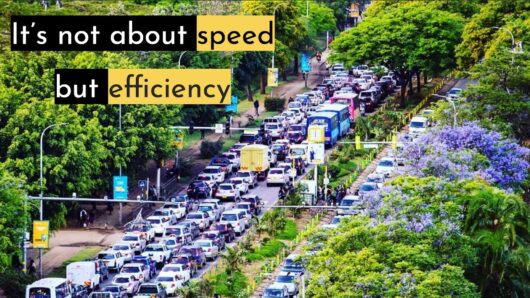
3. It’s not about speed, but efficiency.

When people see you riding a motorcycle in Nairobi they think you’re driving fast. Sometimes you do when on the big highways, but mostly you’re just putt-putting along in first gear as everyone else is stuck in standstill traffic.  Riding a motorcycle in Kenya isn’t about speed, that’s what gets you in trouble (revisit my last point to see why), it’s about efficiency of consistent movement.  When everyone else is stopped, I can keep going.  My commute each day in a car would be approximately one hour each way, on a motorcycle it’s 20 minutes. 

There are times running a company where you are in a speed moment. We’ll find an opportunity with our customers that we need to act on now to clinch a win.  That’s great, and when those happen we have to sprint to get there.  No company can survive doing that all the time, though. So instead, we design for efficiency – for making sure we have constant forward movement and not being bothered that we can’t go fast all of the time. 

I think about how we rolled out our Moja Network across Kenya’s public transportation system over the last two years.  The first few months, when things were on a tight deadline and we were dealing with all kinds of issues, it was an all-hands-on-deck sprint.  Then we were able to gear down, continue growing the network, put in standard operating procedures, and build processes.  This network team today does an amazing job of being efficient and effective without tiring themselves out in a constant speed battle.   

Business Lessons

4. Don’t get comfortable.

I remember jumping onto my motorcycle, and taking a friend for a lift down Ngong Road just outside my office.  One lane wasn’t moving at all, and the other oncoming lane was completely empty (back when it was just two single lanes).  As we’re moving along slowly passing a bus, a guy blindly walks out in front of the bus directly into our path.  I slam the breaks and swerve away from him.  He double-takes, his eyes get as big as saucers, and he jumps forward…!  By this time I’m riding forward up onto my tank as I hit the brakes hard, and my passenger is shoving me forward too. The pedestrian smacks my handlebars and my wheel goes sideways – the bike leans over and drops (my passenger and I were on our feet and didn’t go down with it) – then the pedestrian leaps up and sprints away.  Nothing broken on the bike or person, but we’d just gone from comfortable to shock in about two seconds.

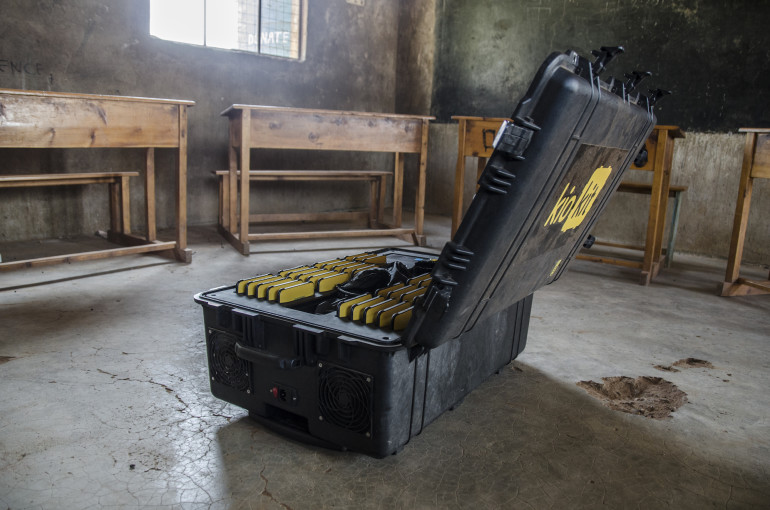
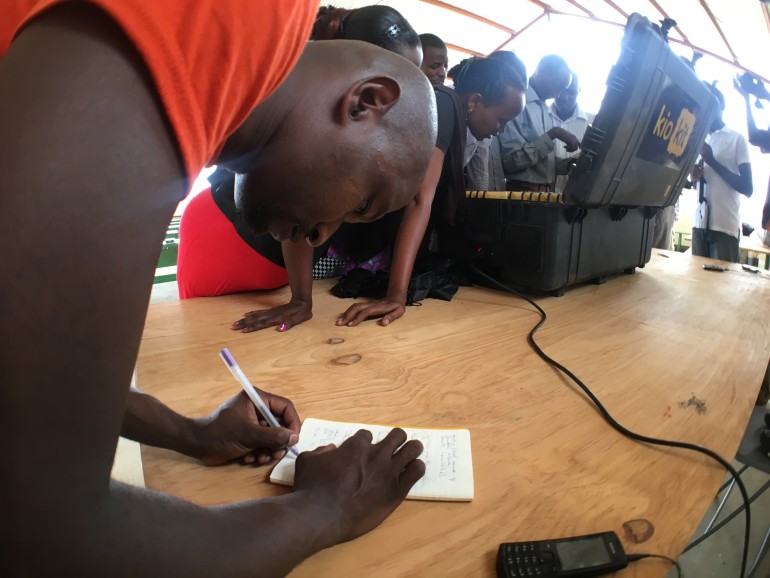
At BRCK we created the Kio Kit, which I still think is the best and most holistic solution for bringing digital education to places that have never had it.  It was truly innovative and we were happy and comfortable with just how good it was.  While we basked in that, we crashed into the slow turnaround time for decisions in the education sector.  We had this great product, but the sales funnel was so long, and the cost of holding inventory was so high, that we just couldn’t make it work.  After two years of pushing it, and getting independent longitudinal studies of how it improved learning outcomes, we had to put the Kio Kit aside and focus on something else. 

Business lessons from riding a motorcycle

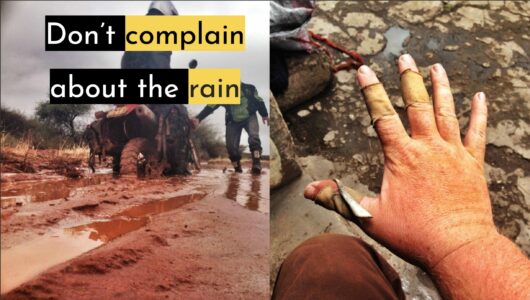
5. You can’t complain about the rain.

This is a short and simple one.  If you buy a motorcycle, you know it will rain and you’ll get wet.  Don’t buy a motorcycle and then complain when it rains, like it’s some great surprise to you. 

In business we know there are going to be things that are uncomfortable to deal with.  You’ll have to fire people.  A new feature won’t quite do what you thought it would do.  A partner lets you down, or a company you relied on just isn’t there any longer.  This is business, this is entrepreneurship.  Don’t complain about it, you know it will happen. Instead, get to work and find a way to deal with it.  However, like a motorcycle in the rain, you can plan.  Get insurance, save cash for that rainy day – in other words, carry your company’s equivalent of a rain jacket. 


These lessons from riding a motorcycle often came to mind during my commute. I kept forgetting them by the time I reached my destination, so I  soon found myself pulling over onto the side of the road to scribble them down. As an innovator and an entrepreneur, things can feel uncertain even in the most ordinary seasons. It’s important to make sure we remember what we’ve learned along the way. 

Future Thinking in a Time of Chaos

Future thinking is a challenging exercise even in the most stable of times.  What is going to be important to society in 10 years? Imagine being the gig-economy visioneers like Uber and Airbnb getting sneered at back in 2010.  On the scary side, think of what it must be like to be an oil-dependent economy today in this new world of too much oil, drastically reduced travel, and widespread acceptance of electric cars.  What other commodities or services that we take for granted are no longer going to be valuable on the global markets 10 years from now? 

In uncertain times like these, the challenge is even more perilous.  Who knows whether Uber or Airbnb will even survive to the end of this year?  What other giants of industry will succumb to the virus that has affected our economy as much as our health?

But in times of great instability also come great opportunities. 

Some of the famous companies that saw new possibilities and started businesses in the midst of global recessions include GE, GM, IBM, Disney, HP, Hyatt, Trader Joe’s, and Microsoft.  

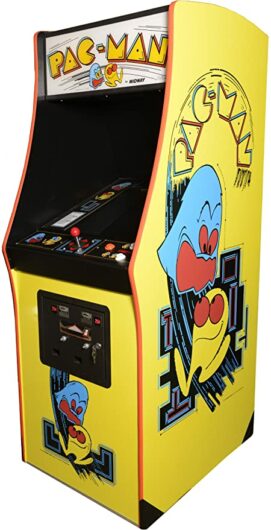
For those of you who have video game addicted kids like I do, the venerable Electronic Arts (look for the EA logo on their games) started in the early 1980s during the recession that followed the ‘79 oil crisis.  Trip Hawkins was an incredibly astute futurist for envisioning that video games would move from arcades into homes.  The year he formed EA saw the arcade video game industry — think coin-operated Pac-Man machines — peak at $8B and begin its rapid decline into a novelty.  The home video game market has now grown into a $120B industry and is thriving in the time of COVID.

So what does future thinking look like for a small connectivity company in Nairobi, Kenya? 

On one hand, we are seeing an increase in demand for connectivity now that people are either out of work or in lockdown.  Unfortunately, our network is currently primarily located on public transportation and in public spaces.  Neither of these are ideal areas for connectivity when social distancing is strictly enforced.  There is a lot of thinking about how we might extend the reach of our signal beyond public spaces into more homes and shops.  Some of these thoughts are pretty tactical, like adding more access points; others are applying more creative uses of technology, such as mesh networking – we are BRCK after all.

But the real future thinking happens when we start to look at the possible new products and services that we can enable from our connectivity platform.  The issues for yesterday were getting access to digital content and entertainment; the issues for tomorrow are going to be food security, education, and jobs.  We have to shift our focus from being just an enabler of connectivity to being an enabler of informal retail, a rail line for supply chains, and a touch point for tele-medicine.  These are some of the most obvious extensions of Moja and they get closer to the heart of the challenge in our presently chaotic world.  We have to be able to ask ourselves “how do we help a duka owner sell more bags of unga (flour)?” or “how do we help an unemployed woman learn the job skills she needs to be globally competitive?”.

There is a weightiness to these questions that were always an underlying rhythm to our work at BRCK, but now they have become the melody, the verse, and the chorus.  

The great thing about the way that we think at BRCK is that we are a connectivity company that does not consider connectivity our end product.  It is just the byproduct of our effort to ensure every African has access to participate in the 21st-century digital economy.  
future thinking

We always viewed Moja as an onramp for our users to access the digital products and services of both the local and global economies.  While that underlying view hasn’t changed, we are in the process of rethinking how we can extend our value to players in various ecosystems that need to access and interact with our population, even when they are thousands of miles away.  Much like Trip Hawkins saw a seemingly unbelievable future that kids would one day sit at home and have access to thousands of video games, we see a future where every African — and ultimately everyone on earth — is able to be remotely connected to the economy, their government, their doctor, their teacher, and their local vegetable vendor without having to decide if they should spend their limited financial resources on internet bundles or food.  

Future thinking may be a challenging exercise but it is an absolute life-sustaining necessity. 

The world we knew yesterday will not be the world that our kids know tomorrow.  Things that were important before will be suddenly overshadowed by things that were previously taken for granted.  Those of us who find a path through this devastation need to do everything we can to help fill in the gap for those products and services that won’t survive.  I don’t know for certain if BRCK will survive to the end of the year but I believe that we will.  I also believe that we can make a deeper and broader impact into the lives of our users in Kenya, Rwanda, and beyond. 

If your business — whether supply chain, retail, health care, education, or anything else — depends upon connectivity to reach your users, please contact us and let’s see how we can work together to rebuild our economy and achieve sustainable resiliency in our community.

Working in the Field During Coronavirus

BRCK’s field team plays an essential role in keeping Moja WiFi up and running and our customers happy and online. On most days, we’re spread out across different cities and towns, providing maintenance to our equipment in matatus and at fixed sites. We are continuously problem solving as unexpected challenges arise. We are used to workdays full of variety, personal interactions, and enjoy the buzz and energy in the field. It keeps us fit, energetic, and cheerful. But working in the field during Coronavirus means that things have looked a little different lately. 

Working in the field

The field team prior to the restrictions.

COVID-19 in Kenya

Kenya announced its first case of COVID-19 on 12th March, several months after the beginning of the outbreak in China. We had to first internalise the whole situation and strategize a way forward for field operations. Being on the frontlines, where our daily routines involve interacting with people, there were quite a few things to consider.

Before the pandemic, our operations included daily visits to fixed and mobile spots, with one-on-one interactions with drivers, agents, and users. Field techs would move freely in town, fixing and maintaining WiFi devices. At lunch hour, we would meet up at our favourite joint while planning out the rest of the day. This free movement gave us the flexibility to repair equipment and address issues as they arose. Overnight, this had to change immediately to prevent the possible spread of the virus. 

Safety Measures

At this point, in line with government regulations, field operations are continuing – but with some significant changes. To flatten the curve, we are taking the following measures:

  • Practising social distancing. To avoid the use of public transport, one person picks each tech from their homes and also practises caution while in the vehicle. When off duty, we stay at home. We avoid crowded areas and only operate in designated areas with minimal interference where we can observe social distancing. On the mobile network, we no longer move to bus stops and stages. Instead, we contact the individual drivers and meet at identified parking areas that are not crowded.
  • Cleaning frequently touched surfaces and objects.  We use disinfectants to clean hand tools and equipment used on site. Prior to touching any agent-owned or site infrastructure, we spray or wipe down using a disinfectant. Regularly washing our overalls and dust coats, we make sure our work vehicles are kept clean and well ventilated. We regularly clean the commonly touched surfaces with a disinfectant.
  • Practising hand hygiene by thoroughly washing hands using soap and water and/or using a hand sanitizer regularly, especially after maintenance at a site or a matatu.  
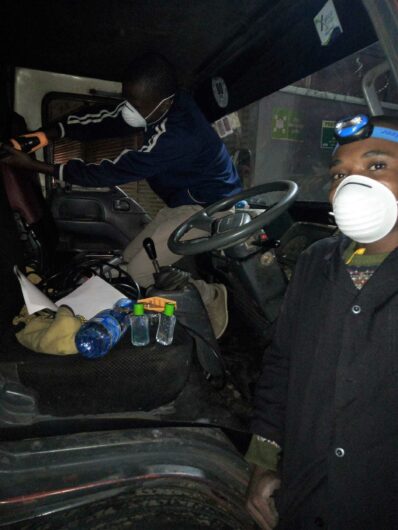
  • Wearing protective gear such as gloves, face masks, and safety glasses.
  • Using good judgement. This includes avoiding the sharing of phones or other work tools and equipment, reminding others on the precautions to flatten the curve, and observing the government curfew.

Working in the field during coronavirus

Impacts of the Pandemic

With the outbreak of the pandemic came unexpected challenges. With reduced numbers of commuters in and out of town, some matatus have been parked, making accessing for maintenance difficult. The government has also placed restrictions limiting our movements, particularly for night maintenance. 

On the fixed network, we have to factor in the 7 pm curfew when we plan assignments and travel routines. Planning tech visits also needs more coordination with agents, as some of their operating hours are now irregular and unpredictable. Additionally, since the government has imposed a 50% limit to passengers in private vehicles, the field guys have to work in shifts because our vehicles cannot carry the maximum number of people required for the job in a day.

Some Silver Lining

With the pandemic also came some positive trends. On the maintenance front, field engineers find it easier to maintain equipment, as clients and drivers are more cooperative. The WiFi fights boredom during this time of social distancing and there is less interference by people during servicing. Users have continued to interact with the network, even though the mobile network activity has reduced due to less travel. Video conferencing has also brought a new experience to the field team, as technicians from Kigali, Mombasa, and Kisumu are now able to participate in our weekly company-wide team meetings.

Looking Ahead

The coming weeks and months will continue to bring new situations. We will need to think creatively and adapt to changing circumstances. With the majority of our work out in public spaces, our highest priority is ensuring we continue to work safely. As people spend more time indoors, we believe the requirements and demands on the fixed network will grow, so we must do what we can now to fill the gaps and tap into new opportunities. The COVID-19 situation requires us to provide a reliable and consistent service, pay attention to our customers’ needs, and use our network to address some crucial gaps in the neediest communities. In these times of unpredictability and fear of the unknown, especially for those with fewer resources at hand, Moja plays a massive role to reduce the barriers to connectivity and affordability and making an impact to peoples lives. 

As we continue working in the field during Coronavirus, our hope is that a vaccine is found very soon and the economic situation returns to normal. Until then, we will do our part to stop the spread of the virus while we continue expanding our network. 

Groundshots in an Age of Moonshots

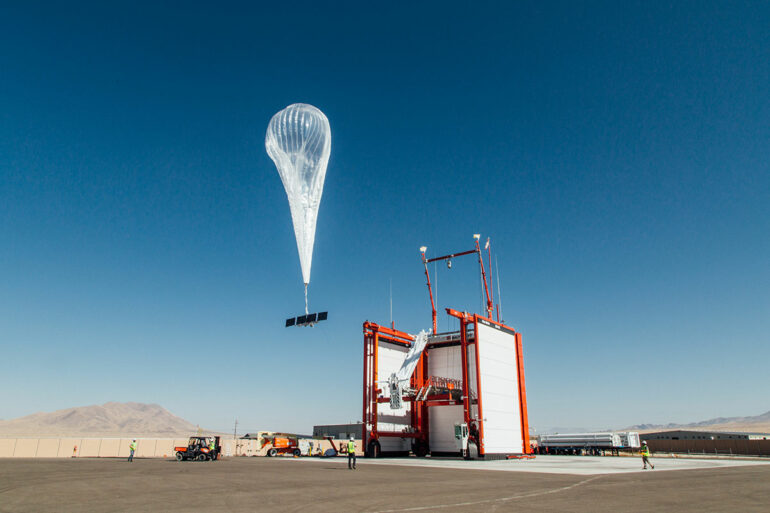
I love the “moonshot” ideology, a type of thinking that aims to achieve something that is generally believed to be impossible.  I first came across this concept with Google X and their way of thinking about hard problems. Who wouldn’t get inspired by solving a massive challenge using next generation technology? Especially when it’s backed with enough money to see if it will actually work. Of all the projects, I love Loon the most – connectivity by high altitude balloons that use wind patterns intelligently.  It’s just that right mix of insanity and brilliance that epitomizes solving a massive problem by trying something incredibly lateral.

Groundshots in an age of moonshots

Like many others, I too am driven to use my time on this earth to solve big problems. My mixture of background and experience ideally suits me to do technology work in Africa, and my personality means I end up building new things, new companies, instead of working for others. By the nature of those three things (entrepreneurship + tech + Africa), I tend to be resource constrained when it comes to moonshots. Instead, along with great partners and co-founders, I’ve built organizations that utilize crowd sourcing, foster innovation grounded in the African context, provide funds to tech startups, and create space to collaboratively build and rapidly prototype new technology.

My most recent endeavor has been building BRCK, which is 6 years old, trying to solve for how to create a real onramp to the internet for people who can’t pay for it.

Moonshots and Groundshots

As I look at this odd mixture of companies, I realize that, while I’m a moonshot thinker, I’m a groundshot operator.  I’m trying to solve big problems that impact many people across the world using the last generation’s technology in different ways, and coming up with a new pattern or model for everyone to benefit. In short, I don’t have the resources to build a Loon or StarLink, but what I can do is figure out how to make something that meets ordinary people where they are with what they have, and not just for profit, but also to make the world a slightly better place.

I’ve been thinking about this a lot as we’re dealing with the current coronavirus pandemic. Google’s Loon was first-level approved to work in Kenya last year, and then just this week was given a final green light by the Kenyan government to operate. This is great news, and I’m excited that we have four of their balloons sitting over Kenya right now. I’m also concerned that it’s only going to solve part of the problem.


You see, connectivity is a mixture of signal and devices, AND affordability. Loon solves for the difficulty of signal in rural Africa, where building mobile phone towers has too low of an ROI for the mobile operators to be interested. Devices are getting cheap enough that we’re seeing a deep density of (low-end) smartphones across many countries. However, affordability is a BIG hairy problem, made only bigger as the economic hits start coming during and after this pandemic.

Loon uses the LTE spectrum of Kenya’s Telkom operator, so anyone who has the Telkom SIM card can receive that signal from the balloon and be connected. The problem is that you have to pay the data rates that Telkom charges, which isn’t much by middle-class standards, but most rural people aren’t middle class and their wallets are much more rigid.

That’s the problem we started working to solve in a little room beneath the iHub back in 2014. “How do you get everyone in Africa online if they can’t pay?

The answer was a bit humbling for us techies to swallow, but it turned out that the business model was as important as the technology – maybe more so. We started grinding on this problem, which culminated in our Moja platform, now operating in Kenya and Rwanda. So far, it has brought 2 million users online for free. The answer was found in us saying, “What if the internet becomes free for consumers everywhere? The internet isn’t free to deliver, so what is the business model for that?” The mental model we were left with meant we had to find other parties to pay, which led us down the B-to-B-to-C model that we currently use and are finding quite successful.

So… What is a Groundshot Then?

I think it’s the glue that connects the amazing wizardry of the moonshot with the grounded business models and older technology found in most people’s pockets.

We’re rapidly expanding our Moja network, and I’m glad to work with our backhaul partners in terrestrial fibre internet and mobile operators. But I’m equally excited to take these moonshots like Loon or StarLink and connect them to real people on the ground in Africa. With a ground game like ours, and air support like theirs, it’s a magical combination.

The Case for Connectivity (part 1)

As with most CEOs of younger companies, I find myself on the investment raising treadmill. Doing so for a company focused on internet connectivity in frontier markets provides an extra layer of complexity, since it’s not as sexy of a proposition as a new app for ecommerce, agtech, fintech, etc might be. Those are easier to invest in since you’re playing with a world of software, not any hardware or infrastructure to muddy your hands with. Unfortunately, in my BRCK world, we have to deal with atoms, not just bits and bytes (though we do those too). Which is why many of my conversations find me explaining why connectivity is critical – thus this post.

What I find interesting is that everyone wants to benefit from a basic underlying availability of connectivity, but few understand what it is or why it is so important. If you’re with me at a public event, I’ll eventually spout off something along the lines of, “you can’t have a 21st century economy without power and connectivity.” This is my simplified way of stating that for any industry to be meaningful on the world stage (or even their own country stage), they need the ability to move data. If power and connectivity are the foundation, then the aforementioned ecommerce, agtech, fintech, and others are all pillars that stand on that foundation.

Economic growth

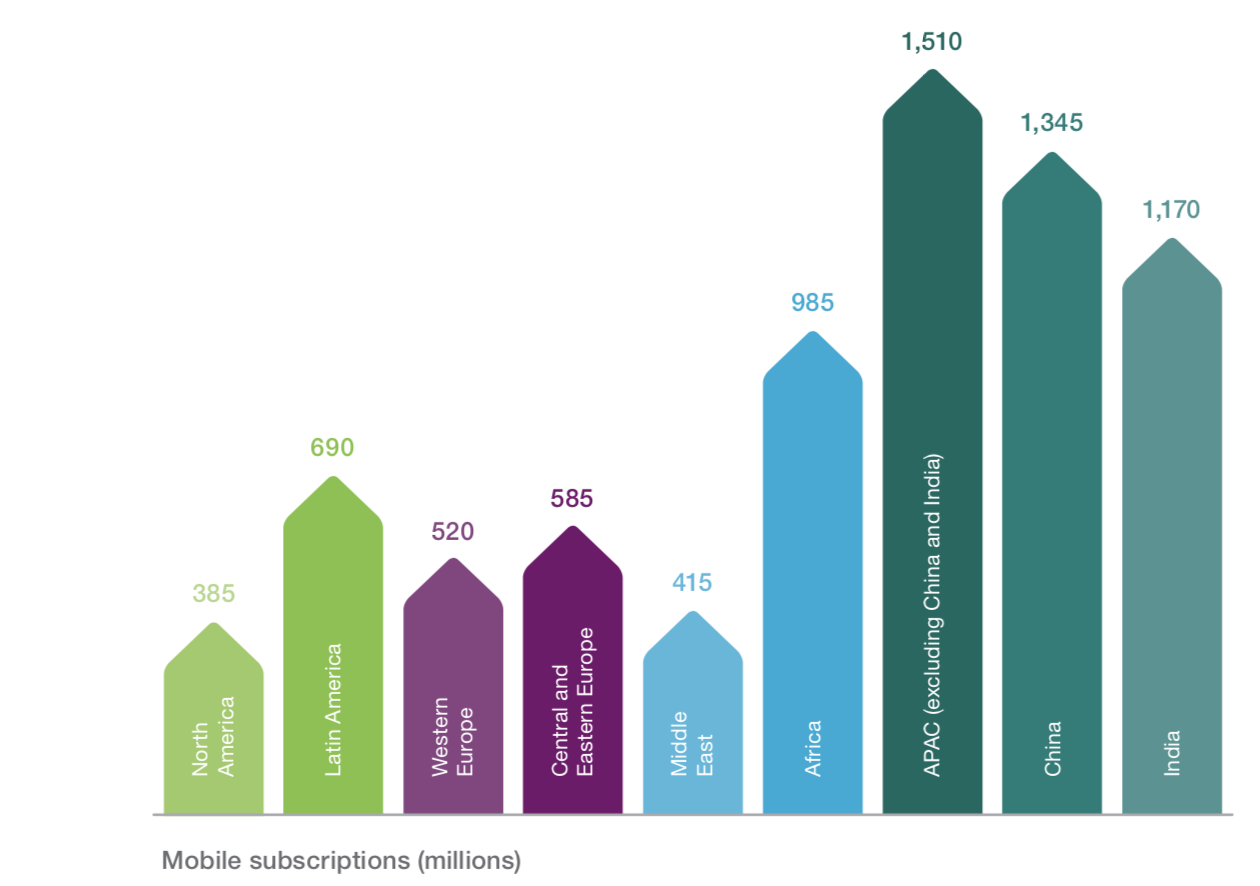
I’ve written before on how smartphone penetration has reached critical mass and proceeds on a noteworthy trajectory across Africa and other frontier markets. Africa, coming from a largely 2g/Edge based on old legacy GSM technology will have some of the highest growth rates in mobile data subscriptions globally, driven by chat apps and mobile video, as we transition to data-only networks. In 2022, there will be eleven times more mobile data traffic in Central and Eastern Europe and Middle East and Africa (Ericsson 2017).

Mobile subscriptions (global)

  • 250M smartphone subscribers in 2016
  • 770M by 2022 (Y-o-Y growth of 30%) (Ericsson 2017)
  • Over half of mobile phone shipments into Africa in 2016 were smartphones (Deloitte 2017)

All of this means that there are millions of new customers available for new, smart, and data-intensive financial products, agricultural services, marketplaces, logistics, and the list goes on. This is why we’re seeing the rise and rise of startups in these spaces, as well there should be.

What we’re not paying attention to is this: the market is still smaller than it could be.

Imagine that you’re finding amazing market traction with your new mobile lending app, or with your logistics system, or with your online goods marketplace. Imagine that you’re doing well. However, did you know that you’re only reaching 20% of the people who own smartphones in the country? Oh, right, that’s the piece that’s surprising! You could be doing even more, growing faster, and capturing more market share if only the other 80% of smartphone owners in your market could afford the costs of getting online regularly to use your service.

This is where BRCK is stepping in with our Moja platform (free to consumer internet). You’ll benefit greatly from our growth. We’ll benefit greatly from your growth.

Social development

Even though I’m largely driven by the economic reasoning for connectivity alone, since I believe that the best way for us to make significant change in Africa is to grow wealth for everyday Africans, there is a strong social argument for widespread and affordable connectivity as well.

Connecting an additional 2.5 billion people to the internet would add 2 trillion dollars per year to global GDP and create 140 million jobs.

  • It enables improvements in health (Deloitte 2014)
  • Unlocks universal education (Deloitte 2014)
  • Strengthens civil society through public services, social cohesion, and digital inclusion (Deloitte 2014)

It turns out that if we connect people to the largest, greatest network of knowledge and information in the the world, then a lot of great social benefits are realized across a number of important areas. It’s hard to argue against more jobs, better education, better healthcare, more informed citizens, and a stronger civil society in any country.

Connectivity is the foundation

Like everyone else not involved in the plumbing and distribution of the internet, I used to think of this only academically. It’s easy enough to understand and think through intellectually. However, I found that in living it, in dealing with the practicalities of the internet, in coming to know the end-user, I began to appreciate just how important connectivity is. Building a new app or service can have big effects, changing the affordability equation for connectivity, and you send a shockwave reaching everyone, everywhere.

2016: The Year at BRCK

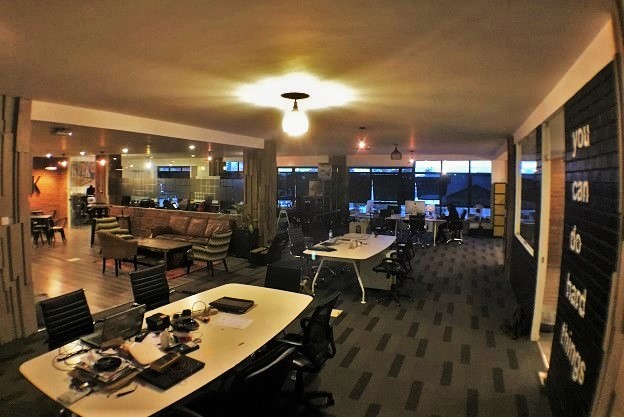
2016 proved to be a busy year at BRCK, after we announced our funding round. We started off by getting into our new office, upgrading from the small room we’d used for the previous two years.

The BRCK office, Nairobi

There was a blur of events, with some of us speaking at WEF, TED, ITU, and many others. A number of visitors came through, the biggest being Facebook’s Mark Zuckerberg.

We had the good fortune to win a number of awards by the year’s close as well:

  • Fast Company’s 2016 Innovation by Design Awards
  • Sustainia Top 100 2016
  • AfricaCom: Best Pan-African Initiative 2016
  • ITU: Global SME Award 2016
  • African Entrepreneurship Award 2016 Finalist

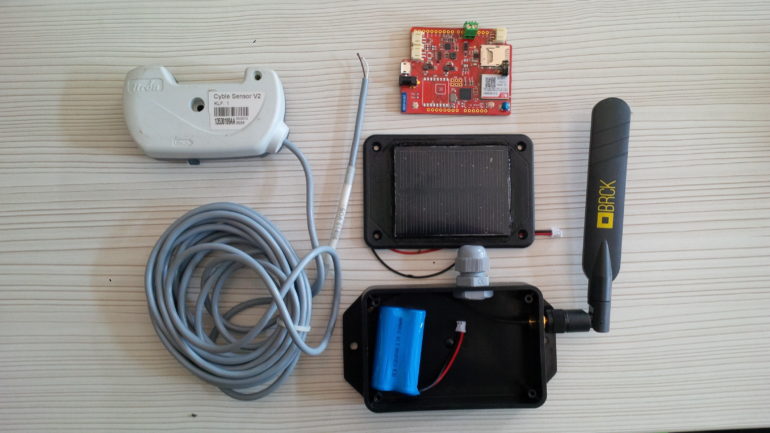
The real work we do is focused on what our customers need, and we figure that out in two ways. First, we spend a lot of time with them. Second, is we do quite a bit of internal testing, as can be seen from the expedition to Mt. Kenya, testing out some new sensor connectivity products.

Some of this work is done just because it’s good to do, as Juliana and Rufus continued to support the Africa Cancer Foundation work, going all over the country to bring connectivity in their efforts to help with cancer screening.

Juliana Rotich taking one of the volunteers through the connection process

02_Malawi

We get very close and spend a lot of time with the people using our products. The Kio Kit, our education solution has been doing well, but we always strive to make it better. Mark, Alex and Nivi lead much of this work as they visited schools, spending time with teachers and students from Malawi to Tanzania, as well as here in Kenya with our trip to Samburu, spending 7 days with Kiltamany Primary School and working with one of our partners, Liquid Telecom to speed up their overall network (see video below).

Liquid Telecom delivers internet to pupils at remote Kenya primary school from Liquid Telecom Group on Vimeo.

Other partnerships have continued to grow. Intel has become a great partner, where we work with both their chip and education teams on multiple products and projects. The same applies to our local partners in Upande, who we’ve teamed up to do quite a bit of intense water sensor work in a county in Kenya. New partners this year include; Swissport, Illuminum Greenhouses, Norwegian Refugee Council, Close the Gap International, BookAid, and Paygo Energy.

Stuff we make

Kio Kit now in 11 countries
We started shipping the Kio Kit in the beginning of the year. After getting the kits out to a few customers in some pretty hard to reach areas, we realized we needed to harden the case to manage the rough transport that is required to get it to its destination. The hardware and software teams continued to improve both, culminating in what we feel is the best holistic education solution on the market.

The children and the author Edoardo

Kio Kit to be used to scale up a rapid response to educational needs in emergencies. In partnership with the Norwegian Refugee Council, youth and out of school children in Dadaab refugee camp will use the Kio Kit to improve their literacy and reading skills in English and Somali.

Our customers agree. Not only have they been back for repeat orders, but we’ve shipped Kio Kits to 11 countries around the world – stretching from the Solomon Islands to Mexico, and of course here in East and Southern Africa.

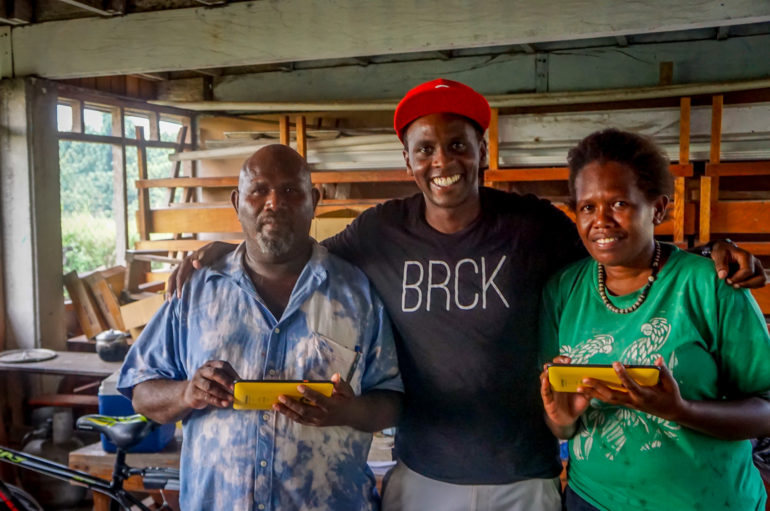
Peter with teachers in the Solomon Islands

BRCK v1 goes end of life
As we get ready for the next generation of BRCK hardware, we decided to stop orders on the old BRCK hardware. Since the end of 2015 the team has been pushing hard on the next generation core device, using all of the lessons we’ve learned from both the original BRCK and the Kio Kit. The new BRCK will be an enterprise-grade device, more details in the new year.

R&D – continuing the innovation cycle
It turns out that there are a number of companies across Africa who badly need an IoT solution that works in our environment. Something reliable and inexpensive that can connect information from their valuable equipment and assets to the people who make decisions.

IMG_20160331_162707

The original BRCK box states, “connectivity for people and things”, and what we found out is that the BRCK v1 might technically be able to do some IoT work, but it wasn’t the right device for it. 2016 has seen us go through the early stages of our new PicoBRCK device, an answer to the rugged IoT needs across Africa’s enterprises. While still in development, we expect a final product in 2017.

2017: The Year Ahead

Expect two new products this year from BRCK, as mentioned above. A lot of the hard work put in by the hardware, software, and design teams in 2016 will bear fruit this year as we get to final productization and are able to scale out for customer orders. Much of the effort from the BRCK team will be spent on finalizing and shipping these products, while also supporting and growing the base for Kio Kit.

On the business side of the house, we’re ramping up our supply chain to manage the increasing demand for all products. We’ll continue to extend beyond Kenya into other interesting markets, which always includes East African countries, and many Southern African ones as well. We also have a few surprises up our sleeves which we can’t talk about in public quite yet. 🙂

A huge thank you to our partners who we’re doing so much work with, and of course our families who are such a great support in the ups-and-downs of a young company’s life. A big thanks to our friends at Ushahidi, the iHub, Gearbox and Akirachix who make life in the Nairobi tech ecosystem such a wonderful experience. My biggest thank you goes out to the BRCK team, the ones who you don’t see on stage and who sometimes clock crazy hours to solve problems, run spreadsheets, create new designs, think up new ideas, and who code, solder and respond to our customers day in and day out.

Designing at the edge of the grid

A year ago, I coined a phrase that grounded my passion for human centered design and is the reason I wake up every morning. “Africa cannot afford un-contextualized design, the stakes are simply too high” never is this so true than in education.

One of the reasons I joined and love BRCK is because BRCK dares to go where others won’t. This week we’re in northern Kenya, a remote place with many challenges. Many don’t go to these extreme environments because of the geographical, social and economic constraints. However, we at BRCK hold a different point of view, that they matter and it makes both social and economic sense to design for the real Africa.

Mark Kamau taking quick notes as the teachers learn the Kio Kit

Mark Kamau taking quick notes as the teachers learn the Kio Kit

Tirrim Primary School is a good example. It is school in the desert, a long way up from Isiolo town, and has been the top primary school in testing in Marsabit County since 2008 sending their graduates to the most prestigious schools in the country. It is a charity school paid for by missionaries and has 620 pupils. Their dream, according to one of the teachers, is to become the “RVA (Erik’s former school) of the desert.” It is a lofty and worthy goal, especially considering people of Korr think on themselves as ‘Kenya B’ because of the sense of isolation and neglect of this desert folk feel from the rest of the country. Despite their limited access, these kids are expected to sit the same national exam and pitted against the same yardstick tablet wielding, smartphone trending students in Nairobi.

As a human centered designer with a passion for Africa, this is amazing territory. The Kio Kit sets out to answer a fundamental design question. ‘How can we convert any rural classroom into a digital classroom?’

In tackling this difficult challenge we made some assumption and learnt some lessons these are specific to this expedition.

1. CONTEXTUALIZED GUIDES

We set out to create guides for using the Kio Kit is English as it is the national language upon which all examinations are taken, but the role of local language in education, even when explaining technology is simply too effective to ignore. Today I observed a nuanced but interesting example. One teacher was trying to explain to a class of lower primary kids what the back button was on the tablet using conventional English and it took him a while to get them on board. Another said please click the “Khonjor” and all the students understood it immediately.

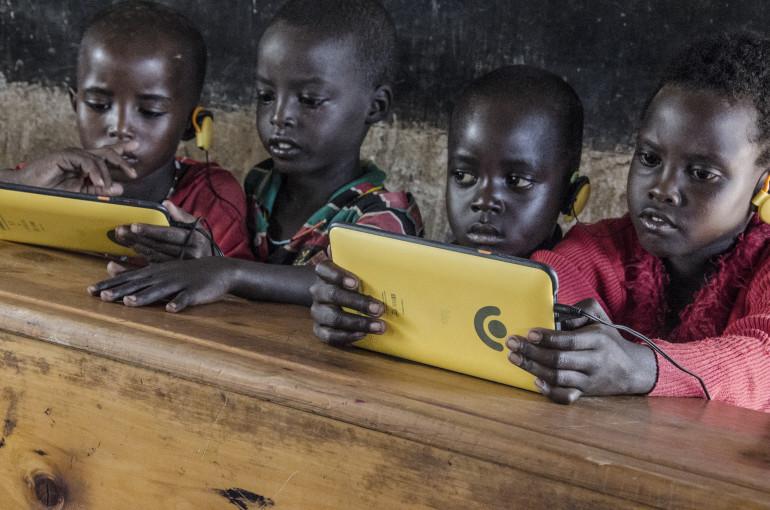
Some Rendille children on the Kio tablets

Some Rendille children on the Kio tablets

In the Rendille language Khonjor is a sickle, one the kids grow seeing their parents use for cutting plants. This shape allowed them to understand the reference as the blade points “back”. I also observed that even a few miles apart, the nuanced pronunciation of the same word meant the difference in understanding of things. While it is means more work, we have to contextualize the Kio Kit guides in localized videos.

2. COLLABORATIVE EXPERIENCES

With tablets, the idea is that students each get a tablet and are able to access content individually. In this construct, it is easy to diminish the importance of collaborative learning. The younger students are, the more they learn from observing and collaborating with each other. The content and games on the Kio Kit that we tested emphasized the need to have even more experiences in the Kio Kit that take advantage of this collaboration.

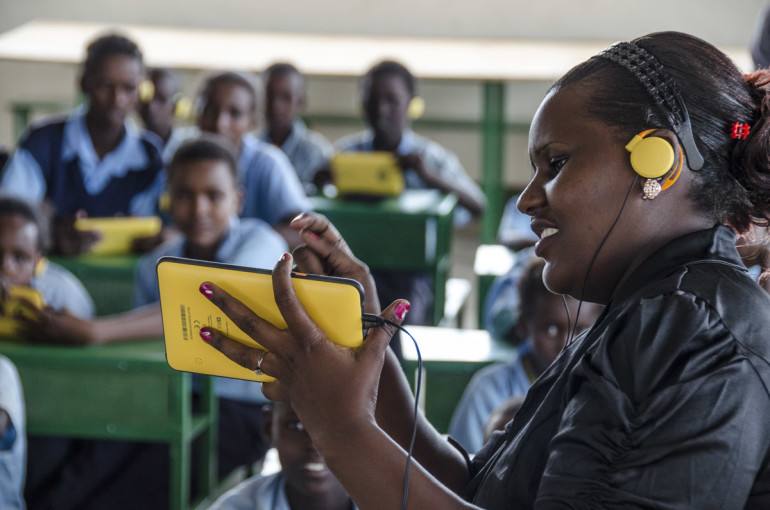
A teacher with the Kio tablet

A teacher with the Kio tablet

2. AUTHORITY CHALLENGE

The typical construct of a normal Kenyan school is that the teacher has the authority, they dictate what happens in the classroom and assume leadership, responsibility and authority. The tablet presents a different paradigm because with the tablet in their hands, the students have more responsibility than listening and writing. They play a more active role in their own learning. Handling this shift is challenging to teachers and their usual classroom control skills don’t directly apply. We therefore need to invest more time on classroom management training with technology.

There are many more lessons we have learnt from technical centered challenges to human centered challenges that energize us as we ride back home to make the Kio Kit work even better. Most of all, interacting with people motivates us to want to do even better.

Some Things are Different but Mostly We’re the Same

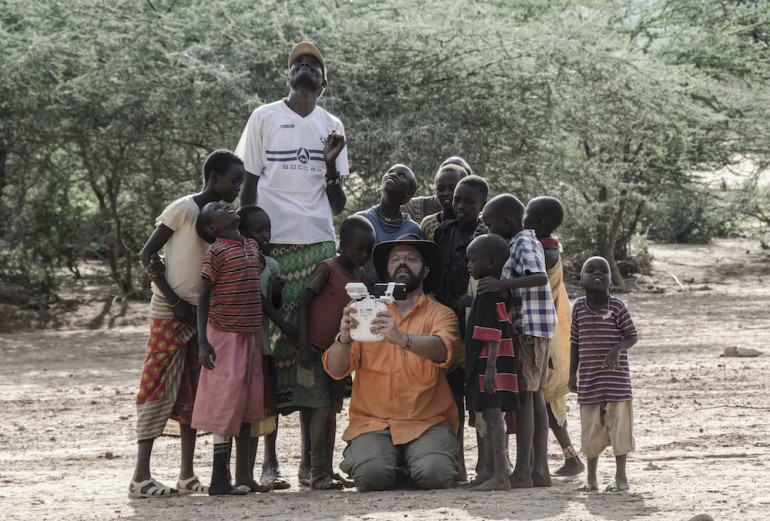
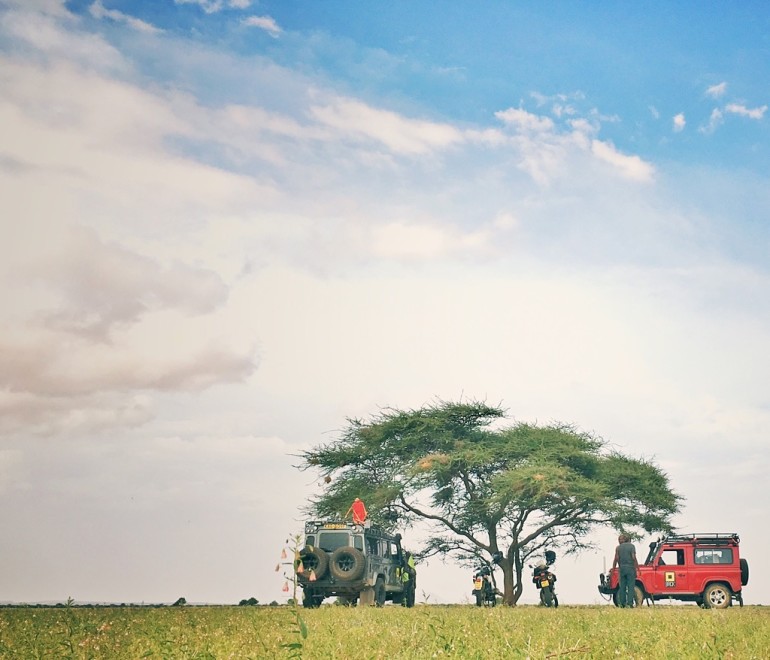
Yesterday, while staying with the Samburu near Kalama, I had the opportunity to ride into Archer’s Post with my new Samburu friend Mike. Mike has the distinction of being the seconds tallest Samburu and his size brings with it an equally warm disposition. We loaded in the Land Rover – with an old man from the village who just tagged along for a free ride to do his shopping – and headed across the sandy track that meanders some 20km back to the tarmac.

Tall Mike and myself with the village kids

Tall Mike and myself with the village kids

As we bounced along I turned up the radio and Mr. Marley was singing about “One Love”. Mike asked me if I liked reggae, which I quickly confirmed. I asked him the same question and he said he did, particularly Alpha Blondy. I was shocked that he even knew who Alpha Blondy is and so I quickly switched to my Alpha collection. For those of you who don’t know Alpha Blondy – and it would seem that I have grossly underestimated his popularity – he is a reggae artist from Cote d’Ivoire. Having spent 4 years in Cote d’Ivoire for secondary school had given me a huge appreciation for Alpha Blondy and The Solar System. This was the local music of my youth and something that I and my friends hold dearly to as part of our heritage.

Here I was driving through a land that is completely unlike the terrain of West Africa listening the singing of ja man from a Mande tribe that is nothing like the Nilotic Samburu people who were hosting me. Their dress is different. Their customs are wildly different. Yet, here we were singing about political oppression as loud as we could to drown out the rumbling noise of the diesel engine. Mike starts to explain to me that the words of the song – which is partially sung in the Jula language – sound to him like they are talking about camels resting. He sings the lyrics and describes how he understands them in either Samburu or Swahili. Of course Alpha Blondy doesn’t sing about camels but Mike doesn’t care and it certainly won’t detract from his intense enjoyment of the music.

How is it that people from such differing backgrounds could so easily bond over the simple expression of ideas through music?

Music is not alone in providing such a practical cultural bridge. Technology has just as much potential to be a cultural equalizer. However, just like the mistranslated lyrics, technology is easily misunderstood as it transitions between cultures. A big part of our job at BRCK is to ensure that technology is well optimized to serve as an enabler for cultural exchange. We want to equip these children with the capacity and the skill set to be globally competitive. We are striving to use technology as a tool for enabling this realization. Some aspects of this task are easy – kids from every culture are captivated by animated lessons on handheld tablets. Others are far more difficult – getting the teacher to understand the distraction that comes from putting a long coveted gadget into the hands of students for the first time. We can’t just rework the equation to solve out the bad from the good – unfortunately it all comes in the same glossy, irresistible package.

Elders are elders

Elders are elders

Our self-imposed mandate at BRCK is to be champions for culturally relevant technology. To invest ourselves in designing and building platforms and tools that transcend the boundaries of our differences to bring about a unity of purpose for educating children from every socioeconomic strata. This Expedition has been a powerful reminder of how essential the human-to-human connection is to make this happen. If we want to change the entire concept of digital education in the African classroom then we – and everyone else who has a similar objective – needs to spend us much time as possible in the dirty, dusty, sandy recesses of this continent to get to know the students and teachers and find the common grounds of understanding that enables us – as technologist – to build the bridges between our different (yet not so different) cultures.

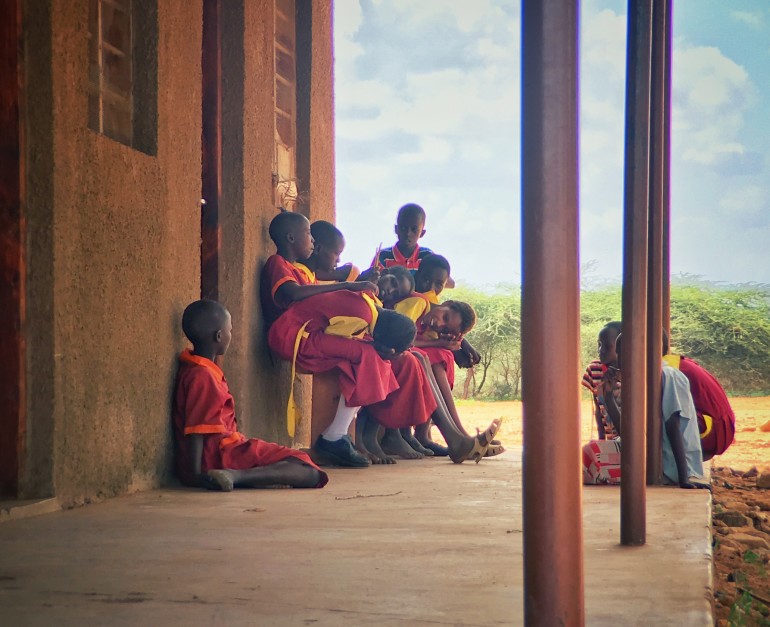
Children at Kiltamany Primary school

Children at Kiltamany Primary school

On the road to Korr

On the road to Korr

Philip fords a sand river in an old BMW R80G/S

Philip fords a sand river in an old BMW R80G/S

Peter shares his love of photography

Peter shares his love of photography

Digital Literacy on Kenya’s Frontier

Kio tablets in action

Kio tablets in action

Kiltamany Primary School is your typical forgotten school. A 20km dusty path from Archer’s Post leads to a small village between Kalama, Samburu and Westgate conservancies. Most women make beaded necklaces and most of the men herd goats. The children giggle coyly when you speak to them, but, like children everywhere, they are curious and eager to learn. As we sat around the campfire last night, it dawned on me how much energy we draw as a team from our “inner child.” I’m thrilled we are working with children this Expedition.

When we arrived at the village yesterday evening, the women sang and danced to welcome us. We took many pictures of their warm and carefully rehearsed welcome. At one point, a woman pulled out her phone and took a picture of us. In that beautiful moment all our hearts soared!

Until 3 years ago, the women of Kiltamany village would walk 13km everyday to fetch water. The new solar powered borehole water tower now means they have a few extra hours in their day. 6 months ago, they starting using tablets and learning how to read, write, add, subtract and now multiply. I watch in wonder as a 50-year old lady learns the concept of division. She weaves her thin fingers between the 12 strands of a beautiful beaded necklace to show me 3 bundles of 4 strands each.

Wmalimu Elijah and his class

Wmalimu Elijah and his class

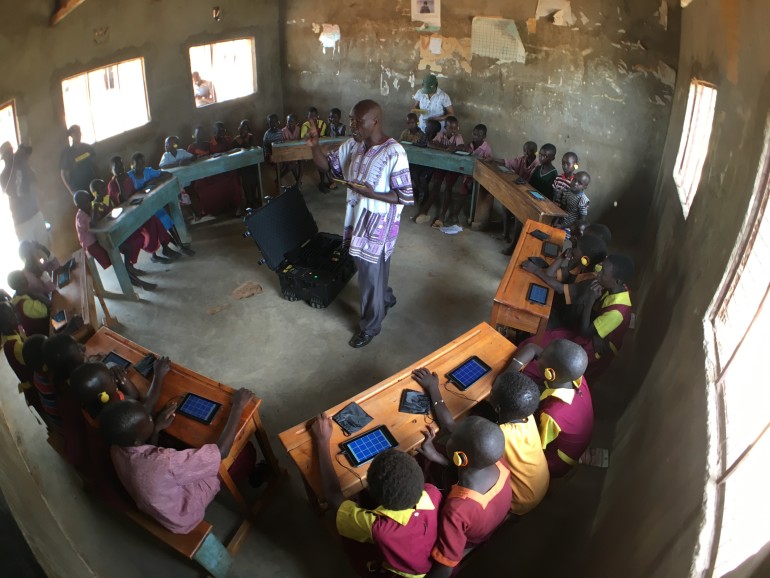
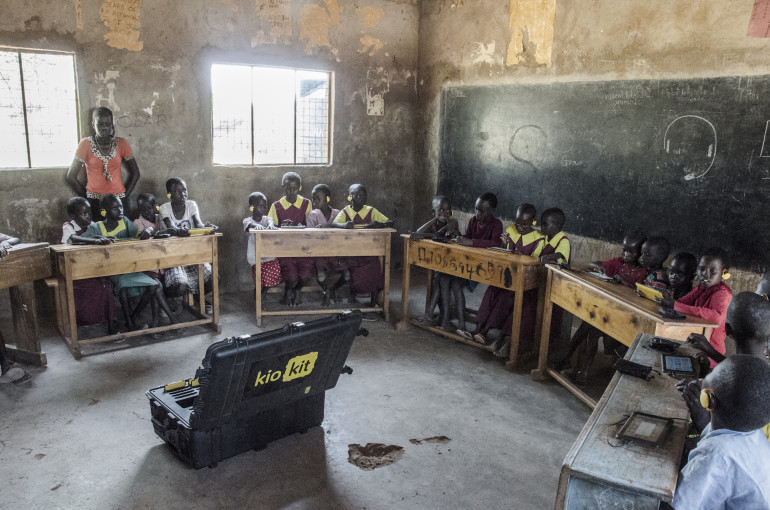
The Kio Kit charged in the school last night. This morning, the headteacher, Mr Elijah Njogu rang the bell and the children from surrounding villages began to trickle in. “December holidays” do not apply to Kiltamany. We ran 3 classes back to back today. It’s crucial to our design process to understand how exhausting it is to be in a hot, dusty classroom with excitable children all day. Our appreciation of the work of teachers grows every time we go to schools. The children, like all children, take little time to start using the tablets. The headteacher lead them through lessons in counting, nutrition and force. After watching the catchy Ubongo songs, the students remembered key concepts that would otherwise take several lessons to reiterate.

A child on a Kio Kit

The Kio Kit in a school room

The Kio Kit in a school room

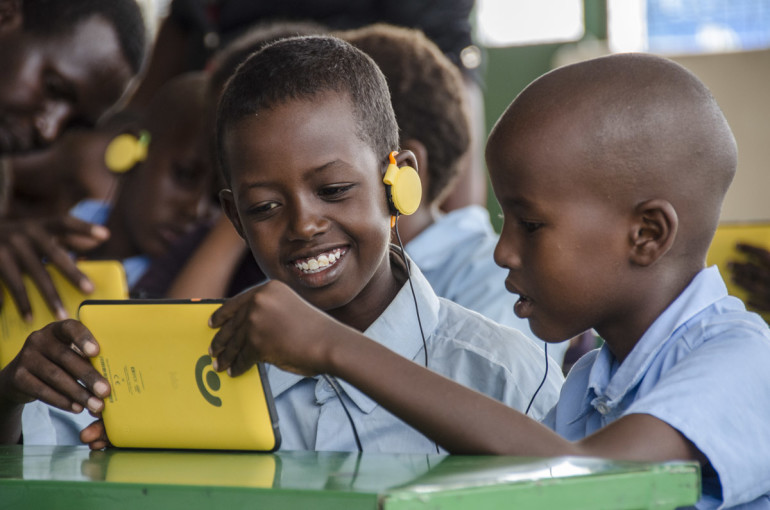
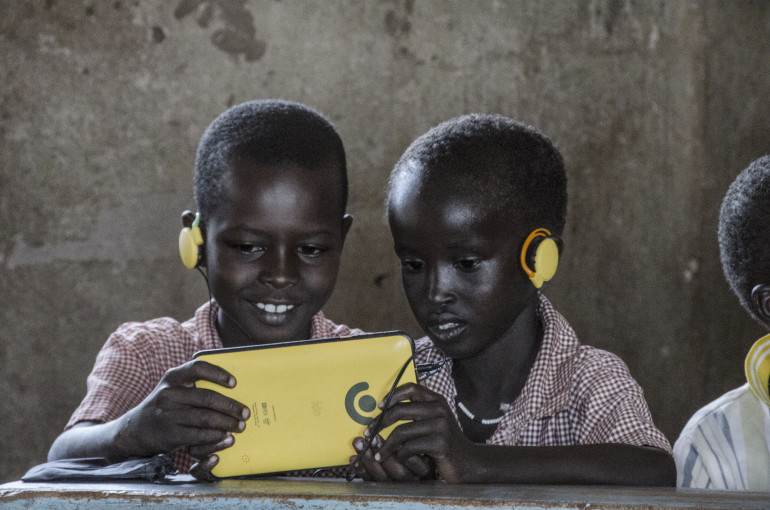
Two children on the Kio

Two children on the Kio

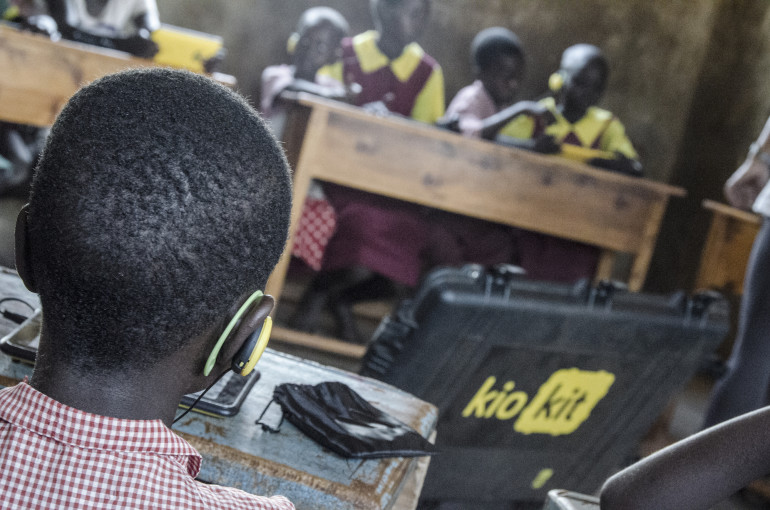
The BRCK Kio Kit

The BRCK Kio Kit

As always, we notice challenges and strive to learn valuable lessons. The classroom where the Kio Kit charged was dusty and the lights of the Kit attracted many bugs; we wonder how many dead bugs we will find in the Kits in a few months, what damage they may do. A shy girl peered at us through the classroom window as her goats grazed nearby; we have come a long way, but still have some work to do to ensure every child has the opportunity to go to school.

The community has not asked anything of us. They express again and again how much they value education and what they dream of for their future. As we sat around the fire tonight eating goat with the elders of this community, we heard a vision for a community that desires equal access to education for all of their children – boys and girls. This cultural shift towards a future that would see a small girl from Kiltamany one day sit as Chief Justice or even President of Kenya is a harbinger of the future that we as BRCK Education are honored to play even a small role in realizing for our country.